iNeedWorkwear
All guides / Buying guides

Buying guide · Safety wellingtons

Safety wellingtons: buying the washable boot.

Some jobs are simply too wet, too washed-down or too biologically interesting for leather boots — and for them the safety wellington is the real spec, not the compromise. The buying decisions are few but they compound: code, material, and the fit that survives a thermal sock.

S4 / S5
Toe cap; S5 adds midsole + cleats
PU vs PVC
The material choice that decides comfort
Washdown
The environments that demand it
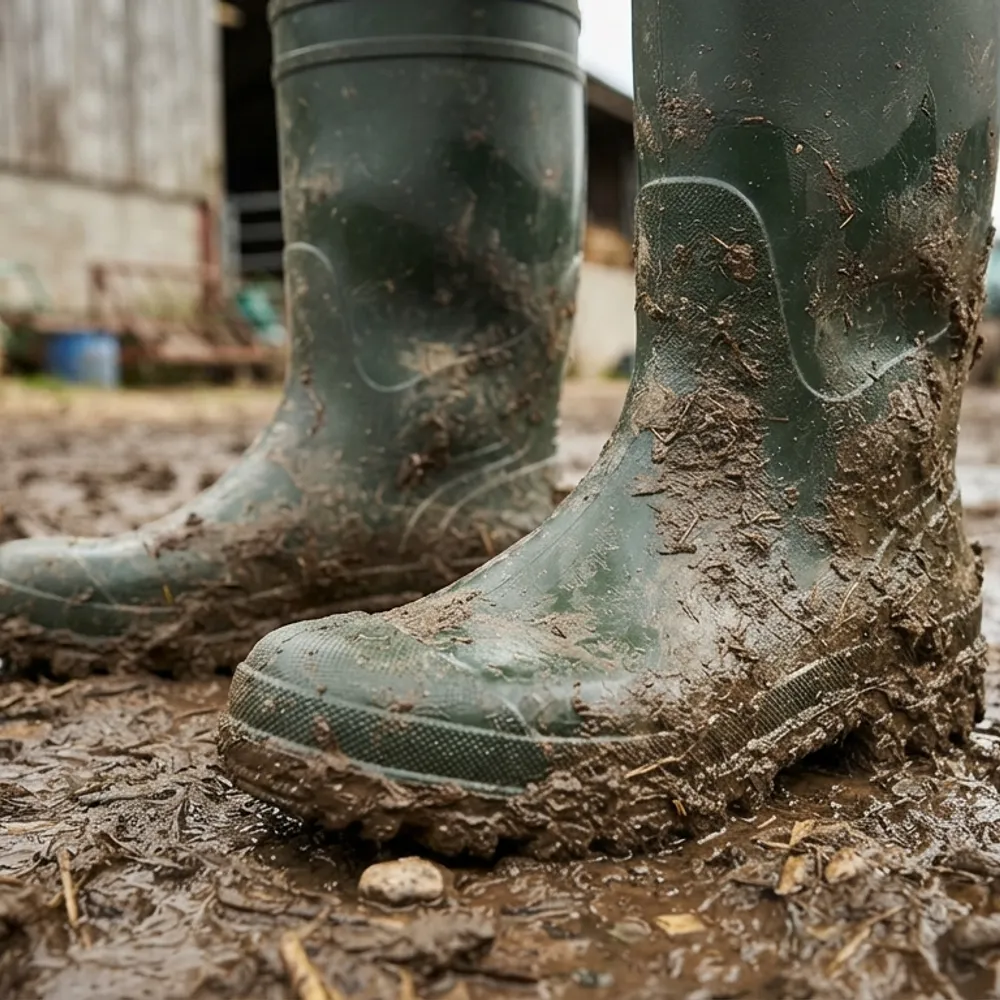
Muddy green safety wellingtons in a farmyard
Buying logic, not sales copy Fabric and spec named Team quantities priced on request Trade accounts

The codes

S4, S5 and the material question

The code ladder gives wellingtons two rungs: S4 — waterproof polymer boot with 200 J toe cap, antistatic, energy-absorbing heel — and S5, which adds the penetration-resistant midsole and cleated outsole. The choice mirrors S1P-vs-S3 logic: S4 for wet-clean environments (food halls, dairies, washdown lines), S5 wherever the ground can bite back — farmyards, construction groundwork, wet chambers, waste sites.

Material is the underrated decision. PVC boots are the cheap end: heavier, stiffer, colder, and they crack at the flex point sooner. Polyurethane (PU) costs more and repays it daily: roughly a third lighter, flexible in cold that turns PVC rigid, better insulated, and typically two to three times the working life — the cost-per-month arithmetic embarrasses the bargain boot. Food and agri sectors standardised on PU years ago for exactly this reason. Fit note: wellingtons are worn with thick or thermal socks most of the year — size for that sock, check calf clearance over work trousers, and prefer models with a proper heel kick for muddy removal.
The sort

Who needs which

EnvironmentSpecWhy
Food production & washdownS4 PU, white/coloured per zoneHygiene codes and daily chemical washdown — the audit wardrobe
Farms & livestockS5 PUCrush + puncture + slurry — the full argument
Groundworks & drainageS5Rebar offcuts and debris underfoot in the wet
Waste & recyclingS5Standing on the unknown is the job — sector guide
Occasional wet tasksS4, or stay with S3 bootsFull-time wet justifies the wellington; occasional doesn't

Questions

Wellington FAQ

What is the difference between S4 and S5 wellingtons?

Both are waterproof safety wellingtons with a 200 J toe cap; S5 adds a penetration-resistant midsole and cleated outsole. Wet-clean indoor environments suit S4; anywhere with debris, mud or unknown ground underfoot — farms, sites, waste — wants S5.

Are polyurethane wellingtons worth the extra cost?

Almost always: PU boots are significantly lighter, stay flexible in cold, insulate better and typically last two to three times as long as PVC — so the cost per month of wear usually favours them despite the higher price. Full-time wellington wearers feel the difference by mid-morning.

How should safety wellingtons fit?

Sized for the thick or thermal socks you'll actually wear, with room to wiggle toes clear of the cap, calf clearance over work trousers, and a snug enough instep that the boot doesn't pump when walking. A heel kick plate matters more than it sounds — muddy removal is a daily event.

List written — kit it out.

Everything in these guides is stocked, embroiderable and priced for teams.