iNeedWorkwear
Sectors hub / Food processing

Sector guide · Food processing

Food processing workwear: dressed for the audit.

Food factory workwear is specified by auditors as much as by wearers: garments designed so nothing falls in the product, coloured so nobody crosses a zone unnoticed, and laundered to standards a certificate depends on. It's the most rule-dense wardrobe on this site — and every rule traces to a recall that once happened.
Audit-led
BRCGS-style rules write the spec
No pockets
Above the waist, nothing falls in
Detectable
Even the accessories
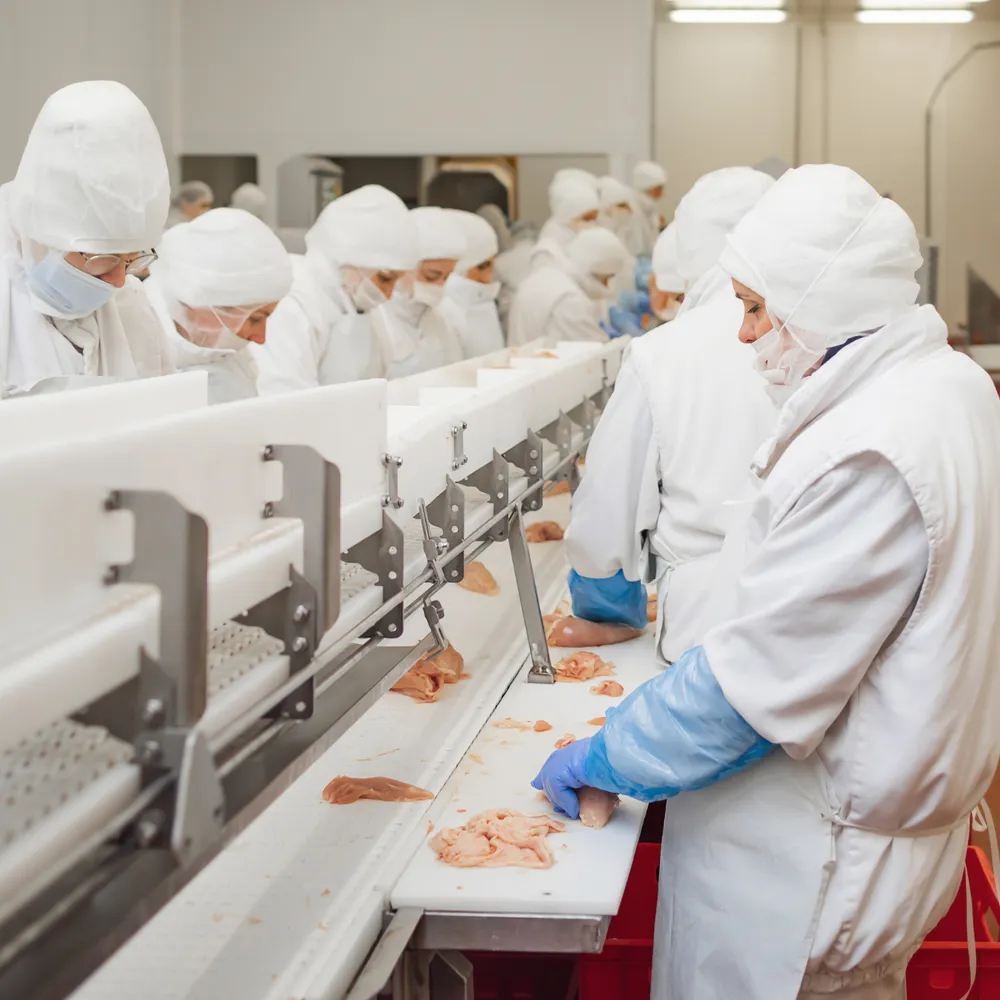
Food factory operatives in white overalls, hairnets and gloves on a processing line
Kit lists by sector Standards named, not implied Embroidery on your kit or ours Trade accounts

The design rules

Hygiene garments are engineered backwards from the product

Food-industry garments look odd until you read them as contamination controls: no external pockets above the waist (nothing can fall into open product), snap studs instead of buttons (buttons detach; studs don't), internal pockets only, no loose fibres, and light colours that show soiling honestly. Add the personal rules — hairnets and beard snoods, no jewellery, metal-detectable plasters and pens — and the whole system exists so the metal detector and the auditor both stay quiet.

Zone colour coding does the movement control: low-risk and high-care areas run different garment colours so a body in the wrong zone is visible across the factory floor, with changing procedures at the boundary.

The kit

The food-factory wardrobe

ItemSpecWhy
Hygiene coats & trousersStud-front, pocket rules as above, zone colourThe audit-grade base garment
FootwearS4/O4 wellingtons or S2/O2 washable, SRDaily washdown; toe caps where handling justifies
Hairnets, snoods, sleevesSingle-use, dispensered by zoneThe disposables logic at scale
ApronsPolythene or PVC by stationWet lines destroy fabric; wipe-down wins
Cold-chain layersEN 342 under hygiene outersChill and blast-freeze areas — the Grimsby reality
GlovesFood-contact approved nitrile; cut-rated for knife linesTwo standards, one line — cut letters for the boning room

The laundering

Who washes it is part of the spec

High-care food environments typically mandate industrial laundering — garments cycled through a contracted laundry to validated standards, not taken home — while lower-risk areas may permit controlled home washing on the separate-hot-dry pattern. Either way the fleet needs the maths: enough sets per person for the laundry cycle, and a garment spec that survives it — which loops back to studs, seams and fabric weight. Buying pretty coats that die at 85 °C is the sector's classic false economy.

Buying

Three food-factory rules

Spec to the audit
BRCGS-style clauses name the garment features — buy against the clause list
Zone colours locked
The colour system only works if reorders match exactly
Rotation maths
Sets per person = laundry cycle days + 2, or the system jams

Questions

Food processing FAQ

Why do food factory coats have no outside pockets?

So nothing can fall from a pocket into open product — the same logic behind snap studs replacing buttons and metal-detectable accessories. Hygiene garment design works backwards from foreign-body contamination.

What is zone colour coding in food factories?

Different garment colours for different risk zones — commonly separating high-care from low-risk areas — so anyone in the wrong zone is visible at a glance. It pairs with changing procedures at zone boundaries and colour-locked reordering.

Can food factory workwear be washed at home?

High-care areas generally mandate industrial laundering to validated standards; lower-risk roles may be permitted controlled home washing (separate load, hot, dried fast) per policy. The site's audit standard, not preference, decides.

Kitting out a team, club or school?

Supply and customise, or embroider what you already use — send the logo and the headcount.