iNeedWorkwear
All guides / Buying guides

Answer page · Footwear

The best safety boots for concrete floors.

Ask what boot suits concrete and the honest answer starts with what concrete actually does: it returns every step's shock straight back up the leg, eight hours a day. The spec that matters isn't the toe cap — it's everything between your heel and the floor.
Zero give
Concrete returns every step
Cushioning
The spec that matters
2 pairs
Rotation keeps foam alive
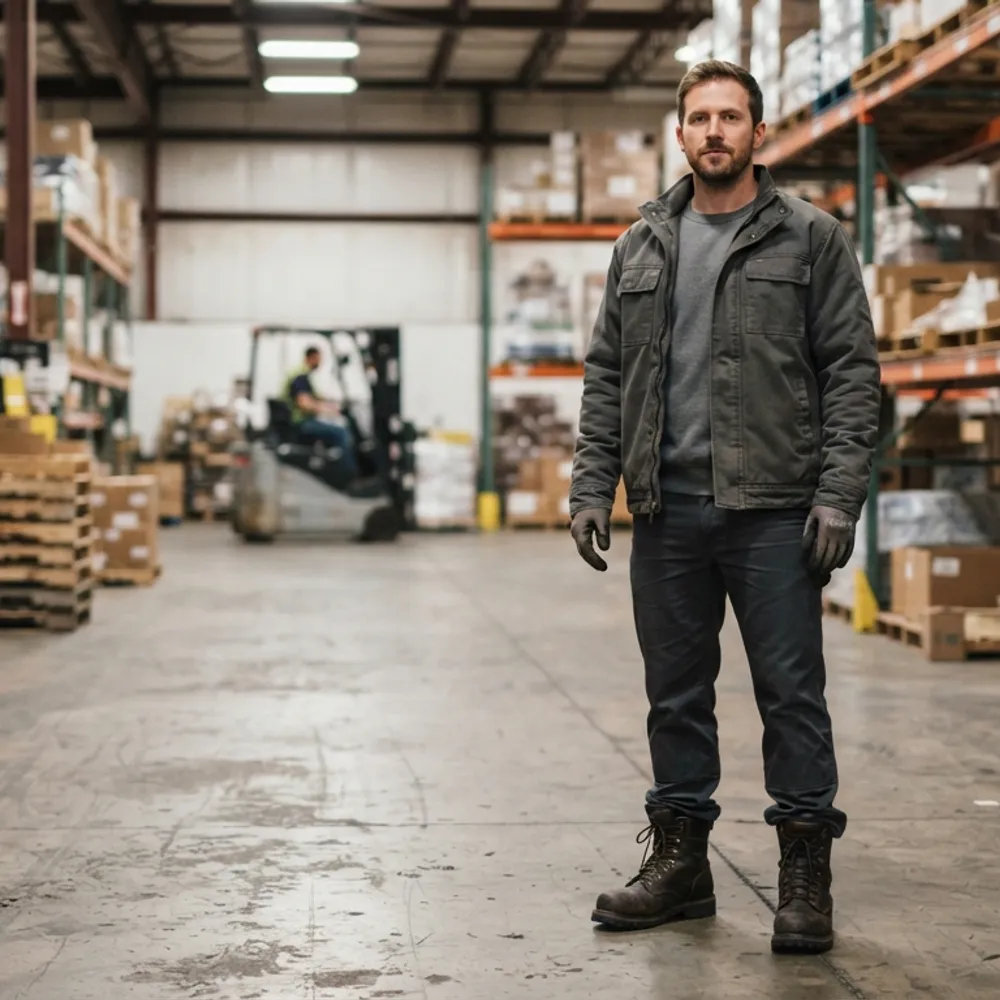
Warehouse worker in safety boots standing on a bare concrete floor
Buying logic, not sales copy Fabric and spec named Team quantities priced on request Trade accounts

The problem

Concrete injures slowly

Concrete's hazard isn't dramatic — it's cumulative: plantar fasciitis, knee and hip wear, lower-back fatigue, all downstream of a surface with zero give. Warehouse pickers, factory staff and workshop trades feel it as burning feet by hour six. The boot's job on concrete is shock management, and four features do it:

  • A genuinely cushioned midsole — EVA or PU foam with real depth, not a token layer under a rigid boot.
  • The energy-absorbing heel that's built into every code from S1 up — one reason plain SB boots are a false economy on hard floors.
  • A replaceable, cushioned insole — the component that actually dies first, and the cheapest to renew.
  • Weight discipline — every gram is lifted thousands of times a shift, which is why composite caps and trainer-style builds suit concrete so well.

The spec

Concrete-floor spec by job

WhereThe pickWhy
Warehouse & factory floorsS1P safety trainer, cushionedLight, foamy, midsole for stray fixings — the concrete default
Workshops with heavier handlingS1P/S3 boot, PU-midsole buildMore structure, same cushioning priority
Wet-process concrete floorsS2 washable + SRCushioning and washdown together
Standing posts (assembly, machining)Any of the above + anti-fatigue mattingThe floor can be fixed as well as the boot

The routine

Cushioning is a consumable

Foam compresses; that's how it works and how it dies. The habits that keep concrete tolerable: replace insoles the moment they flatten (months, not years — a fresh insole revives a tired boot for a tenth of its price), rotate two pairs so the foam recovers between shifts, and retire on dead cushioning even when the uppers look fine — a boot that has stopped absorbing is transmitting. The full replacement checklist lives in boot care, and the code logic around these picks in the S-code guide.

Quick answers

The three-line version

S1P trainer
The concrete-floor default for dry indoor work
Fresh insoles
The highest-value pound spent on hard floors
Two pairs
Foam needs recovery time as much as feet do

Questions

Concrete-floor FAQ

What safety boots are best for standing on concrete all day?

Cushioning-first builds: an S1P safety trainer or PU-midsole boot with a deep foam layer, energy-absorbing heel and a fresh replaceable insole — kept alive by rotating two pairs. The toe cap spec follows the job; the cushioning spec follows the floor.

Why do my feet burn after a shift on concrete?

Concrete returns every step's impact — burning feet, plantar fascia pain and knee fatigue are the cumulative result. Renewed insoles, genuinely cushioned midsoles, boot rotation and anti-fatigue matting at static posts each remove a share of the load.

Are safety trainers OK on concrete floors?

They're often the best choice — S1P trainers carry the same certified cap and midsole as boots with far less weight to lift each step, and their trainer-style foam handles concrete's shock better than many rigid boots. Step up to boots where ankle support or weather demands it.

List written — kit it out.

Everything in these guides is stocked, embroiderable and priced for teams.