Buying guide · Jackets & outer layers
Jacket regret is nearly always a category mistake, not a quality one: a waterproof bought for warmth, a padded jacket sweated through by an active job, a fleece facing January rain. Pick the family first — shell, softshell, insulated, or gilet — and almost any decent garment inside it will do its job.

The one question
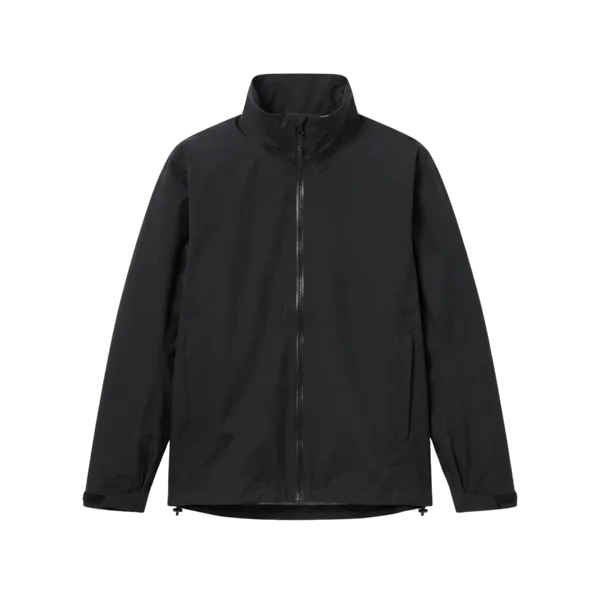
Everything follows from how the job generates heat. Active work — carrying, climbing, fitting, delivering — makes its own warmth and needs a jacket that manages weather without cooking you: a softshell for everyday wind and drizzle, a true waterproof shell when it's properly raining (the rating system is decoded in our EN 343 guide), or a gilet when the arms need to swing free and the core just needs cover.
Static work — banksman duties, gate security, machine minding, cold-store picking — generates almost nothing, and that's where insulated jackets and parkas earn their bulk. The classic mistake runs both directions: padded jackets on active jobs end up tied round waists by ten o'clock, and softshells on static winter jobs are a misery by lunch.
Layers beat bulk either way: a base layer and a mid-layer under a shell covers more conditions than one heavyweight jacket ever will — and when the choice inside a family is genuinely close, our softshell vs fleece comparison settles the commonest one.
The families
| Family | Built for | Watch for |
|---|---|---|
| Waterproof shell | Real rain, all day, over layers | EN 343 class; taped seams; sized for a mid-layer under it |
| Softshell | Everyday wind, drizzle, constant movement | Water-resistant is not waterproof — it buys you an hour, not a shift |
| Insulated / parka | Static cold: gates, yards, banksman, cold store | Too warm to work hard in; check cuff and hem seals, not just fill |
| Bodywarmer / gilet | Active jobs needing free arms; layering over knitwear | Core-only warmth — pair with sleeves elsewhere in the system |
Before you order
Questions
A softshell is wind-resistant and shower-resistant — ideal for active work in everyday weather — but its fabric and seams are not sealed. A waterproof shell carries an EN 343 rating with taped seams and keeps sustained rain out for a full shift. If the forecast says rain all day, it's a shell job.
Excellent for active jobs: they keep the core warm while leaving the arms completely free, which is why fitters, couriers and warehouse teams favour them. They're core-only warmth though — in real cold they work as a layer over knitwear or under a shell, not alone.
Yes, but embroidery needles puncture the waterproof membrane, so it needs doing properly — sealed behind the stitching or applied to a bonded patch. It's standard practice for a competent workwear embroiderer; just don't have a fashion embroiderer do it as if it were a hoodie.
An insulated jacket or parka sized over a base and mid-layer, with sealed cuffs and a decent hem drop. Static outdoor work generates almost no body heat, so buy for insulation and wind-proofing rather than breathability — the opposite of what an active trade needs.
Everything in these guides is stocked, embroiderable and priced for teams.