Buying guide · Embroidery pricing
Ask three suppliers what embroidery costs and you'll get 'free', a per-logo price and a shrug — and all three are describing the same model from different angles. Here's how the trade actually prices badged workwear, so you can compare quotes on the number that matters.

The model
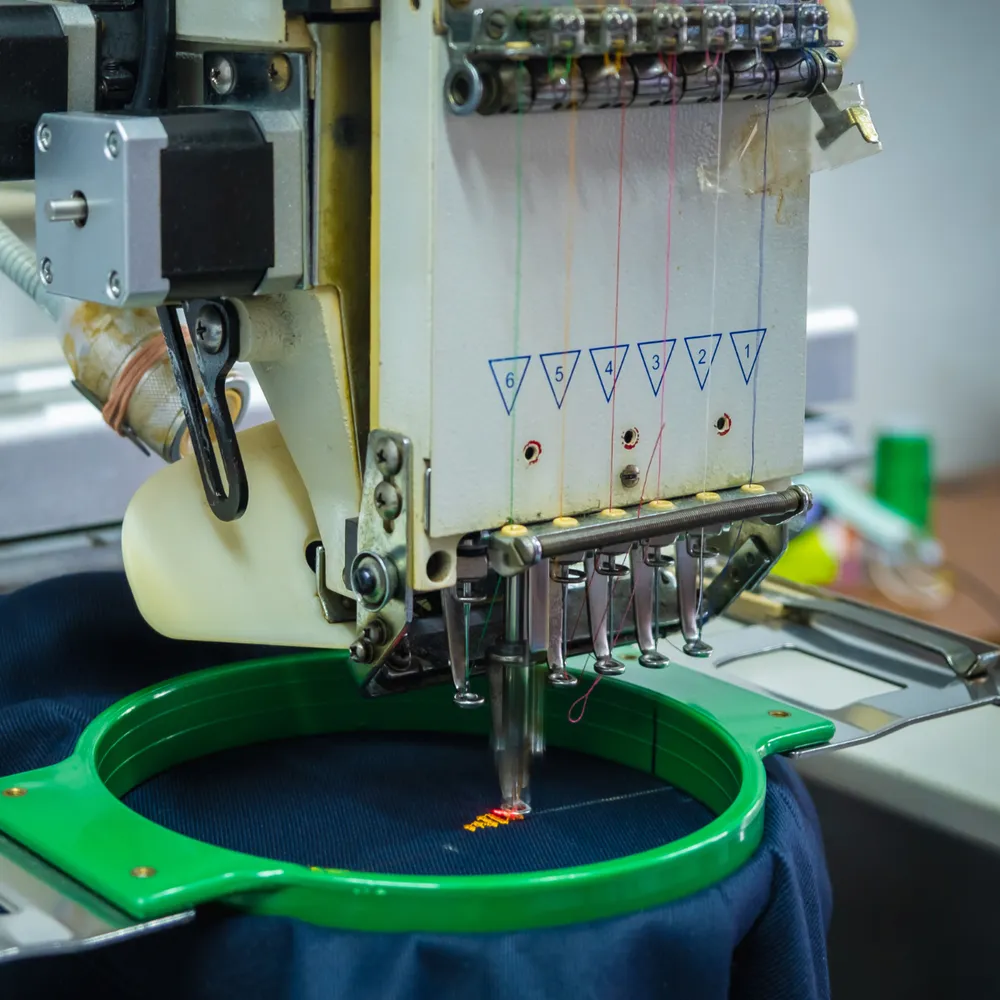
Most workwear suppliers, us included, quote badged garments as one price: buy the polos, the logo comes stitched. Nobody is donating machine time — the embroidery cost sits inside the garment price — but the bundling reflects something true about the work: once your logo is set up, running it onto a garment that's already passing through the workshop is efficient, so charging it as a separate line item mostly adds admin, not value.
The practical consequence for buyers: compare quotes on the total delivered price of the badged garment, not on whose line items say "free". A £9 polo with free embroidery and a £7 polo plus £2 per logo are the same quote wearing different clothes — and the garment quality, not the line-item theatre, is where the quotes genuinely differ (the polo guide covers what to look for).
What costs what
| Item | How it's usually charged | Why |
|---|---|---|
| Logo digitising | One-off setup, sometimes waived on larger first orders | A human converts your artwork into a stitch file — real skilled work, done once, reused for years |
| Standard chest logo | Included with garments bought from the supplier | The bundled model above |
| Extra positions (sleeve, back, nape) | Usually a small per-position charge | Each position is another machine run |
| Names or initials per garment | Per-unit charge | Every garment needs its own setup — initials are cheaper than names, and survive squad churn |
| Badging customer-supplied garments | Charged per logo | No garment margin to absorb it — this is the schools-and-clubs badge-only route, priced as the service it is |
| Large back designs & sponsor panels | Quoted by size — often printed instead | Stitch count scales with area; print wins at scale |
The variables
Stitch count is the honest unit of embroidery cost — driven by logo size and how much of it is solid fill. A clean left-chest logo of 8–10 cm runs quickly; a dense, fill-heavy crest at twice the size takes several times the machine minutes. Thread colour changes matter far less than people assume (multi-head machines carry many threads), and quantity matters the way you'd expect: the setup is fixed, so per-garment economics improve with volume — which is why suppliers can waive digitising on decent first orders.
Two more things worth knowing. Artwork quality is money: a crisp vector or high-resolution logo digitises cleanly; a stretched photo of a letterhead costs redraw time — one reason schools and clubs are told to treat the digitised crest as an asset they set up once and keep. And certified garments carry placement rules: badging hi-vis and FR kit must keep clear of the certified areas and use compatible processes — part of why safety kit gets badged by the workwear supplier, not the cheapest press in town.
Buyer's summary
Questions
Because the trade bundles embroidery into the garment price — once a logo is digitised, stitching it onto garments already passing through the workshop is efficient, so most suppliers quote one badged-garment price. It's a pricing convention, not a giveaway: compare quotes on the total delivered price.
The one-off cost of converting your logo artwork into a machine stitch file — skilled work that determines how the logo renders in thread forever after. It's done once and reused across every garment and reorder; suppliers often waive it on larger first orders.
Yes — badging customer-supplied garments is standard work, and the route many schools and clubs use for existing kit. Expect it to be charged per logo rather than bundled, since there's no garment sale to absorb the cost, and note that certified hi-vis and FR items need placement-aware badging.
Stitch count, mainly — bigger logos and dense solid fills take more machine time — plus extra positions per garment and per-unit personalisation like names. Thread colour count matters less than most buyers assume. Volume works the other way: fixed setup spread over more garments.
Everything in these guides is stocked, embroiderable and priced for teams.