iNeedWorkwear
All guides / Buying guides

Buying guide · Coveralls

Coveralls: one garment, four families.

The coverall is workwear's one-decision wardrobe: a single garment covering torso to ankle, bought by trades from mechanics to turnaround crews. The four families answer different questions — everyday cover, flame, chemistry, or single-use — and inside each, the difference between good and irritating is a handful of construction details.

4 families
Standard, FR, chem, disposable
Fit rule
Size for the crouch, not the stand
Details
Zips and access make or break it
Navy work coverall
Buying logic, not sales copy Fabric and spec named Team quantities priced on request Trade accounts

The families

Which coverall is the question

Standard coveralls245–300gsm polycotton, the garage and workshop default — are bought on fit and details (below), in rotation quantities because oil retires them chemically. FR and multi-norm coveralls are certification purchases: EN ISO 11612 letters for heat and flame, welding spec, or the refinery triple of FR + antistatic + splash — the label list is the product. Chemical coveralls run the type ladder from type 6 splash upward. Disposables — type 5/6 for dust and light splash — are consumables bought by the case, covered honestly in the disposables guide.

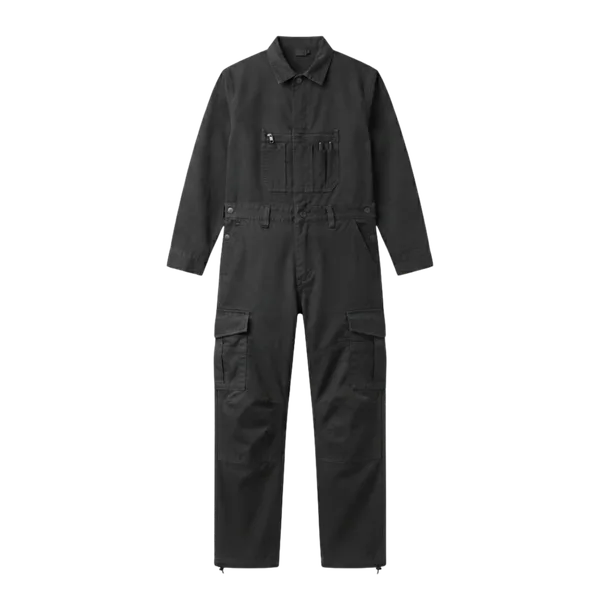
Fit is the coverall's make-or-break: the garment must accommodate a crouch, a reach and a crawl simultaneously — which is why the fit test is squatting, not standing. Look for a generous back rise or bi-swing back, and size over what's worn beneath in winter. The details that separate good from cheap: a two-way zip (ventilation and, frankly, plumbing), covered stud plackets that don't scratch paintwork, knee-pad pockets in trade versions, elasticated waist panels, and pocket access slits that reach the trousers underneath — the feature nobody notices until they've lived without it.
The sort

Family by job

JobFamilyThe note
Workshops & mechanicsStandard polycotton, rotatedThe garage wardrobe
Hot work & hydrocarbon sitesFR / multi-norm to the site's lettersThe label list IS the spec
Chemical handlingTyped chem coveralls per assessmentLayer over FR where both apply
Dusty one-offs & turnaroundsType 5/6 disposables by the caseSingle-session, never re-worn
Food & hygieneBoiler suits in hygiene specPocket and stud rules — the audit wardrobe

Questions

Coverall FAQ

How should a coverall fit?

Test it crouching, not standing: squat, reach overhead and cross your arms — the garment should follow without pulling at the crotch or shoulders. Size to wear over your normal work layers, and prefer bi-swing backs and stretch panels for mobile trades.

What is a multi-norm coverall?

A garment certified to several protective standards at once — typically flame resistance (EN ISO 11612), antistatic performance (EN 1149-5) and chemical splash (EN 13034), sometimes with welding or arc ratings. Process sites specify them because layering separate single-purpose garments gets the protection wrong.

Why do coveralls have a two-way zip?

Ventilation from the bottom when working hot, and practical access without undressing — both daily realities in a one-piece garment. It's one of the small construction details (with covered plackets, knee-pad pockets and pass-through pockets) that separate a good coverall from a cheap one.

List written — kit it out.

Everything in these guides is stocked, embroiderable and priced for teams.