Sector guide · Waste & recycling
Waste and recycling carries one of the highest injury rates of any British sector, and its hazards are democratic: everything the public throws away — glass, needles, chemicals, dead batteries — passes through someone's gloved hands or past someone's boots. The kit list is built around what's hidden in the bag.

The sector
Most industries know their hazards; waste handles everyone else's, unsorted. That's why the sector's glove spec goes beyond the usual cut letters into needle- and puncture-resistant constructions for picking lines and litter work (EN 388 covers cut and puncture; needlestick-specific ratings come from supplementary tests worth asking suppliers to evidence). Footwear follows the same logic — S5 wellingtons or S3 boots with midsole protection, because standing on the unknown is the job description.
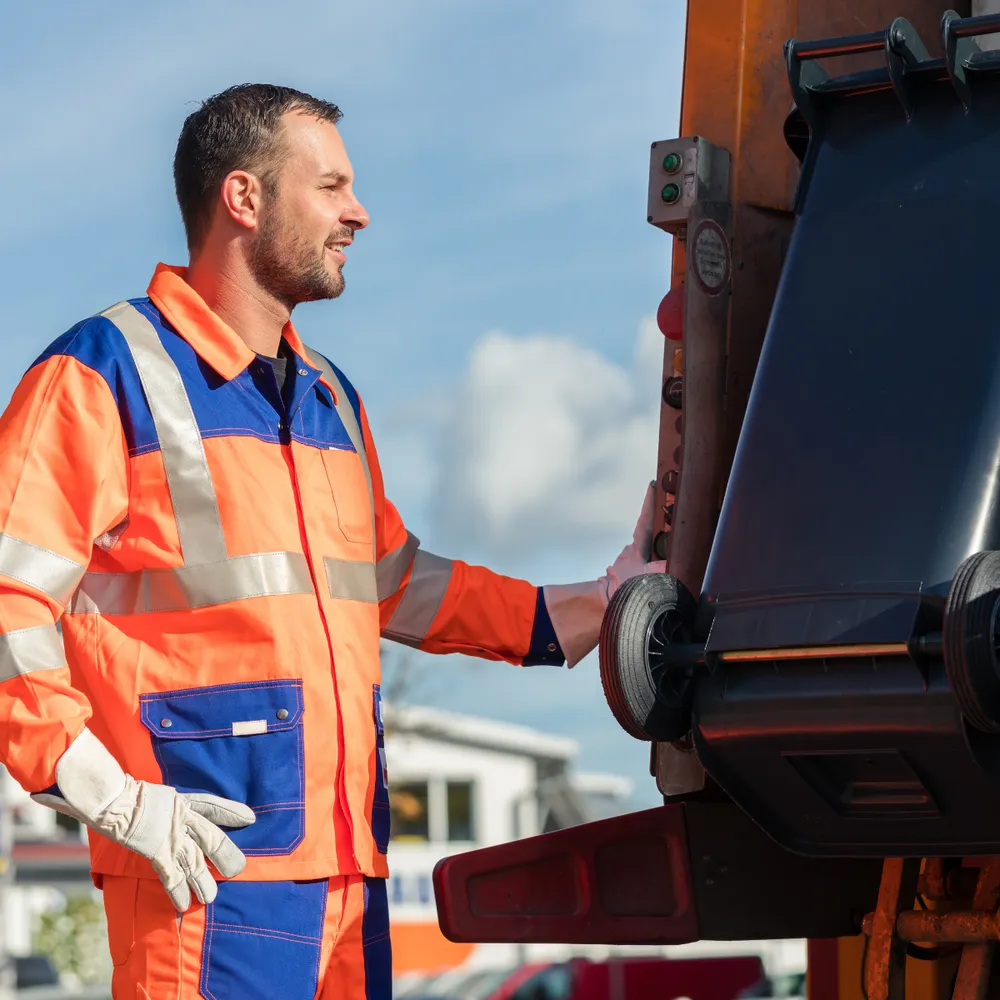
Visibility is the other constant. Collection rounds put crews in live traffic hundreds of times a shift — Class 3 is the sector default, worn as jackets and two-piece kit that still meets class when the jacket comes off. At transfer stations and MRFs, add FFP respirators for dust and bioaerosols, eye protection on picking lines, and the quiet rule the sector learned the hard way: work kit is contaminated kit — employer-managed laundering, not the family machine.
Kit by role
| Role | The kit that matters | The spec detail |
|---|---|---|
| Collection crews | Class 3 hi-vis, grip gloves, S3 boots | Traffic + lifting + weather, simultaneously |
| MRF picking lines | Needle/puncture-resistant gloves, FFP, eye protection | Ask for needlestick test evidence, not adjectives |
| HWRC site staff | Hi-vis, cut gloves, public-facing embroidered kit | Half traffic marshal, half customer service |
| Drivers & plant operators | Hi-vis, fitted cab kit, S3 | In-and-out of cabs is the injury moment |
| Washdown & maintenance | Waterproofs, chemical gloves where dosed | Splash logic at wash bays |
Management notes
Questions
Picking lines specify cut-resistant gloves with genuine puncture performance, and increasingly needle-resistant constructions tested against hypodermic penetration — ask suppliers for the test evidence rather than the adjective. Grip and dexterity still matter, because the job is continuous handling.
Collection crews work in and beside live traffic continuously, in all light conditions — the highest-visibility class is the sector default, usually as jackets and two-piece combinations that keep class compliance even when layers come off. Vehicle blind spots make conspicuity a life-safety item here.
No — kit from waste handling is treated as contaminated, and laundering is managed by the employer or its laundry rather than sent home. It's the same logic as clinical uniforms: the washing machine is part of the exposure control chain.
Send the roles and headcount — we'll come back with a kit list per role, embroidered and priced.