iNeedWorkwear
Roles hub / Agriculture

Role guide · Farm work

What farm workers actually wear.

Farming compresses more distinct hazards into one job than any other British trade: machinery that entangles, livestock that crushes, chemicals with their own PPE small-print, dust that sensitises lungs, and weather as a permanent colleague. No single garment covers it — the skill is matching kit to the day's tasks.

S5
Safety wellingtons — the yard default
Fitted
Loose clothing + PTO shafts = the old story
Per label
Chemical PPE comes off the product, not habit
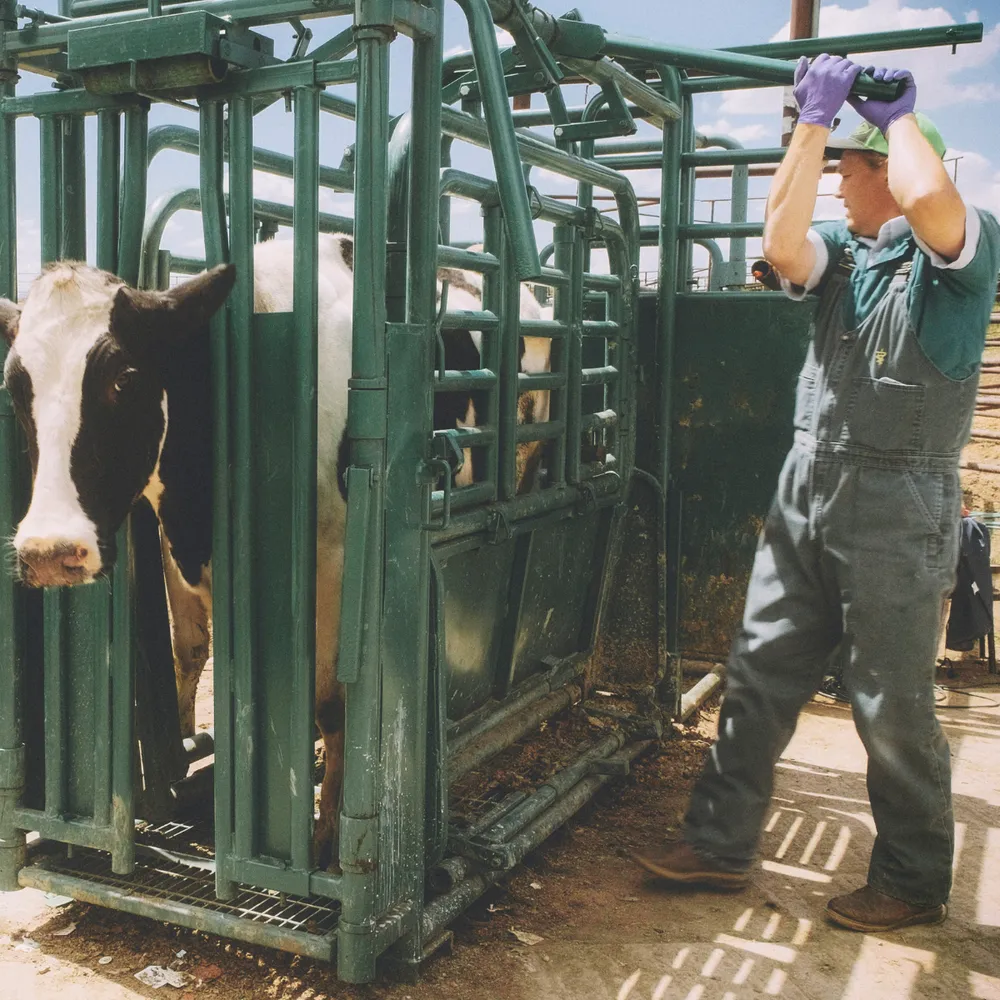
Farm worker in bib-and-brace overalls and gloves working a cattle crush
Written from the job backwards Standards named per item Stocked and embroidered Trade accounts

The job

Task-by-task, not one-outfit

Machinery sets the silhouette: the oldest rule in agriculture — no loose clothing near PTO shafts, balers and augers — still writes the spec: fitted garments, zipped not flapping, drawcords removed or tucked. Livestock sets the footwear: steel or composite-toe S5 safety wellingtons, because a cow's hoof finds an unprotected foot eventually, and yards are washed-down, slurry-slick surfaces where grip is non-negotiable (the codes cover S4/S5).

Chemicals come with their own law: plant-protection products specify their required PPE on the product label and safety data sheet — commonly nitrile gauntlets, face protection, and splash-rated or disposable coveralls for mixing and loading, with certificated training governing who sprays at all. And dust is the sleeper hazard: grain stores, straw work and poultry sheds put organic dusts into lungs that sensitise permanently — FFP2/FFP3 respirators belong in the everyday kit, not the someday kit.
The list

The farm kit map

TaskThe kit that mattersThe spec detail
Yard & livestockS5 safety wellingtons, waterproofs, gauntletsCrush-toe protection in washdown territory
Machinery & workshopFitted coveralls, cut gloves, hearing protectionEN 352 around old cabs and grain dryers
Spraying & chemical handlingPPE per the product label — gauntlets, coveralls, faceDisposables done right
Grain stores & dusty workFFP2/FFP3 respirators, eye protectionOrganic dust sensitises — protect early, not eventually
All of itLayered weather kitJacket families; there is no indoors

The details

Three farm-specific truths

Hygiene routes
Zoonoses ride on kit — yard clothing stays out of the kitchen, hands wash before food, cuts get covered
Sun & cold
The same fields deliver UV dose in July and wind chill in January — <a href='summer-workwear-guide.html'>summer kit</a> and <a href='base-layers-guide.html'>base layers</a> both earn keep
Estate saw work
Any chainsaw task brings its own certified kit — <a href='chainsaw-protection-standards-explained.html'>the standard decoded</a>

Questions

Farm kit FAQ

What boots are best for farm work?

Safety wellingtons — S4 or S5 rated, giving toe protection (and midsole protection at S5) in a washable boot with serious grip — for yard and livestock work, with S3 leather boots for field, machinery and estate tasks. Livestock and unprotected feet are a bad long-term combination.

What PPE is needed for spraying on farms?

Whatever the product label and safety data sheet specify — typically nitrile gauntlets, protective coveralls (splash-rated or disposable), face/eye protection and sometimes respiratory protection, with the highest exposure usually at mixing and loading. Certification training governs the activity itself; the label governs the kit.

Why does loose clothing matter around farm machinery?

Rotating equipment — PTO shafts above all — catches loose fabric and pulls the wearer in; it remains one of agriculture's fatal mechanisms. Fitted garments with no flapping edges, loose cords or dangling sleeves are the rule around any running machinery, full stop.

Kit the crew.

Everything in this guide is stocked, embroiderable and priced for teams — send the headcount.