iNeedWorkwear
All guides / Buying guides

Buying guide · Extended sizing

Workwear at the edges of the size range.

Every workforce has bodies the standard size run ignores — the 6'5" engineer whose trousers are ankle-swingers, the 5XL operative whose hi-vis won't close and therefore doesn't protect. Buying at the range edges isn't a favour; it's the same fit-equals-function rule everywhere else, applied where catalogues go quiet.

Leg options
Short/reg/tall exists — order it
To 5XL+
Real ranges reach further than habit
Fit = function
An open hi-vis isn't Class anything
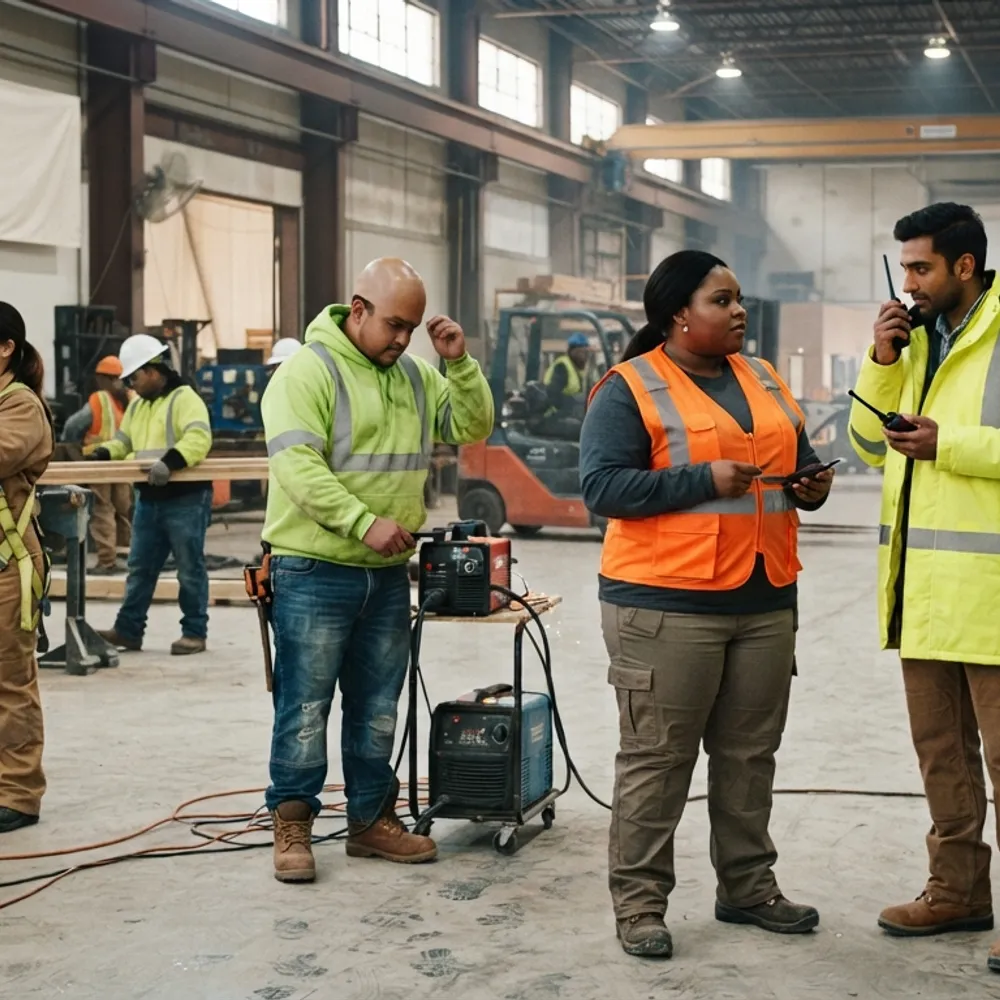
Workers of different shapes and sizes in hi-vis kit in a workshop
✓ Buying logic, not sales copy✓ Fabric and spec named✓ Team quantities priced on request✓ Trade accounts

The issues

What actually goes wrong at the edges

Tall problems are length problems: trousers riding above the boot (and dragging the knee-pad pocket off the knee — the pad protects a shin instead), sleeves exposing wrists to weather and spatter, jackets that untuck at every reach. Most trade ranges cut short/regular/tall legs and some cut tall bodies — the failure is usually ordering habit, not availability. Plus-size problems are protection problems: a hi-vis that can't close loses its certified area the moment it flaps open (class is area maths); stretch panels and correct sizing keep outer layers actually closable over winter mid-layers; and harness-based work needs rated, sized fall-protection equipment — standard harnesses have weight and girth limits, and exceeding them is an equipment-selection issue the employer must solve, not a squeeze-it-on issue (see the fall-protection map).

For employers the fix is procedural: collect real measurements at intake (our measuring guide makes it a five-minute job), order the size curve you actually employ rather than a bell curve from habit, and pick core ranges that genuinely extend — same garment, same colour, 3XS to 5XL+ with leg options — so nobody's uniform announces them as an afterthought. That last point is the quiet one: matching kit at every size is a dignity feature, and it costs nothing but supplier choice.
The checklist

Ordering for the whole curve

ItemThe edge-size note
TrousersOrder leg length per person — tall legs exist in most trade ranges
Hi-visMust close over winter layers at every size — or it isn't its class
Jackets & shellsExtended sizes with real sleeve length, not just girth
GlovesGenuine XXL exists — ratings mean nothing in a glove that won't don
Height workHarness ratings and sizes checked per wearer — an equipment decision, not a squeeze

Questions

Extended sizing FAQ

Does workwear come in tall sizes?

Most serious trade ranges cut short, regular and tall leg lengths and some cut tall body lengths — the gap is usually in ordering habits rather than catalogues. Per-person leg length matters functionally: knee-pad pockets only protect knees they actually sit on.

Why does hi-vis fit matter at larger sizes?

Because the class rating is certified area, worn as designed — a garment that can't close and flaps open no longer presents its certified fluorescent and reflective area. Extended-size hi-vis that closes properly over real layers is the compliant answer, and it exists.

Are there weight limits on safety harnesses?

Yes — harnesses and energy-absorbing systems carry rated capacity limits, and standard models don't fit or protect every body. Where height work is involved, equipment selection for larger workers is a competent-person decision with properly rated, sized kit — never an improvised fit.

List written — kit it out.

Everything in these guides is stocked, embroiderable and priced for teams.