Buying guide · Thermals & base layers
Crews spend hundreds on jackets and pounds on base layers — backwards, since the layer against your skin decides whether sweat becomes warmth or chill. It's the highest warmth-per-pound purchase in workwear, if you follow three rules.
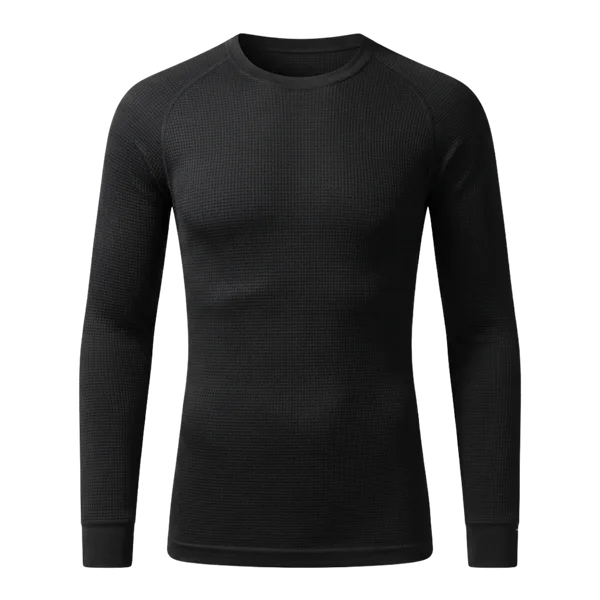
How it works
A working body sweats even in January. Whatever sits against the skin either moves that moisture outward — keeping the insulating layers dry and working — or holds it, and wet fabric conducts heat away many times faster than dry. That's the entire base-layer job, and it's why cotton is banned from this list: it absorbs sweat, stays wet, and turns into a refrigeration layer at the first tea break. The classic cotton tee under a site jacket is the most common self-inflicted cold on British sites.
Fit is function: a base layer wicks by touching skin — snug through the torso and arms, not compression-tight, never baggy. If it hangs loose it's just a thin shirt.
The fabrics
| Synthetic (polyester/polypropylene) | Merino wool | |
|---|---|---|
| Wicking speed | Fastest — dries in hours | Slower to dry, warm even damp |
| Odour after day 2 | The known weakness | Wins — days between washes |
| Durability & price | Cheap, survives industrial washing | Dearer, needs gentler care |
| Best for | Daily-wash fleets, high-output work | Multi-day wear, moderate output, sensitive skin |
| Under FR kit | No — synthetics melt. FR-rated or natural layers only | Acceptable where FR base layers aren't mandated — check policy |
By job
Outdoor trades: lightweight synthetic top and leggings under normal workwear — warmth without bulk under the site layering system. Cold stores: the base layer is load-bearing kit under an EN 342 suit — wicking matters more there than anywhere, because sweat inside a freezer suit is the classic failure. Drivers and yard staff: a mid-weight zip-neck covers the in-and-out pattern without overheating the cab. Anyone in FR: the melt-layer rule owns the decision — FR-rated or natural fibre only, T-shirt included.
Questions
Cotton absorbs sweat and holds it against the skin, and wet fabric strips body heat many times faster than dry. A cotton tee under winter kit becomes a chilling layer by the first break — synthetic or merino wicking layers exist to prevent exactly that.
Snug — in contact with skin through the torso and arms so it can wick — but not compression-tight. Baggy defeats the mechanism entirely; it's just a thin shirt with an insulating air gap it can't use.
For multi-day wear, moderate work rates and anyone bothered by synthetic odour, yes — merino stays wearable for days and insulates even damp. For daily-washed fleets doing sweaty work, synthetics wick faster, survive hot washing and cost half as much.
Everything in these guides is stocked, embroiderable and priced for teams.