iNeedWorkwear

Care guide · Safety footwear

Safety boot care: make them last, know when they're done.

Most site boots don't wear out — they get killed: baked on a radiator, left caked in mud, worn a year past their tread. The care routine that prevents it takes minutes a week, and the replacement checks take one look.

Never
Radiator-dry leather
2 pairs
Rotation doubles life
5 signs
That a boot is done
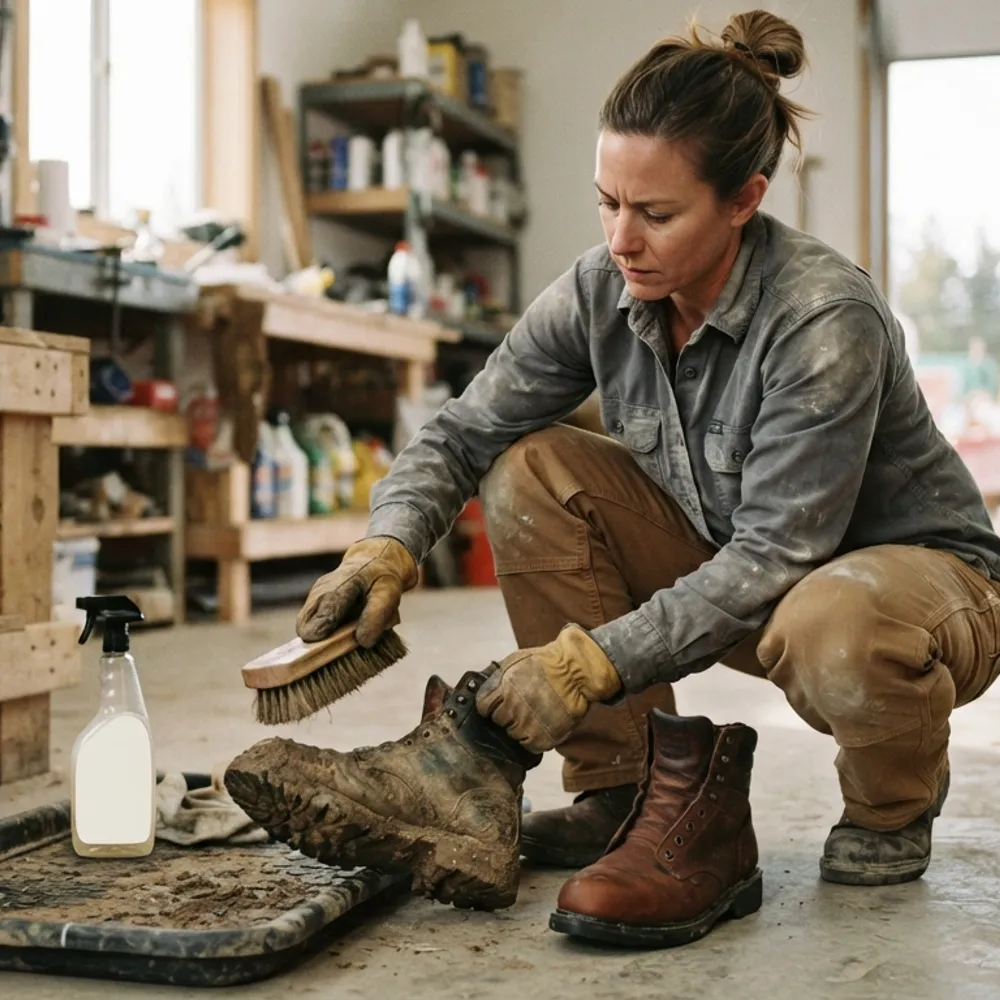
Worker brushing dried mud off a safety boot in a workshop
EN ISO 20345 certified stock SB to S7 Steel, composite & aluminium caps Boots, shoes & trainers Trade accounts

Why bother

The routine is the cheap part

A decent pair of site boots costs real money, and the habits that destroy them are all avoidable. The two big killers are heat-drying — which cracks leather and delaminates soles — and never cleaning off mud, which stiffens and dries the upper from outside. Neither takes effort to avoid; they take a routine.

The five steps below are that routine. After them: the five signs that no amount of care fixes, and the boot comes off the payroll.

The routine

Five habits that double a boot's life

Knock the mud off the same day

Wet mud draws moisture out of leather as it dries, and a caked upper can't breathe. Bang the soles, brush the uppers — a minute at the van.

Dry slowly — never on a radiator

Heat cooks the oils out of leather and softens the adhesives holding the sole. Cracked uppers and peeling soles are almost always drying damage, not wear. Room temperature, stuffed with newspaper, overnight.

Feed the leather fortnightly

Wax or conditioner keeps the upper supple and sheds water. If you ever intend to re-wax the leather, avoid silicone sprays — they seal the surface against everything, including the next treatment.

Rotate two pairs

Linings need about 24 hours to dry from a day's sweat. Alternating pairs keeps the inside dry — that's most of the fight against odour and blisters — and two rotated pairs outlast two pairs worn consecutively.

Inspect monthly, and after any impact

Check tread depth, stitching, the sole bond and the toe area. Anything on the replacement list below, or any serious impact to the cap, retires the boot.

End of the road

Five signs a boot is done

None of these are cosmetic — each one means specific protection has lapsed.

What you seeWhat it meansVerdict
Tread worn smooth or clogged flatSlip resistance is in the pattern — it's goneReplace
Toe cap visible through the upperCap can shift; upper no longer locates itReplace
Sole separating from upperWater path in; structural bond failingReplace
Upper split or deeply crackedWater in, protection compromisedReplace
Took a serious impact — even if it looks fineCap is certified for one major eventReplace
No law sets a boot's lifespan — condition does. Daily site wear typically retires a pair inside 6–12 months. If an employer supplies PPE it must be maintained and replaced when no longer effective, so a boot showing any sign above shouldn't wait for a round-number anniversary.

Questions

Boot care FAQ

How do you dry safety boots overnight?

Knock off mud, pull the insoles, stuff the boots with newspaper and leave them at room temperature — swap wet paper once if they're soaked. Never use radiators, stoves or hot-air dryers: heat cracks leather and softens sole adhesive.

How often should safety boots be replaced?

On condition, not a calendar. Typical daily site wear means 6–12 months, but the triggers are specific: smooth tread, an exposed or shifted toe cap, sole delamination, a split upper, or any serious impact to the cap.

Can you repair safety boots?

Laces and insoles, yes — and worth replacing, since a fresh insole restores comfort cheaply. Structural damage, no: once the sole bond, upper or cap area is compromised, repair can't restore the certified performance and the boot is retired.

Do safety boots need waterproofing spray?

Leather boots benefit from wax or conditioner, which feeds the leather and sheds water. Reserve sprays for fabric or suede uppers, and avoid silicone products on leather you plan to wax later. No treatment turns a water-resistant S3 into a waterproof S7 — that's a certification, not a coating.
Know your S-code? Shop it.

EN ISO 20345 boots, shoes and safety trainers from stock — S1P and S3 always available, with trade-account ordering for teams.