Area guide · Milton Keynes
Milton Keynes never finished being built — the grid keeps growing, the sheds keep landing, and the HQ campuses keep hiring. Its workwear economy is correspondingly triple: delivery and distribution at national scale, construction trades everywhere the grid extends, and corporate teams whose polo shirt is the brand.
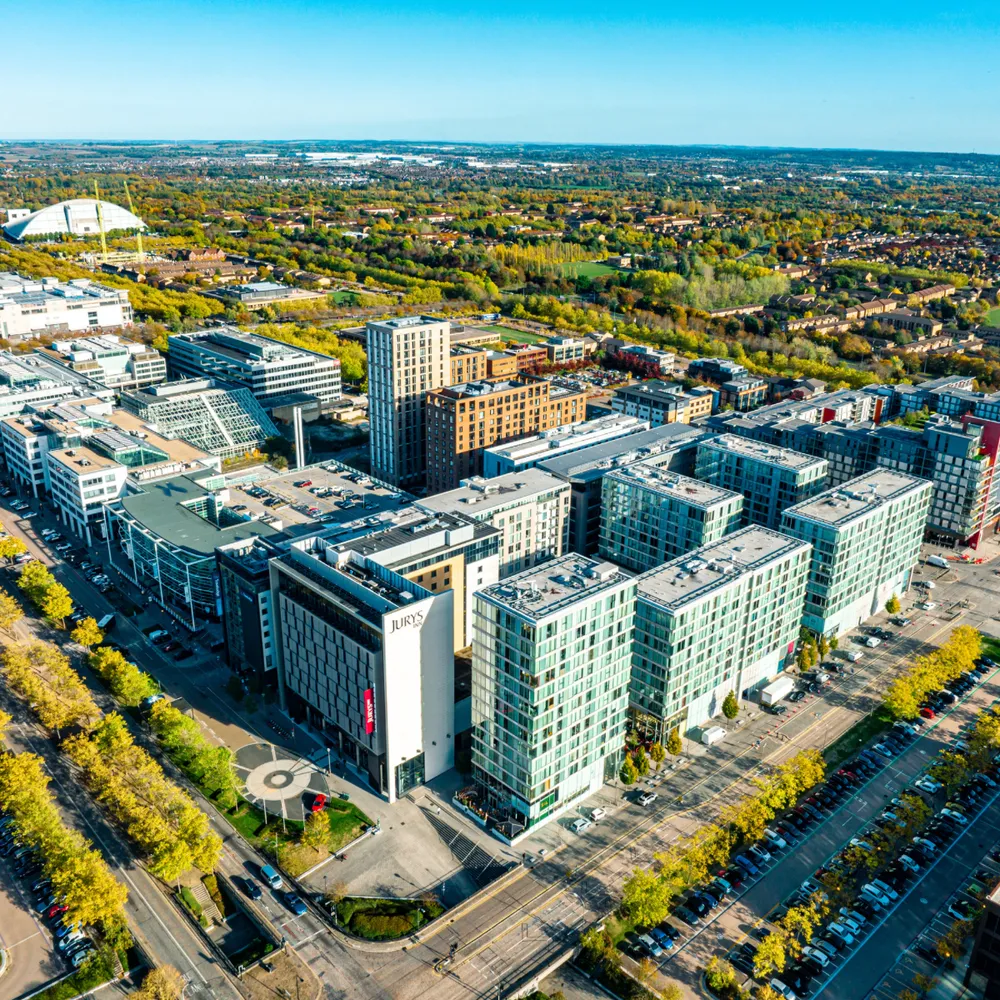
The local economy
Planned around movement, MK became a natural home for distribution and parcel networks — national hubs and last-mile depots share the grid with retail head offices, banks and tech campuses. Construction is a permanent industry rather than a phase: housing expansion, commercial fit-out and infrastructure roll on year after year. Add datacentres and facilities management (a quiet MK speciality), automotive HQs and the hospitality that serves a city of commuters, and you get a wardrobe that runs from S3 boots to embroidered gilets without pausing.
Kit by industry
| Local sector | The kit that matters | The spec detail |
|---|---|---|
| Parcel hubs & last-mile | Hi-vis, cushioned trainers, all-weather layers | The delivery-driver kit list |
| Construction & fit-out | Class 2 hi-vis, helmets, S3 boots | The baseline and trade add-ons |
| Datacentres & FM | ESD awareness, fitted kit, quiet-site rules | Where antistatic applies |
| Corporate & HQ teams | Embroidered polos, softshells, FOH tailoring | The FOH guide |
| Grounds & landscaping | Waterproofs, chainsaw kit where licensed | Forestry kit decoded |
The detail that matters
Last-mile delivery made the driver the most-seen employee in Britain, and MK's depots dress thousands of them. The kit does three jobs at once: visibility (hi-vis that stays compliant through daily wear — fading is the failure mode), weather (a driver crosses between van heat and doorstep rain two hundred times a shift, which argues for gilets and breathable shells over one heavy coat), and brand — the logo on the chest is the company's most-photographed asset. Fleet buying rewards garments that do all three without a premium price, because the multiplier is in the hundreds.
The construction side runs on the standard site baseline, with one MK-specific note: fit-out and datacentre sites often enforce clean-site rules (no rigger boots, laces covered, dust control) stricter than a muddy groundworks job — read the induction, not the stereotype.
Supply
Questions
Hi-vis that actually stays visible (Class 2 as the common baseline, kept unfaded), breathable layers that handle van-to-doorstep transitions — gilets earn their keep here — comfortable safety footwear for two hundred drop-offs, and gloves in winter. The full list is in our delivery-driver guide.
Usually fitted, snag-free kit with ESD considerations where the site zones for static control, plus clean-site footwear rules. The environment protects the equipment as much as the person, so induction documents lead — antistatic garments (EN 1149-5) appear where the site specifies them.
Yes — fleet orders are stock-and-embroider jobs: size runs held, logos digitised once, garments branded before dispatch nationwide. Depots typically phase delivery by shift pattern so the whole fleet flips uniform in a week.
We supply nationwide from stock — send the roles and headcount and we'll come back with a kit list, embroidered.