Area guide · Felixstowe
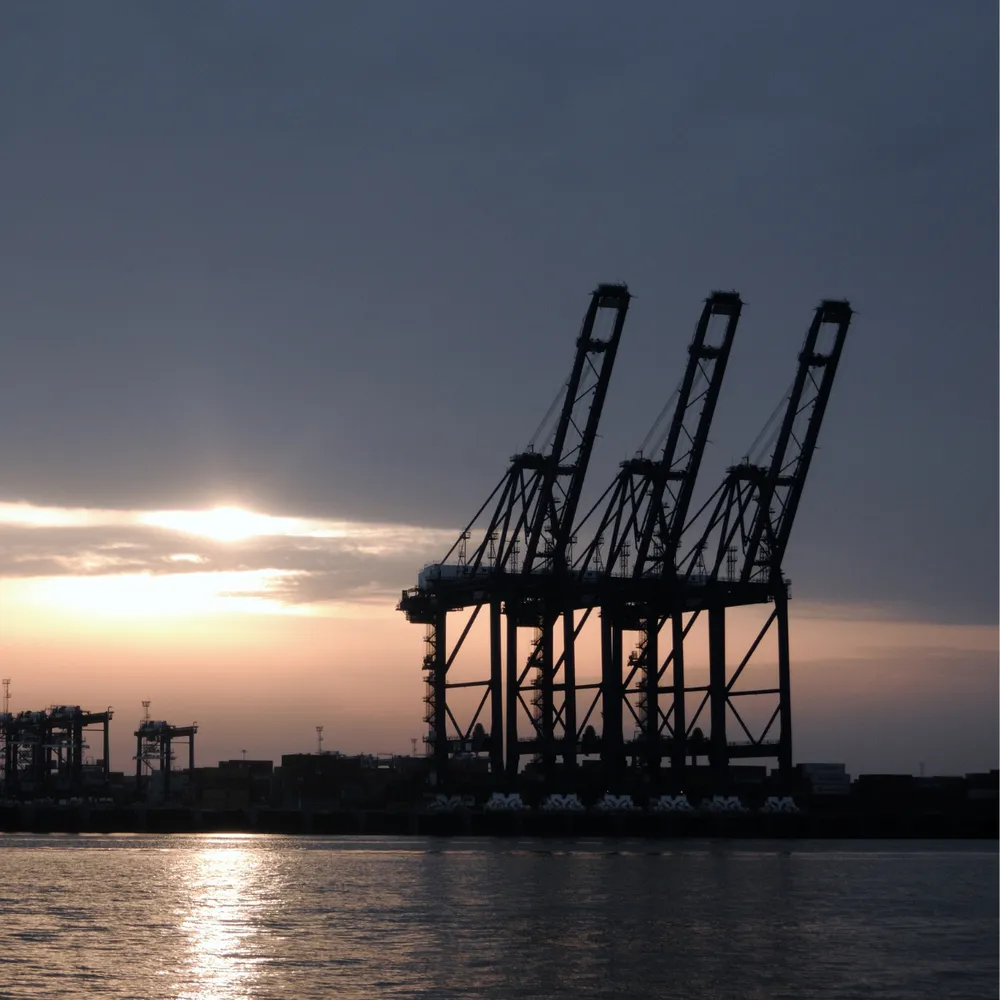
Felixstowe handles more containers than any other British port — a machine of straddle carriers, cranes and shuttle lorries that never switches off. Workwear here is about being seen by plant operators forty feet up, staying functional through a North Sea night shift, and lasting in salt air that ages kit faster than work does.
The local economy
The port is the town's economy: quay cranes and straddle-carrier fleets working the deep-sea berths, engineering teams maintaining them, gate operations processing thousands of lorry movements a day, and the haulage and freight-forwarding businesses that cluster around any gateway. Rail terminals move a growing share inland. Beyond the fence, Suffolk adds agriculture, food businesses and the trades of the surrounding towns — but the wardrobe conversation starts and ends with working safely around very large moving machines in open weather.
Kit by role
| Role | The kit that matters | The spec detail |
|---|---|---|
| Quayside & yard operations | Class 3 hi-vis, all-weather layers | Why the top class among plant |
| Crane & plant engineering | Fitted kit, harness-compatible layers, gloves | Work-at-height rules; EN 388 for wire and steel |
| Gate & checkpoint staff | Hi-vis with weather protection, thermals | Standing outdoors, every season — base layers earn it |
| Haulage & shunting | Hi-vis, gloves for twist-locks and straps | Cut and impact protection for container furniture |
| Reefer & engineering shops | Layered kit, insulated gloves | Chilled plant work — the cold ratings |
The detail that matters
Port kit fails differently: the North Sea's salt spray and near-constant wind fade fluorescent fabric and corrode fittings faster than inland wear ever would, and hi-vis that has quietly dropped below its class is the most dangerous garment on the quay because everyone still trusts it. The discipline is scheduled inspection — colour and tape checks on a calendar, not on a feeling — and buying garments whose zips and poppers are plastic or coated rather than bare metal.
The other local reality is shift weather: a 2am winter gate shift and a July afternoon on the same roster. That argues for the layering logic in our jacket guide — waterproof shell sized over insulating layers that come and go — rather than one garment asked to do every season.
Supply
Questions
Class 3 is the working default on quaysides and container yards — the environment pairs fast internal roads with plant operators viewing the ground from height, and maximum conspicuity is the point. Individual terminals publish their own PPE standards; expect Class 3 with long sleeves as the norm.
Salt and UV fade fluorescent dyes faster than inland use, and salt corrodes bare-metal zips and fittings. Coastal and port garments should be bought with coated or plastic furniture and inspected on a schedule, because a faded Class 3 garment no longer delivers Class 3 visibility whatever its label says.
Yes — driver and shunter kit (hi-vis, gloves rated for twist-locks and strapping, weather layers) ships nationwide from stock, embroidered per firm, with rotation quantities for round-the-clock operations on a single trade account.
We supply nationwide from stock — send the roles and headcount and we'll come back with a kit list, embroidered.