Area guide · Doncaster
Doncaster has been a railway town since the Flying Scotsman was built here, and it never stopped: rolling-stock engineering, refurbishment and component work still cluster round the works. The other half of the modern town is measured in warehouse miles — some of the UK's largest logistics parks sit off the M18 — and the two halves wear completely different kit.
The local economy
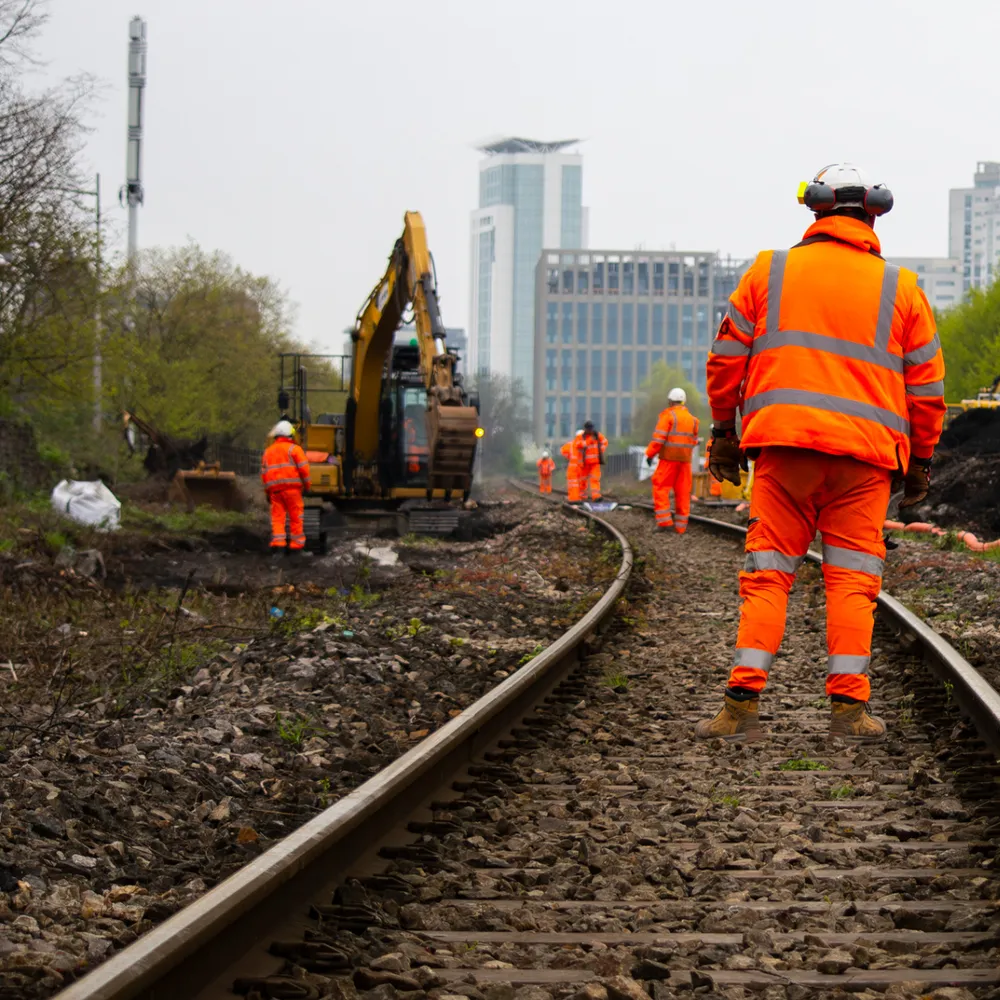
The rail cluster is the heritage that kept working: rolling-stock overhaul, bogie and component engineering, signalling firms and trackwork contractors, with a college training the next generation of rail engineers in the town that built locomotives for a century. The logistics economy is the new giant — iPort alone is one of the country's largest rail-connected distribution parks, and the M18/A1(M) corridor is lined with fulfilment and 3PL sheds, many with cold-chain sections. Around both: construction, civils and the trades of a growing town.
Kit by industry
| Local industry | The kit that matters | The spec detail |
|---|---|---|
| Rail engineering & trackside | Orange hi-vis to rail spec | RIS-3279-TOM — why rail is orange |
| Depot & rolling-stock work | Coveralls, cut gloves, S3 boots | Depot ≠ trackside — where the line sits |
| Logistics & fulfilment | Hi-vis, S1P trainers, layered kit | Kit by zone, dock door to pick tower |
| Cold-chain sections | EN 342 rated jackets and trousers | The cold ratings decoded |
| Construction & civils | Class 2–3 hi-vis, helmets | The site baseline |
The detail that matters
Doncaster is the clearest place in Yorkshire to see the orange/yellow split work in real life. On Network Rail infrastructure the hi-vis is rail-spec orange — a deliberate contrast against signalling colours, specified down to the garment standard — while a mile away the logistics parks run yellow, because sheds and yards follow the general convention. A contractor moving between both needs both, and mixing them up is the fastest way to fail a rail induction.
Inside the sheds, the kit question is zones: ambient picking, chilled sections, freezer rooms and yard work each carry their own list — the logistics guide maps it, and EN 342 covers the cold end.
Supply
Questions
UK rail standardised on high-visibility orange (currently specified through RIS-3279-TOM) because it contrasts reliably against railway signalling and the trackside environment. Yellow garments — whatever their EN ISO 20471 class — don't meet the rail requirement, so trackside crews wear orange without exception.
By zone: breathable layers and S1P safety trainers for ambient picking, added thermals in chilled areas, EN 342-rated suits for freezer sections, and hi-vis with warmer outer layers for yard and dock-door work. One person can cross all four zones in a shift, which is why layering beats one heavy jacket.
Yes — rail-spec orange and conventional yellow hi-vis ship from the same stock, alongside the full warehouse list. Contractors who work both environments typically hold both on one trade account, embroidered to match.
We supply nationwide from stock — send the roles and headcount and we'll come back with a kit list, embroidered.