iNeedWorkwear
Areas hub / Peterborough

Area guide · Peterborough

Workwear in Peterborough: engines, food and fen freight.

Peterborough's industry is old-fashioned in the best sense: it makes engines, processes food and moves freight. Diesel power has been machined here for a century, the fens deliver produce that gets packed and processed at scale, and the A1(M) lined itself with sheds. Three trades, three kit lists, one town.
100 yrs
Of engine building
Rotation
Oily coveralls washed on schedule
Fen food
Produce packed under audit
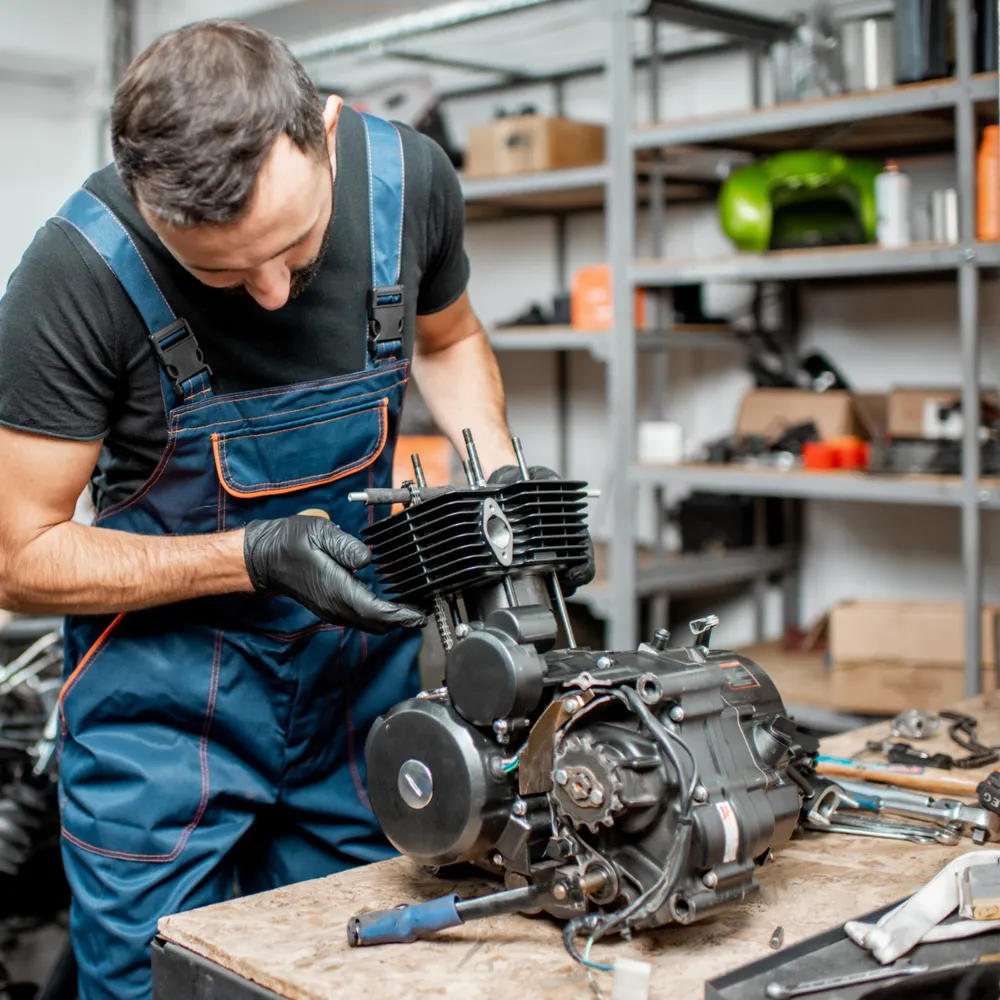
Engineer in bib and brace working on an engine
Kit matched to the local economy Standards named, not implied Fast nationwide supply Embroidery & trade accounts

The local economy

What Peterborough actually makes

Engine and power-systems manufacture anchors the engineering base — large diesel and generator production with the machining, test cells and supply chain that entails — alongside a broad mix of metalworking and equipment firms. Food is the second pillar: the surrounding fenland is Britain's vegetable garden, and Peterborough packs, processes and distributes it, with bakeries and prepared-food plants in the mix. The third is logistics — parcel and retail distribution off the A1(M) — plus a construction sector servicing one of England's faster-growing cities.

Kit by industry

The Peterborough kit map

Local industryThe kit that mattersThe spec detail
Engine manufacture & testCoveralls in rotation, hearing protectionOil-day laundering — rotation beats saturation
Machining & fabricationFitted kit, cut gloves, S1P/S3 footwearEN 388 letters
Food processing & packingHygiene garments, wellingtons, snoodsThe audit wardrobe
DistributionHi-vis, trainers, chilled-section layersKit by zone
ConstructionClass 2 hi-vis, helmets, S3 bootsThe baseline

The detail that matters

Test cells and pack houses share one rule: rotation

An engine works and a vegetable pack house look like different planets and buy workwear on the same principle: garments cycle through wash on a schedule, so each person needs enough sets that the schedule holds. On the engineering side the enemy is oil saturation — a coverall wears out chemically long before it wears out physically, and the laundering routine only works if a clean one is always hanging ready. On the food side the driver is audit compliance: fresh hygiene kit per shift, managed laundering, and colour or condition rules that make a tired garment a finding, not a fashion issue.

Both resolve to the same purchase maths — our quantity calculator does the sets-per-person sum that stops rotation collapsing into re-wearing.

Supply

How we supply Peterborough

Rotation maths
Sets-per-person calculated before the order
From stock
Coveralls, hygiene kit and hi-vis express
Trade accounts
Works and pack houses on rolling supply

Questions

Peterborough kit FAQ

How many coveralls does an engine fitter need?

Enough that a clean one is always available while others are in the wash — typically four to five sets on a weekly wash cycle, more where oil exposure is daily and heavy. Once a coverall stays stiff and dark after proper hot washing, it's saturated and due for replacement, not sympathy.

What do food packing staff wear?

Company-provided hygiene garments (typically pocket-free above the waist, press-stud closures), hair coverage, dedicated footwear — wellingtons or washable safety shoes — with laundering managed rather than done at home in higher-risk areas. The site's certification scheme sets the exact rules.

Do you supply Peterborough businesses directly?

Nationwide from stock, express — coverall rotation programmes, hygiene garment matrices and shed kit all run through one trade account with embroidery before dispatch.

Kitting a team out here?

We supply nationwide from stock — send the roles and headcount and we'll come back with a kit list, embroidered.