iNeedWorkwear
All guides / Answers

Answer page · Safety footwear

Steel toe myths: the folklore audit.

No item of PPE carries more folklore than the steel toe cap: it'll guillotine your toes, it's useless after one knock, composite versions shatter like biscuits. Most of it traces to one debunked TV segment and decades of canteen repetition. Here's the folklore, audited against how caps are actually tested and behave.

200 J
The impact both steel and composite pass
Myth #1
The guillotine legend
Verdict
Wear the boots
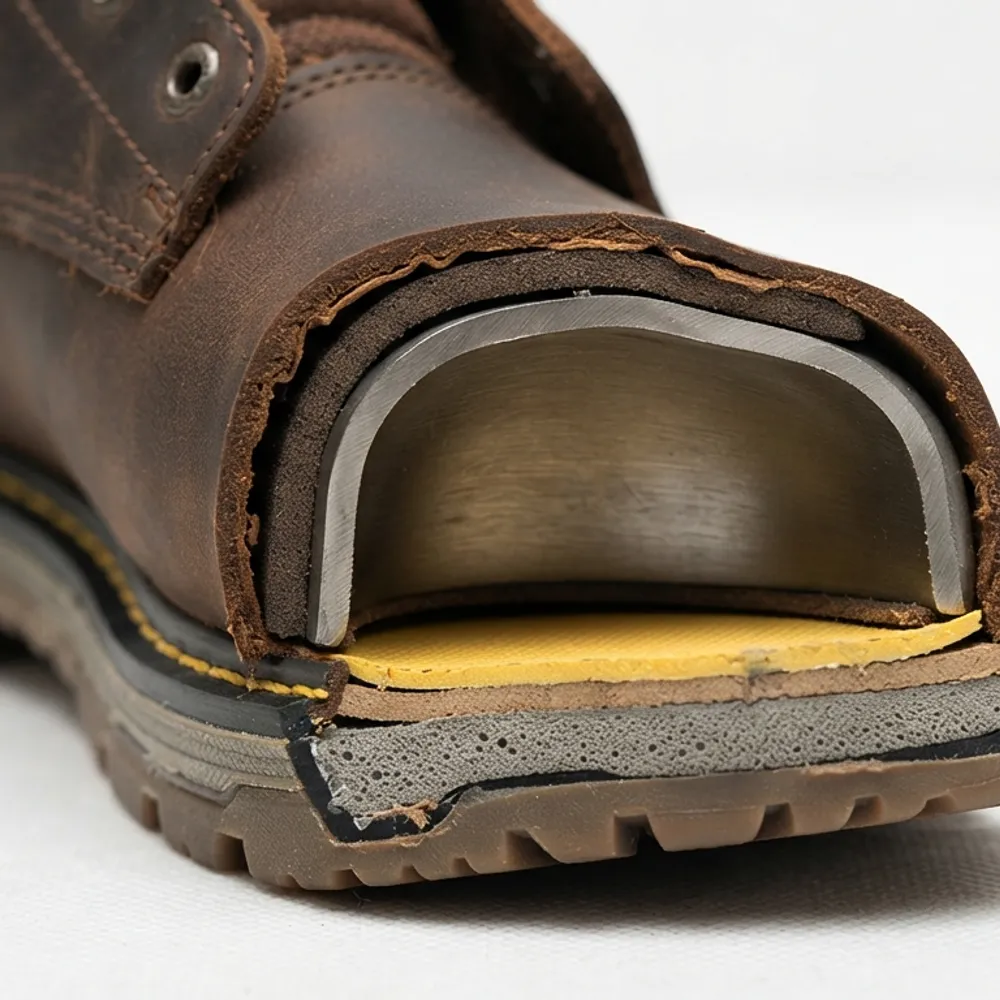
Cross-section of a safety boot showing the steel toe cap and midsole
Honest trade-offs, not sales copy Standards cited where they apply Both options usually in stock Trade accounts

The audit

Four myths, examined

Myth 1: 'A heavy impact folds the cap and guillotines your toes.' The famous TV test used loads far beyond the certified range on unsupported caps. Within and well beyond the 200-joule test regime, caps deform progressively while preserving clearance — and decades of injury data show crush outcomes with protection are consistently better than without. If a load is big enough to defeat a cap, it was big enough to pulp an unprotected foot long before.

Myth 2: 'Once it's taken a knock, it's weakened.' Half true, badly told. Everyday knocks and scuffs don't consume a steel cap. A serious impact — the kind you remember — can deform either material (and composite can be damaged invisibly), which is why the rule is: after a significant impact, replace the footwear. Not because caps are fragile; because they're single-event insurance at the extremes.

Myth 3: 'Composite caps are weaker.' Same 200 J certification, same test rig — see the full comparison. Composite is bulkier for the same rating and doesn't dent visibly; steel is slimmer and conducts cold. Neither is the weak one.

Myth 4: 'Steel caps freeze your toes / set off every detector.' Both contain truth worth acting on rather than fearing: steel does conduct heat away in cold-store and winter work (insulated linings or composite solve it), and steel does trigger security archways (why airside crews buy metal-free). Facts, not reasons to skip protection.
The keepers

What survives the audit

Replace after a big one
A memorable impact retires the boot — deformation can be invisible, especially in composite
Fit prevents more
Most 'cap injuries' are rubbing from bad fit — toes shouldn't touch the cap, ever
The cap can't do it alone
Midsoles, grip and <a href='safety-footwear-2022-update.html'>the rest of the code</a> stop the injuries caps can't

Questions

Toe cap FAQ

Can a steel toe cap cut your toes off?

The guillotine legend traces to demonstrations using loads far beyond certified ranges on unsupported caps. Within realistic impacts, caps deform progressively and preserve clearance — injury data consistently favours wearing them. A load huge enough to defeat a cap would have destroyed an unprotected foot regardless.

Do safety boots need replacing after an impact?

After a significant impact, yes — the cap may be deformed (visibly in steel, sometimes invisibly in composite) and its protective geometry spent. Everyday knocks and scuffs don't consume the protection; the memorable drop does.

Are composite toe caps as strong as steel?

They certify to the same 200-joule impact and 15 kN compression tests. Composite builds bulkier for the rating, doesn't conduct cold and clears metal detectors; steel builds slimmer and dents visibly when damaged. Strength isn't the difference — the side properties are.

Decision made?

Both sides of every comparison are one click away — or ask a human to settle it for your team.