iNeedWorkwear
All guides / Comparisons

Comparison · Respiratory protection

FFP2 vs FFP3: the difference that matters.

FFP2 filters at least 94% of test particles; FFP3 at least 99%. That five-point gap sounds small and isn't — in protection-factor terms FFP3 is roughly twice the mask, and for the dusts that end careers (silica, hardwood, welding fume) it's the specified answer, not the upgrade option.

94 / 99%
Minimum filtration, FFP2 vs FFP3
APF 10 / 20
The protection factors in use
Fit decides
An unsealed FFP3 is an FFP-nothing
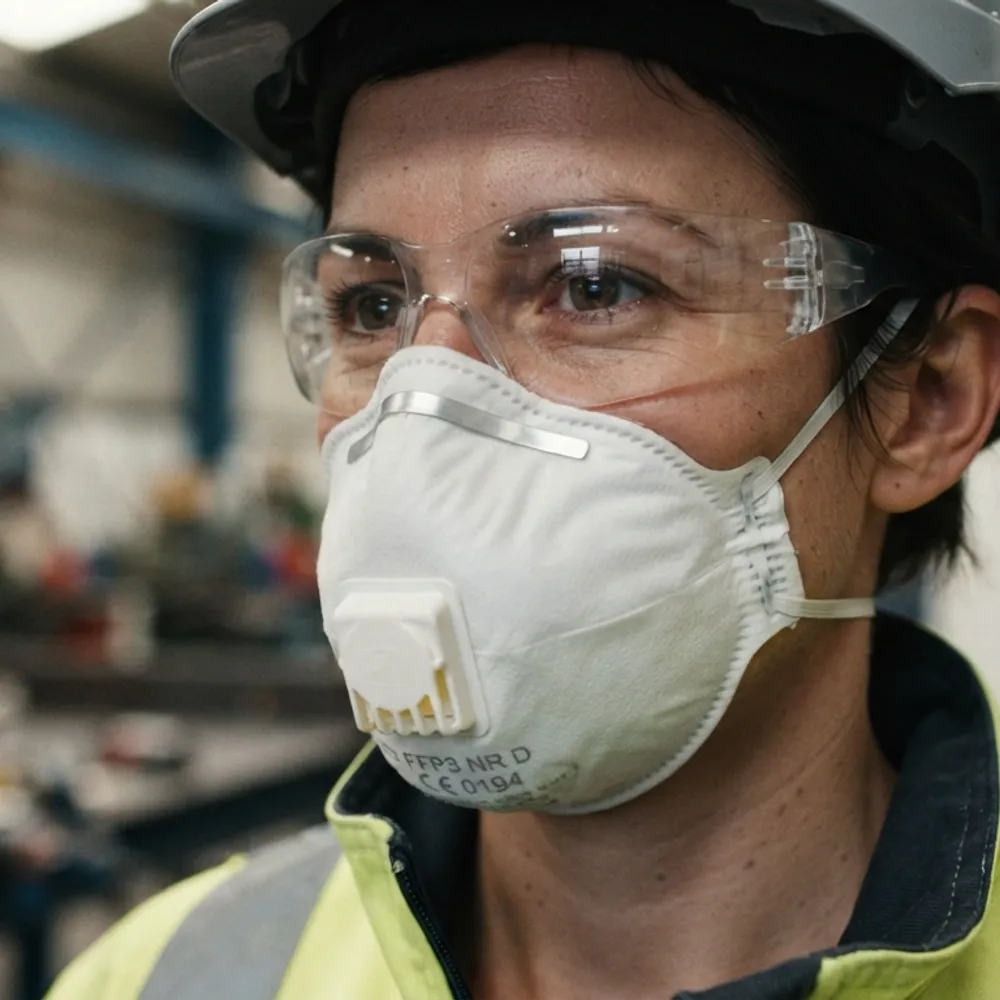
Close-up of a worker wearing a valved FFP3 dust mask and safety glasses
Honest trade-offs, not sales copy Standards cited where they apply Both options usually in stock Trade accounts

The difference

Two numbers, honestly compared

Both are disposable filtering facepieces under EN 149; the rating is filtration efficiency against the standard's test aerosols — FFP2 ≥ 94%, FFP3 ≥ 99% — which translates in UK practice to assigned protection factors of roughly 10 and 20: worn correctly, the air inside carries a tenth or a twentieth of the contaminant outside. The choice is made by the hazard's toxicity, not preference: respirable crystalline silica (concrete cutting, chasing, quarry dust), hardwood dusts (a carcinogen — see the joinery sector guide), and welding fume (now treated as carcinogenic across the board) are FFP3 territory in almost every competent assessment. FFP2 holds the line for general nuisance-to-moderate dusts — plastering finish work, softwood offcuts, general sweeping.

The uncomfortable truth both ratings share: the number assumes a sealed fit. Stubble, the wrong size or a casually-donned mask leaks around the edges, and leakage doesn't care about filter grade — which is why face-fit testing is a legal expectation for tight-fitting RPE at work, and why an FFP2 that fits beats an FFP3 that doesn't.
The decision

Which rating for which dust

HazardRatingWhy
Silica dust (concrete, stone, brick)FFP3Silicosis is dose-driven and irreversible — the assessment will say FFP3
Hardwood dustFFP3Carcinogen — sinonasal cancer risk
Welding fumeFFP3 minimumReclassified carcinogenic; extraction first, RPE with it
Plaster, softwood, general dustsFFP2Moderate-hazard dusts at typical exposures
Composite/GRP sandingFFP3 commonFine respirable fibre — see the Hull composite trades

The caveats

What the rating can't fix

Beards leak
Tight-fitting masks seal on skin — stubble breaks the seal; powered hoods are the bearded answer
Valves
Exhale valves add comfort, filter nothing outbound — relevant where protecting others matters
Single shift
Disposable means disposable — a clogged, creased FFP3 from yesterday's pocket is theatre

Questions

FFP2 vs FFP3 FAQ

Is FFP3 much better than FFP2?

Meaningfully, yes: minimum filtration rises from 94% to 99%, and the assigned protection factor doubles from about 10 to 20. For carcinogenic and high-toxicity dusts — silica, hardwood, welding fume — FFP3 is the specified rating, not a luxury upgrade.

When is FFP3 required?

Whenever the risk assessment's exposure maths demands a protection factor of 20 — in practice, silica-generating tasks (cutting concrete, stone, brick), hardwood dust, welding fume and similar high-hazard aerosols. The assessment and any trade guidance name it; extraction and wet-cutting still come first in the control hierarchy.

Does an FFP3 mask work with a beard?

No — FFP masks are tight-fitting and seal against skin, and even heavy stubble leaks enough to undo the rating. Facial hair points to loose-fitting powered RPE (hoods) instead. For clean-shaven wearers, face-fit testing verifies the seal the rating depends on.

Decision made?

Both sides of every comparison are one click away — or ask a human to settle it for your team.