iNeedWorkwear
Roles hub / Marshals

Role guide · Traffic marshalling

What traffic marshals actually wear.

Every other trade wears hi-vis so vehicles notice them incidentally; a marshal's entire job is to be seen and understood by drivers, in every light and weather, for a full static shift. That flips the kit priorities: visibility is the tool of the trade, and cold is the occupational hazard.

Class 3
The uniform, not the accessory
Static
Cold is the daily adversary
Signals
Hands must read at distance
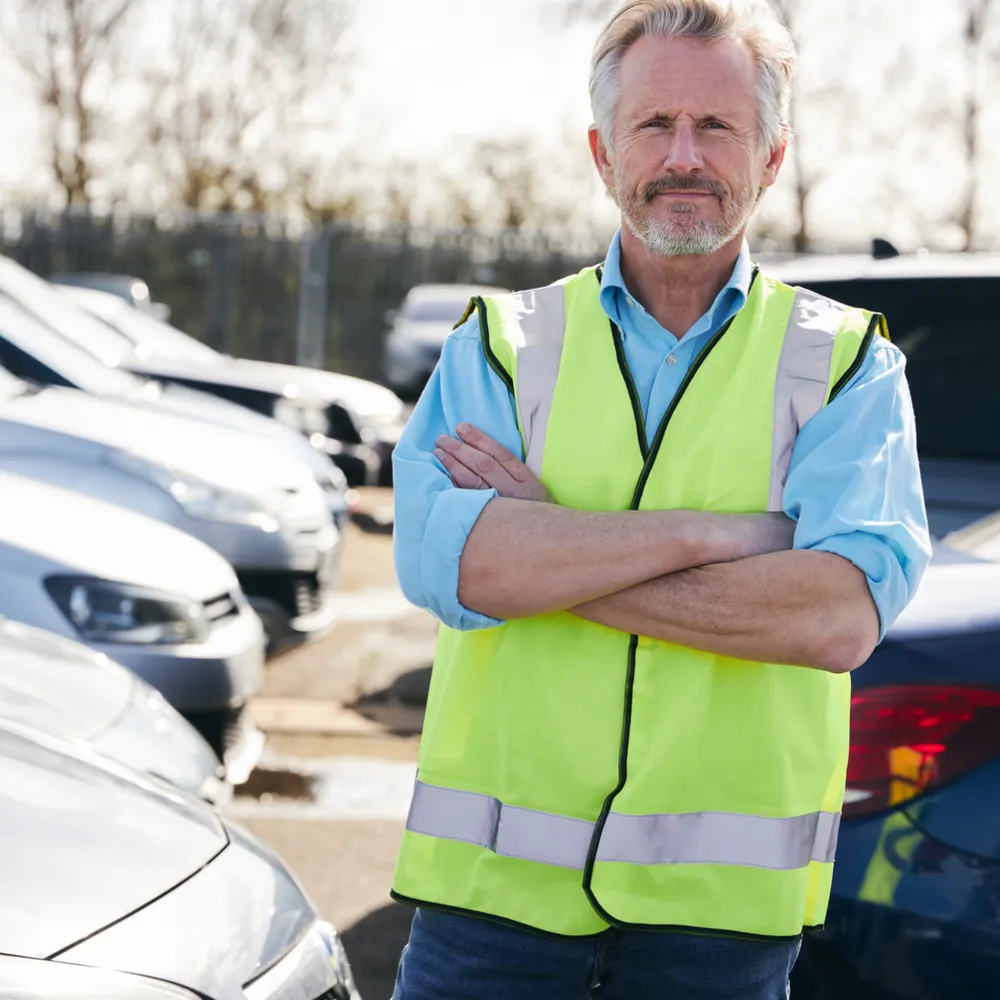
Parking marshal in a yellow hi-vis vest standing between parked cars
Written from the job backwards Standards named per item Stocked and embroidered Trade accounts

The job

Visibility as the core competency

The hi-vis is the working uniform: Class 3 — full sleeves, maximum certified area — as the default, in jacket-and-trouser combinations for winter and breathable class-compliant options for summer, kept genuinely fluorescent: a marshal in faded kit is a safety system with a flat battery, and this is the one role where the daylight comparison test should run monthly. Night and wet work is the real exam: retroreflective tape does the work in headlights, so tape condition matters as much as colour, and waterproof EN 343 hi-vis keeps the certified layer outermost — a plain raincoat over hi-vis deletes the hi-vis.

The static-cold problem is the banksman's tax: generating no work heat while standing on a gate or beside a lift for hours puts this role closer to cold-store logic than to the trades around it — serious insulated layering, insulated boots (standing still is what freezes feet), and rotation or shelter built into the task plan. Hands must read at distance: gloves in hi-vis or contrasting colours make signals legible to a crane operator or reversing driver — a real spec, not a gimmick — and EN 511 warmth keeps them out of pockets. Training (vehicle banksman, plant marshalling, traffic management tickets) governs the role itself; the orange-lid convention marks slinger-signallers where lifting is the game.
The list

The marshal's kit map

ItemThe specWhy
Hi-visClass 3, two-piece winter, tape checked monthlyVisibility IS the job description
WaterproofsEN 343 in certified hi-visCover-ups must not bury the class
Layers & bootsStatic-cold insulation, warm footwearNo work heat for a whole shift
GlovesHi-vis/contrast colour, EN 511Signals must read at 50 metres
Role kitPer training ticket and site systemBatons, radios and paddles are site-issued

Questions

Marshal FAQ

What hi-vis does a traffic marshal need?

Class 3 as the working standard — full-sleeve, maximum certified area — kept genuinely bright and with intact tape, because the role depends entirely on being seen in headlights, rain and dusk. Winter runs jacket-and-trouser certified combinations; summer uses lighter class-compliant garments rather than dropping class.

How do banksmen stay warm standing all day?

Like cold-store workers: serious insulated layering (base, mid, insulated outer), insulated footwear — standing still is what defeats ordinary boots — warm EN 511 gloves, head coverage under the helmet, and task rotation or shelter in the plan. Static roles generate no work heat; the kit must supply all of it.

Why do marshals wear brightly coloured gloves?

So hand signals read at distance — crane operators and reversing drivers follow the hands, and hi-vis or contrast gloves make the signals legible in poor light. It's a genuine piece of the communication system, alongside training and agreed signal codes.

Kit the crew.

Everything in this guide is stocked, embroiderable and priced for teams — send the headcount.