Role guide · Butchery
Butchery is the trade where cut protection stops being a rating and becomes chainmail: a boning knife works millimetres from the free hand all day, and the kit list is built around that fact — then wrapped in food-hygiene whites and taken into a cold room.

The job
The blade side: boning and breaking work puts the knife against the free hand constantly, and the trade's answer predates every modern standard — chainmail (metal mesh) gloves on the non-knife hand and chainmail or heavy-duty aprons where boning is close and fast. Modern cut-resistant fabric gloves (ISO 13997 level D–F) supplement for slicing and prep tasks where mesh is too much — but for boning proper, mesh remains the specification in most cutting plants, because a slip that a fabric glove slows, mesh stops.
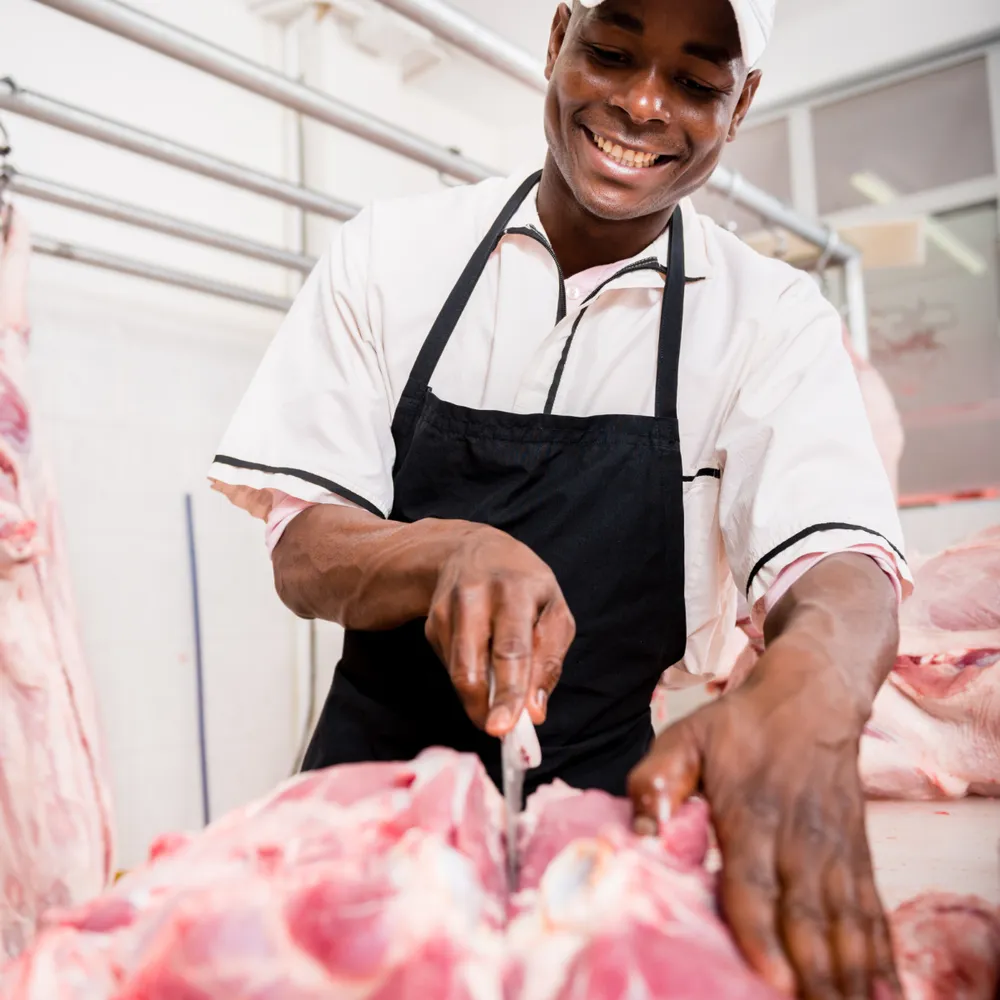
The hygiene side is the food-audit wardrobe: whites (jacket or coat, trousers, apron) that are boil-washable and changed per session, hair coverage, and waterproof aprons over the top for wet work — with the counter trade adding a customer-facing version (butcher's stripes exist because retail butchery is theatre as well as trade). The cold side: cutting rooms run at chill temperatures all shift, so thermal base layers under whites and insulated options for the walk-in freezer (the cold ratings) keep hands and core working. Footwear is S4 hygiene wellingtons or washable slip-rated safety shoes — floors mix water, fat and washdown chemistry.
The list
| Item | The spec | Why |
|---|---|---|
| Chainmail glove (free hand) | Metal mesh, correct size | Boning's non-negotiable — mesh stops what fabric slows |
| Cut-resistant gloves | ISO 13997 D–F for prep | The letters for non-boning tasks |
| Whites & aprons | Boil-washable, waterproof apron over | The whites laundering logic applies |
| Thermal base layers | Under whites for the cutting room | Chill temperatures are all-shift, not occasional |
| Footwear | S4 wellingtons / washable slip-rated | Fat + water + washdown = the slip trifecta |
Questions
A chainmail (metal mesh) glove on the free hand for boning and breaking — the trade standard, because mesh stops a slipped blade outright — with modern cut-resistant fabric gloves (ISO 13997 level D and up) for slicing and prep tasks. Glove hygiene rules apply: washed and sanitised like any food-contact equipment.
Tradition with a function: the butcher's stripe made the retail trade recognisable and hid the working day between washes better than plain white. In cutting rooms the practical layer is a waterproof apron over hygiene whites; the stripes survive out front where customers are part of the job.
Thermal base layers under their whites for chill-temperature cutting rooms, with insulated jackets (EN 342-rated for freezer work) for walk-in time. Cold hands lose knife control, so thin thermal liners compatible with hygiene gloves matter more than bulk.
Everything in this guide is stocked, embroiderable and priced for teams — send the headcount.