Answer page · Hi-vis lifespan
There's no expiry date sewn into a hi-vis vest — but there is a wash-count on the label, a fade test anyone can do in daylight, and a set of use patterns that stretch identical garments from three months of life to three years. Here's how the lifespan question actually resolves.

The answer
Clock one: the wash count. Hi-vis labels state a maximum number of wash cycles (commonly 25, often 50 on better garments) — the point up to which the fluorescent dye and retroreflective tape are warranted to keep certified performance if washed correctly (the washing rules). Nobody counts domestic washes, which is why the second clock matters more.
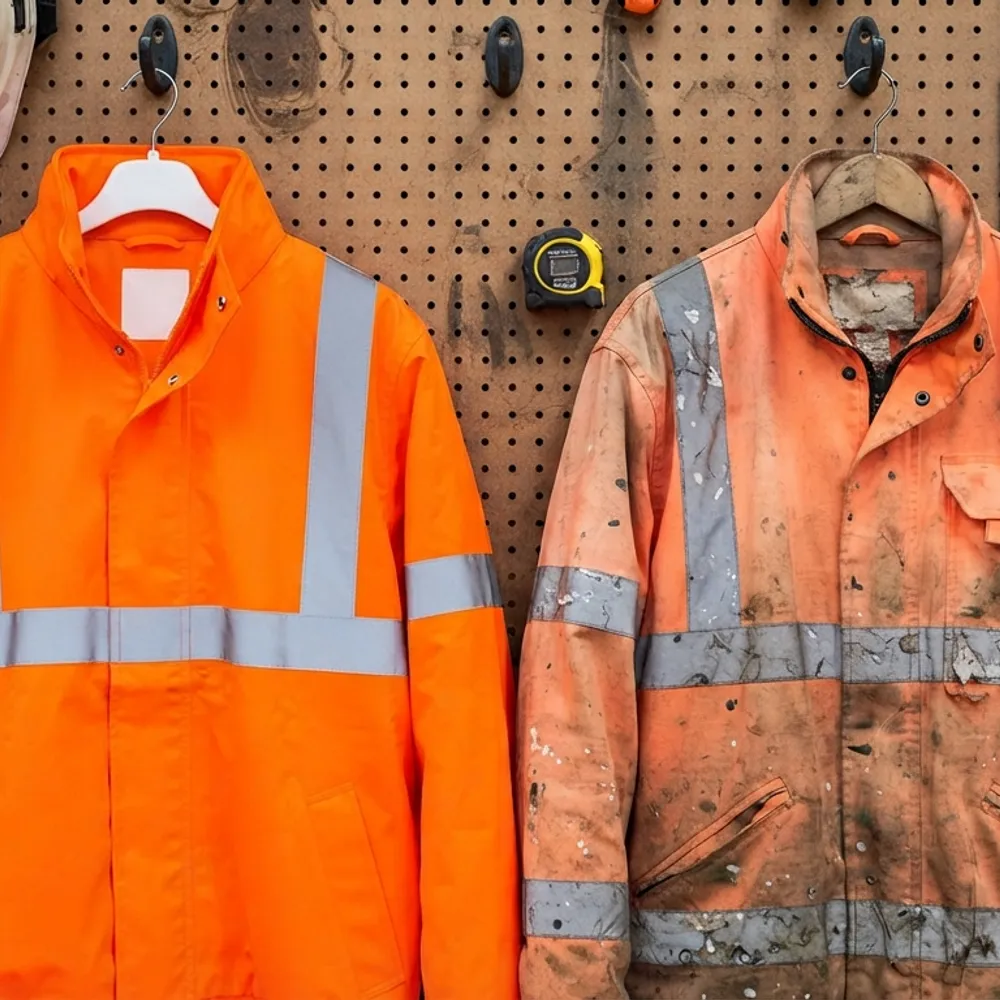
Clock two: visible condition. Fluorescence fades toward ordinary yellow-green (hold it beside a new garment in daylight — the difference announces itself), tape greys, cracks or delaminates at the flex lines, and soiling that washing won't lift kills both properties at once. Any of those means the garment no longer delivers its class, whatever its age. Clock three: exposure. UV is the ager — a garment worn daily outdoors (or stored on a van shelf) fades in months; the same garment on occasional indoor duty lasts years; coastal salt air accelerates everything. The honest answer to 'how long': daily outdoor wear, expect 6–12 months; occasional use, 2–3 years; and the daylight comparison overrules both.
The checks
| Check | Fail looks like |
|---|---|
| Colour vs new (daylight) | Washed-out, ordinary-looking yellow — the fluorescence is gone |
| Tape condition | Grey, cracked, peeling at flex points — or dull under headlights |
| Soiling | Ground-in grime the wash can't lift, especially across tape |
| Damage | Tears, burns or repairs through fluorescent area or tape |
| Label | Wash count exceeded, or label illegible (traceability gone) |
Questions
On condition, not calendar: daily outdoor wearers typically get 6–12 months before fade or tape wear retires a garment; occasional users can see years. The reliable test is comparing against a new garment in daylight — visible fade means the certified performance is gone.
The maximum number of care-label washes for which the maker warrants certified performance — commonly 25 to 50. Beyond it (or after incorrect washing: hot cycles, tumble heat) the fluorescent dye and tape can no longer be assumed to meet the class, however intact the garment looks.
Yes — UV exposure is the main ager of fluorescent dye, working on the garment whether it's being worn or parked on a van's rear shelf. Store hi-vis out of sunlight, wash it cool, line-dry it, and it keeps its class for the full wash-count instead of dying early.
When care can't bring a garment back to compliance, replace it — certified hi-vis and weatherproofs from stock, with embroidery for teams.