iNeedWorkwear
Roles hub / HVAC

Role guide · HVAC & refrigeration

What HVAC engineers actually wear.

HVAC engineering spans more temperature than any other trade — brazing at over 600°C before lunch, handling suction lines that frost the skin after it — in workplaces that alternate between plant rooms, rooftops, ceiling voids and someone's reception area. The kit list runs hot, cold and presentable at once.

600 °C+
Brazing on the same day as…
−40 °C
…refrigerant cold burns
4 places
Plant room, roof, void, reception
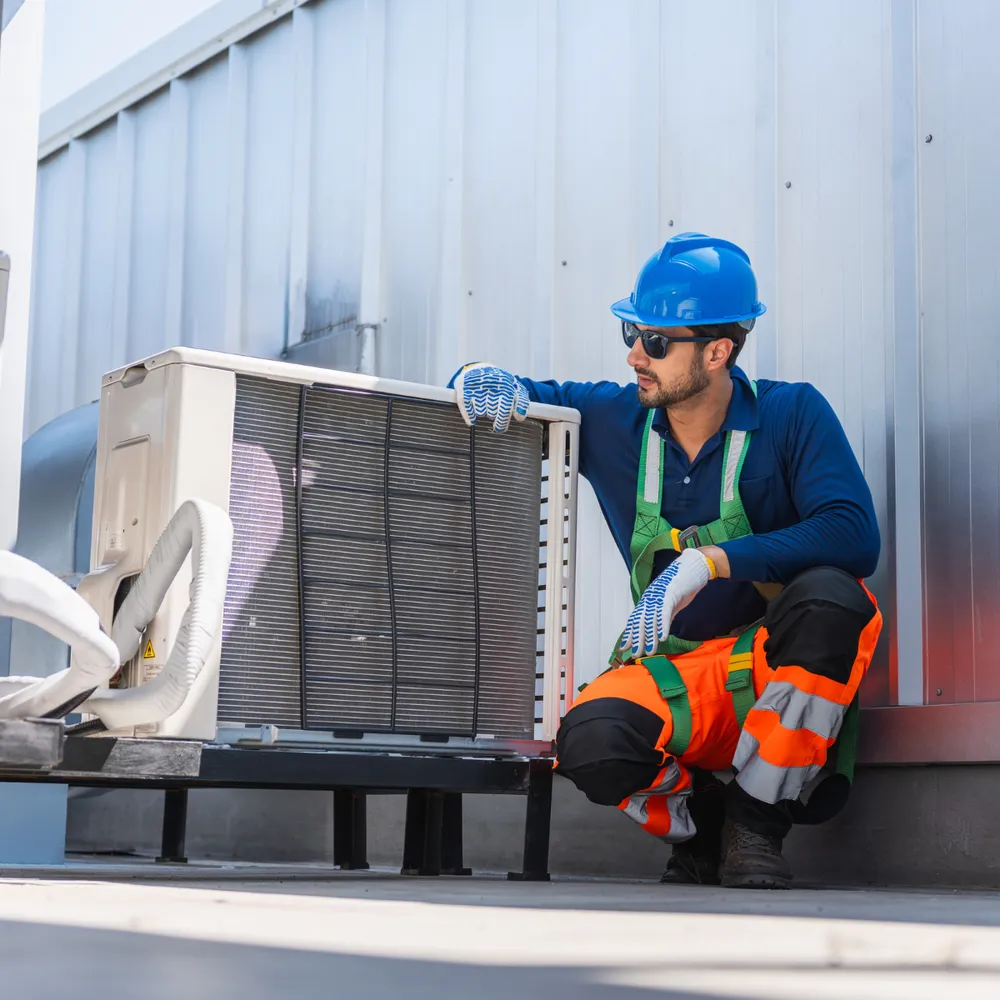
HVAC engineer in hi-vis trousers and safety helmet servicing a rooftop air-conditioning unit
Written from the job backwards Standards named per item Stocked and embroidered Trade accounts

The job

Hot work, cold work, tight work

The hot end: brazing and soldering pipework is genuine hot work — EN 407 gloves, appropriate eye protection (brazing wants tinted lenses; the flame is bright), natural-fibre or FR-appropriate sleeves per the melt rule, and the hot-work-permit discipline of whatever building you're in. The cold end: liquid refrigerant and bare suction lines cause instant cold burns — insulated gloves for charging and recovery, eye protection against spray (a venting valve is a freeze-spray accident), and the F-Gas handling rules that govern the work itself. Deep-freeze plant work borrows the cold-store logic outright.

The places in between shape the everyday kit: stretch trousers with knee protection for ceiling voids and crawl spaces, a bump cap where ducts and steels live at head height, S1P/S3 footwear per site, and rooftop plant brings hi-vis, weather layers and the building's edge-protection regime. The customer-facing layer completes it: HVAC engineers walk through offices and shops to reach their plant rooms, so the doorstep-professional logic — embroidered polos, presentable softshells — applies the moment the van door opens.
The list

The HVAC kit map

TaskThe kit that mattersThe spec detail
Brazing & hot workEN 407 gloves, tinted eye protection, melt-safe sleevesPlus the building's hot-work permit rules
Refrigerant handlingInsulated gloves, eye protectionCold burns are instant — F-Gas rules govern the task
Voids & crawl spacesKnee protection, bump cap, fitted kitEN 812 territory, exactly
Rooftop plantHi-vis, weather layers, site edge rulesThe forgotten outdoor workplace
Client premisesEmbroidered presentable layer, overshoesThe trade walks through reception to work

Questions

HVAC FAQ

What PPE is needed for brazing?

Heat-rated (EN 407) gloves, eye protection with appropriate shading for the bright flame, non-melting sleeves and clothing, and the venue's hot-work permit controls — fire watch included. It's proper hot work even when it's three joints in a ceiling void.

Can refrigerant burn you?

Yes — cold burns: liquid refrigerant and freshly frosted lines are cold enough to injure skin on contact, and a venting connection sprays. Insulated gloves and eye protection for charging, recovery and any break-into-circuit work are the standing kit, with F-Gas rules governing the task itself.

What do HVAC engineers wear day to day?

Stretch trousers with knee-pad inserts (voids and crawl spaces are the office), embroidered polos or softshells presentable enough for client premises, S1P/S3 footwear per site, a bump cap where services run at head height, and hot/cold task PPE in the van for the day's extremes.

Kit the crew.

Everything in this guide is stocked, embroiderable and priced for teams — send the headcount.