iNeedWorkwear
Roles hub / Tiling

Role guide · Tiling

What tilers actually wear.

Tiling is the trade most literally on its knees — hours per day, every day, on hard floors — which makes knee protection the headline purchase rather than an accessory. Around it: hands that meet sharp edges and wet adhesive constantly, and one genuinely serious moment at the cutting station.

Knees
The career-length consumable
Edges
Cut tile is glass-sharp
The saw
Porcelain dust is silica dust
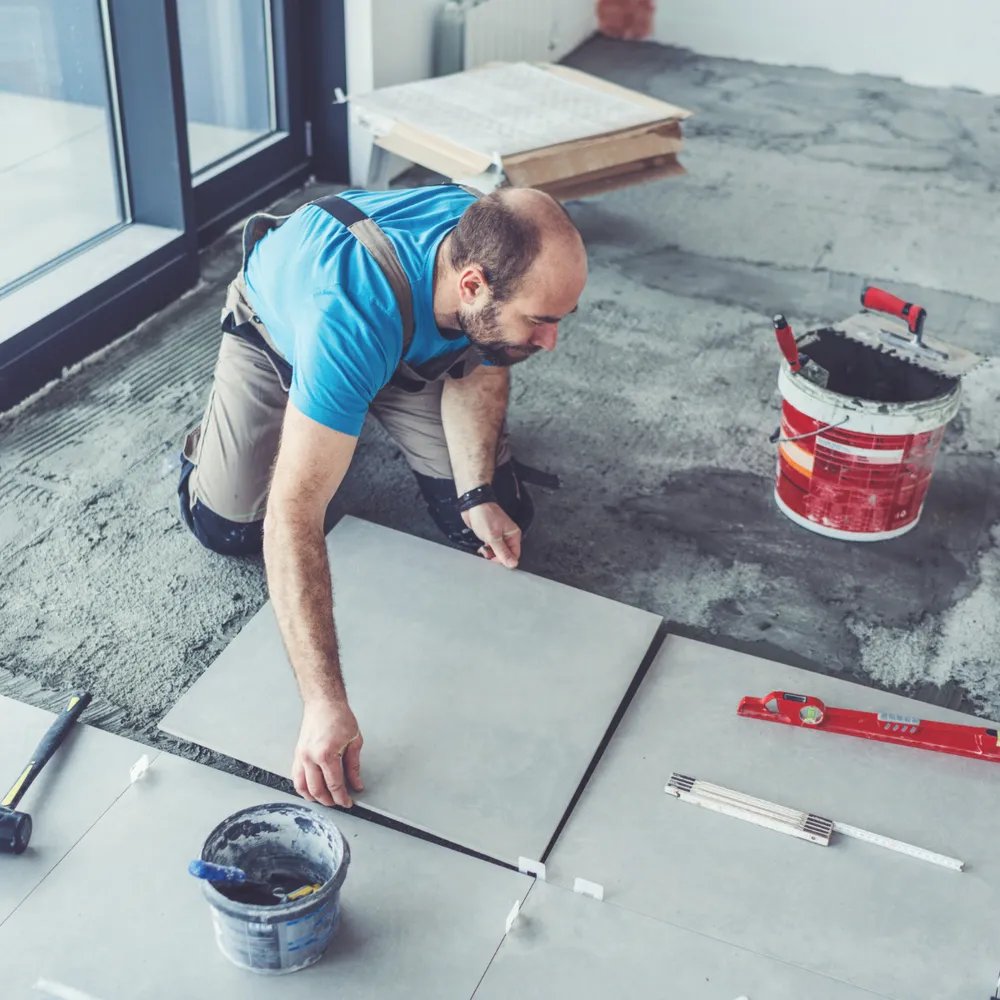
Tiler in bib-and-brace kneeling to lay large floor tiles
Written from the job backwards Standards named per item Stocked and embroidered Trade accounts

The job

Knees first, then hands, then lungs

Knees are the trade's pension question: EN 14404 protection — quality trouser inserts for mobility plus strapped Type 1 pads or a kneeling board for the long floor days — replaced on compression like the consumable it is. Trousers follow the knees: stretch fabric, properly positioned pockets (the leg-length rule matters more here than any trade), holster or cargo per preference for spacers, nippers and pencils.

Hands take two hazards at once: freshly cut tile edges are glass-sharp — cut level B–C for handling and snapping — while cement-based adhesives and grouts are alkaline (nitrile-dipped for the wet work; the cement skin warning applies fully to grout). The wet saw is the serious moment: cutting porcelain and natural stone releases respirable silica — wet cutting suppresses most of it, but dry cutting or grinding demands FFP3 and eye protection without exception, and the smart habit is treating the cutting station as its own PPE zone. Bathrooms and kitchens are finished-home work: overshoes, dust sheets and the occupied-home presentation logic ride along.
The list

The tiler's kit map

ItemThe specWhy
Knee protectionEN 14404 inserts + Type 1 pads for long daysThe defining purchase — replaced on compression
Gloves ×2Cut B–C for edges; nitrile for adhesive & groutTwo hazards, two gloves
RPE at the sawFFP3 for dry cutting/grinding; wet-cut where possiblePorcelain dust is silica dust
TrousersStretch, correct leg length, tool pocketsPad position IS the protection
Eye protectionAt cutting and snappingShards fly exactly at bench height

Questions

Tiling FAQ

What knee pads do tilers use?

Both systems, by task: EN 14404-certified trouser inserts for general mobility, plus strapped Type 1 pads or a kneeling board for long floor-laying sessions. Foam compresses with use — tilers replace inserts like consumables, because compressed foam protects like cardboard.

Do you need a mask for cutting tiles?

Wet cutting suppresses most dust and is the preferred method. Dry cutting or grinding porcelain, ceramic or stone releases respirable crystalline silica and demands FFP3 with eye protection — no exceptions, indoors especially. Treat the cutting station as its own PPE zone.

What gloves for tile adhesive and grout?

Nitrile-dipped gloves — cement-based adhesives and grouts are alkaline and drive dermatitis and burns with prolonged contact, exactly like cement. Swap to cut-resistant gloves (level B–C) when handling and snapping cut tile, whose edges are glass-sharp.

Kit the crew.

Everything in this guide is stocked, embroiderable and priced for teams — send the headcount.