iNeedWorkwear
Roles hub / Glazing

Role guide · Glazing

What glaziers actually wear.

Glass is the material that punishes optimism: a pane that breaks in the hands finds wrists and forearms first, and a dropped unit finds feet. Glazing kit is built backwards from those two facts — maximum meaningful cut protection where glass meets body, and the discipline to keep it on for the 'easy' panes.

Cut D–F
Sheet edges set the glove bar
Forearms
Where breaking glass lands
S3
Dropped units find feet
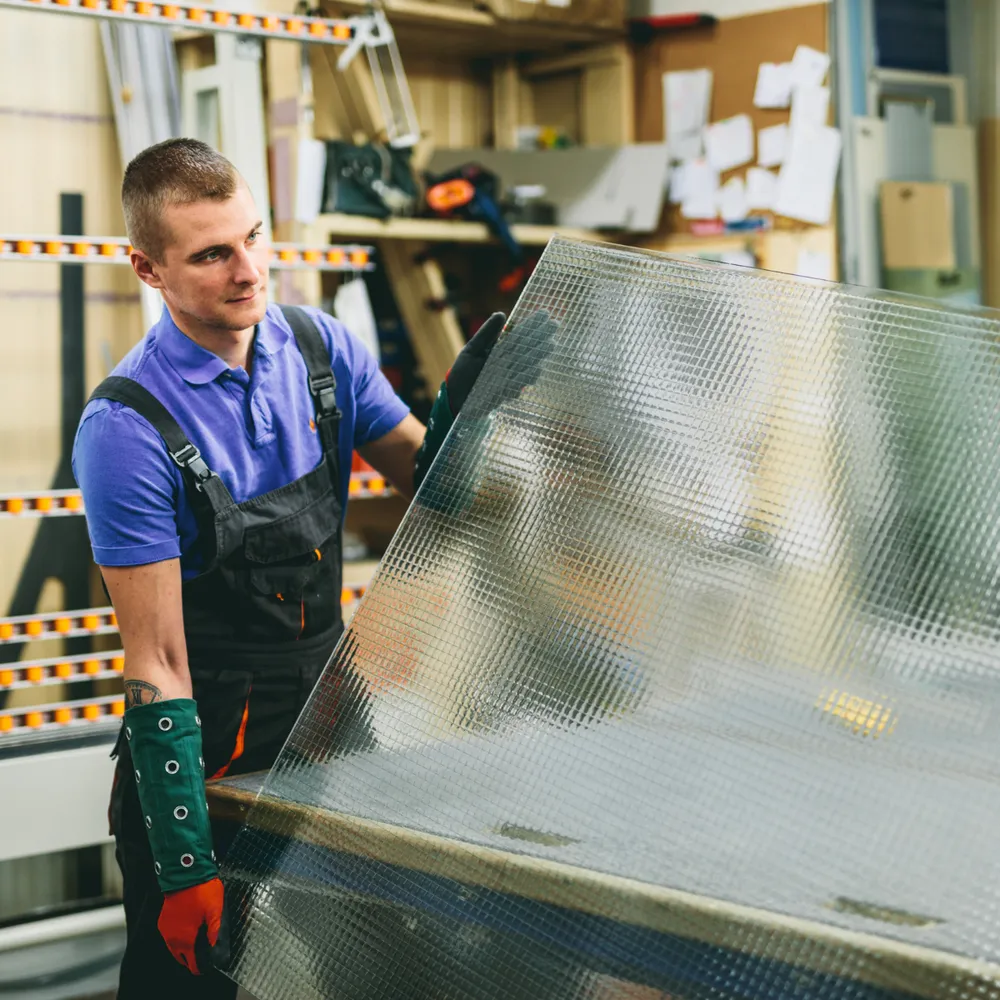
Glazier in a bib apron and protective gauntlets handling a sheet of wired glass
Written from the job backwards Standards named per item Stocked and embroidered Trade accounts

The job

Where glass meets body

Hands and wrists lead: handling sheet and unit glass calls for ISO 13997 cut level D–F gloves with genuine grip (glass is heavy and smooth — the grip is as protective as the cut rating), and the detail the trade learns early: gloves with extended cuffs or separate wrist guards, because a pane that lets go slides down — across exactly the wrist and forearm arteries a short glove exposes. Cut-resistant sleeves earn their place for unit carrying and de-glazing old frames, where shards come off unpredictably.

The rest of the list: S3 footwear (a dropped sealed unit is a guillotine with a postcode — toe protection is not optional in this trade), eye protection for de-glazing and cutting, and fitted kit without snag points that could catch a carried pane. Fitting work adds the trades-in-homes layer — knee protection at cills, overshoes in finished houses — and shopfront and curtain-wall work brings site rules plus the height regime where MEWPs and edges feature. Suction-cup carrying changed the trade's backs but not its gloves: the cups grip the glass, and the glass still breaks.
The list

The glazier's kit map

ItemThe specWhy
GlovesCut D–F, grippy, extended cuffEdges + weight + smoothness, together
Wrist/forearm coverCut-resistant sleeves for units & de-glazingBreaking panes slide down the arms
FootwearS3Dropped units end careers without caps
Eye protectionDe-glazing, cutting, drillingOld putty and shards fly
Fitted kitSnag-free, knee pads for cill workA caught pane is a broken pane

Questions

Glazing FAQ

What gloves do glaziers use?

High cut-rated gloves — ISO 13997 level D to F — with strong grip coatings, ideally with extended cuffs or paired wrist guards, because breaking glass slides down across wrists. Grip matters as much as the rating: most glass injuries start as a slip of a heavy, smooth sheet.

Why do glaziers wear forearm protection?

When a carried pane breaks, the fragments travel down the line of carry — across wrists and forearms where major vessels run close to the surface. Cut-resistant sleeves or gauntlet-cuffed gloves cover the trade's most characteristic serious injury.

Do glaziers need safety boots?

Emphatically — a dropped sealed unit or sheet concentrates a lot of weight into a falling edge, and feet are where it lands. S3 boots (toe cap plus midsole) are the trade's standard, with the midsole earning its keep on renovation sites full of old glass and fixings.

Kit the crew.

Everything in this guide is stocked, embroiderable and priced for teams — send the headcount.