iNeedWorkwear
Sectors hub / Printing

Sector guide · Printing

Printing: ink, solvents and moving rollers.

Print rooms combine hazards that rarely share a roof: rollers that grab loose clothing, solvents that strip skin, presses loud enough for mandatory zones, and guillotines in finishing that have their own safety folklore. The kit list is fitted, nitrile-gloved and bought expecting ink.

Fitted
Rollers grab what hangs loose
Nitrile
Wash-up chemistry, every shift
Zoned
Press floors run at EN 352 levels
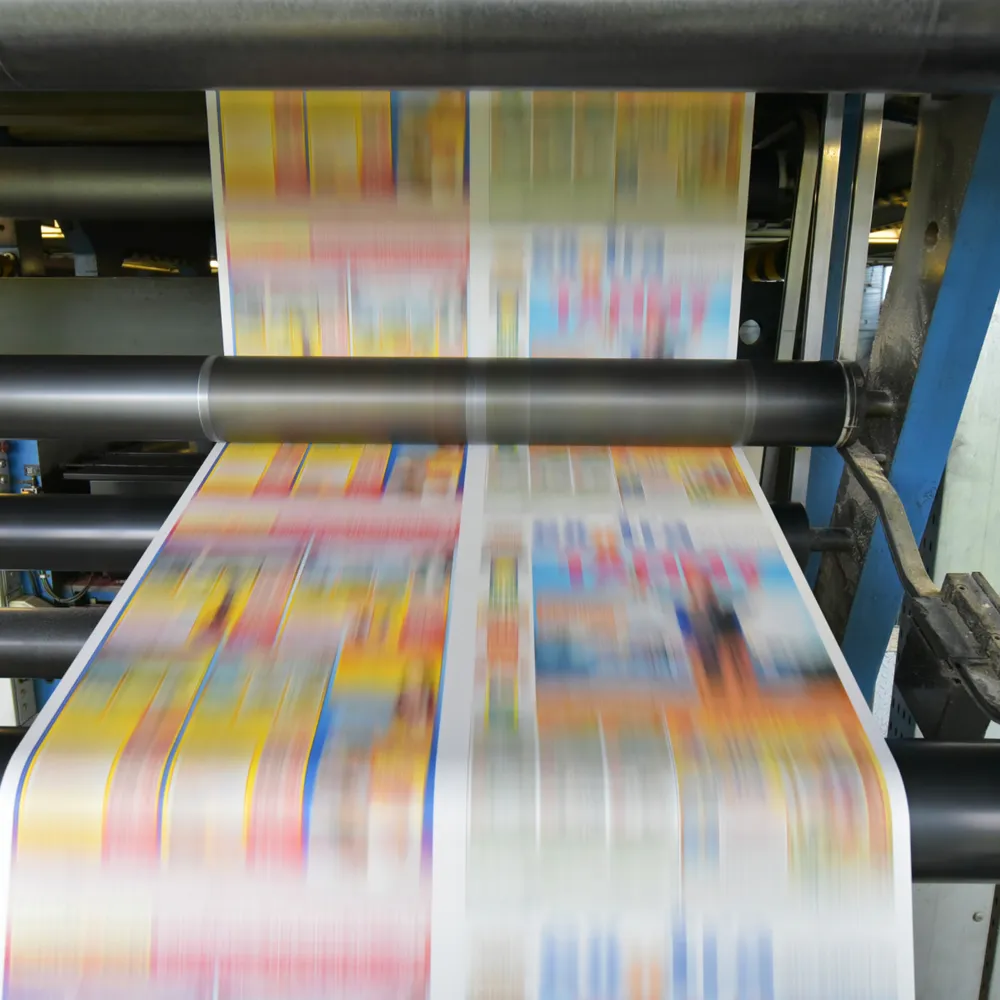
Colour print run moving through the rollers of a web printing press
Sector hazards mapped to standards Kit lists by role, not by catalogue Stocked nationwide Trade accounts

The sector

Around the press, at the wash-up, in finishing

Around running presses the clothing rule is the machine-shop one, intensified: fitted kit, no loose cuffs, no drawcords, no lanyards — web and sheet-fed presses alike pull in what hangs, and nip points don't negotiate. Fitted polos and work trousers beat coveralls-with-flap here; hearing protection follows the zoned logic because press floors routinely cross action levels.

Wash-up and ink handling is the chemical corner: blanket and roller washes are solvent work — nitrile as the daily default with proper rated gloves for the stronger chemistry per COSHH, eye protection at decanting, and the skin-care discipline (barrier cream, washing, moisturising) that keeps dermatitis — printing's occupational disease — off the crew. UV-cure and litho each bring product-specific rules; the data sheet decides. Finishing adds guillotine discipline (two-hand controls do the safety; kit stays snag-free), paper-dust FFP2 where extraction lags, and cut-aware gloves for handling stacked stock — paper edges at ream weight cut like blades. Ink means dark polycotton in rotation: press kit is bought expecting stains, retired on saturation like workshop oil kit.
Kit by area

The print kit map

AreaThe kit that mattersThe spec detail
Press operationFitted polos/trousers, hearing protectionNothing loose near nips — the absolute rule
Wash-up & ink storesNitrile / rated solvent gloves, eye protectionEN ISO 374 per the COSHH sheet
Finishing & guillotinesSnag-free kit, cut-aware glovesReam edges cut; machines do their own guarding
DespatchHi-vis, S1P trainersWarehouse rules at the dock
All press crewDark rotation kit, skin-care regimeDermatitis is the trade disease — prevention is daily

Management notes

What printers get burned by

Skin surveillance
Solvent dermatitis creeps — gloves plus skin checks beat either alone
The fitted rule
One loose cuff near a nip point is the incident report — buy fitted, enforce fitted
Ink economics
Press kit is stained by Tuesday — dark colours, deep rotation, saturation retirement

Questions

Printing FAQ

What gloves do printers use?

Nitrile as the daily default for ink and general wash-up, stepping up to EN ISO 374-rated gloves in the right polymer for stronger solvent work per the COSHH assessment — plus cut-aware gloves in finishing, where stacked paper edges cut like blades. Skin care alongside gloves is what actually keeps dermatitis away.

Why can't you wear loose clothing near a printing press?

Rollers and nip points grab and pull in anything that hangs — sleeves, drawcords, lanyards, cloths tucked in waistbands. Press-floor clothing is fitted with snug cuffs, the same entanglement rule as any rotating machinery, enforced because the consequences are immediate and severe.

Is hearing protection required in print rooms?

Where noise assessments cross the action levels — which busy press floors routinely do — designated zones make hearing protection mandatory under the noise regulations. Muffs or plugs to EN 352, chosen so operators stay aware of machine sounds that signal problems.

Kit the whole operation.

Send the roles and headcount — we'll come back with a kit list per role, embroidered and priced.