iNeedWorkwear
Sectors hub / Demolition

Sector guide · Demolition

Demolition: construction in reverse, dressed harder.

Demolition is construction with the certainties removed: the structure's condition is a survey plus a guess, the dust is whatever the building was hiding, and everything underfoot has nails in it. The kit list is the site baseline with every margin widened — bought knowing the job will destroy it on schedule.

Unknowns
The defining hazard class
FFP3
Mixed dusts get the top rating
Consumable
Kit life is measured in weeks
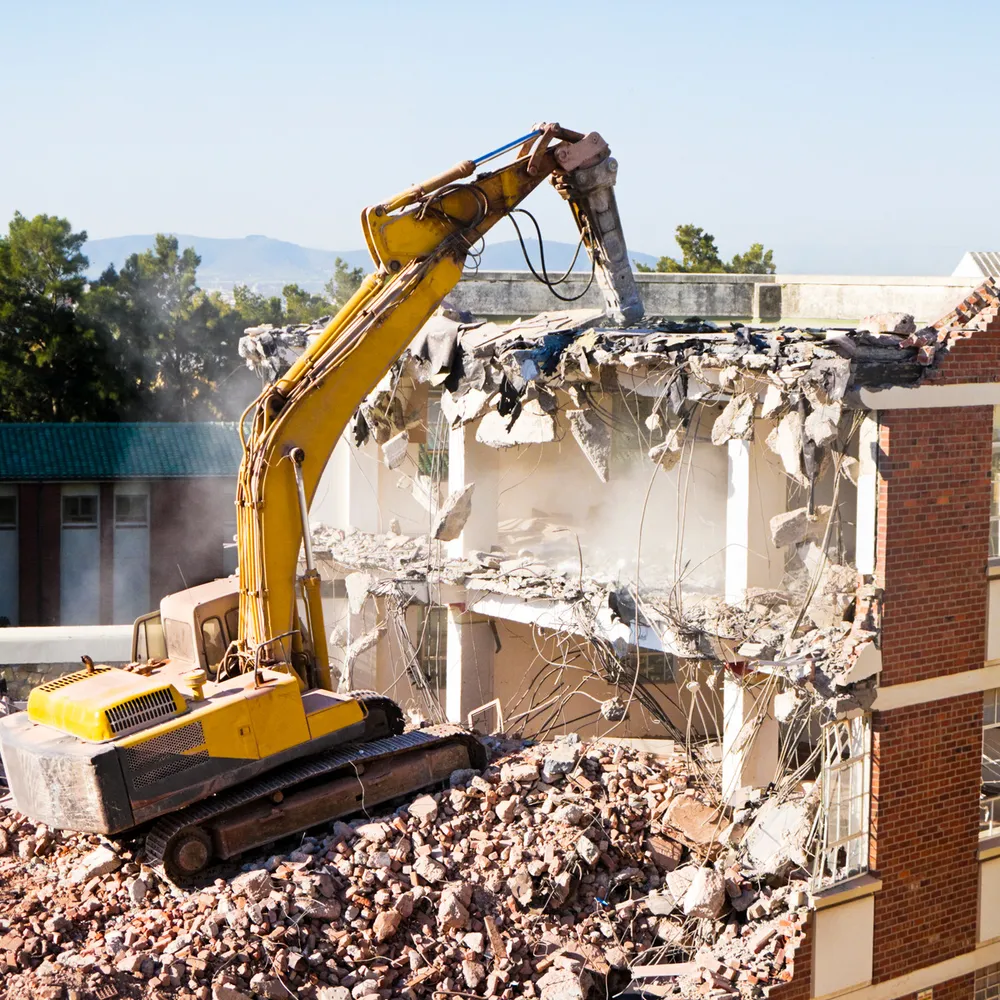
Excavator with breaker attachment demolishing a brick building
Sector hazards mapped to standards Kit lists by role, not by catalogue Stocked nationwide Trade accounts

The sector

The baseline, widened

Everything from the construction baseline applies and then hardens: helmets with chinstraps (work at height over voids), Class 2–3 hi-vis among machines working blind, S3 boots where the midsole earns its keep daily — demolition arisings are a carpet of nails and rebar, and it's the sector where puncture protection stops being theoretical. Gloves run at cut level C and up because everything handled has edges, and FFP3 is the respiratory default because pre-1990s buildings shed mixed dusts — concrete silica, plaster, and the legacy nasties — where guessing lower ratings is gambling (the ratings logic).

The asbestos boundary is absolute: licensed asbestos removal is its own regulated world — enclosures, air-fed RPE, decontamination units, disposable suits by procedure — and none of it is bought casually off a workwear list. What a demolition contractor's everyday kit list needs is the boundary discipline: knowing that unexpected suspect materials stop work and change the rules, and that ordinary type 5/6 disposables over site kit are for nuisance dusts, not asbestos. Kit economics finish the picture: demolition consumes clothing at rates that embarrass every other trade — gloves in days, trousers in weeks — so buy on heavy fabric specs, budget rotation deep, and treat retirement-on-damage as routine, not failure.
Kit by task

The demolition kit map

TaskThe kit that mattersThe spec detail
Soft stripCut gloves C+, FFP3, knee protectionEverything has edges; every ceiling has dust
Structural demolitionEnhanced baseline, chinstrapped helmetsEN 397 over voids and drop zones
Burning & cuttingWelding FR, leather gauntletsEN ISO 11611 on structural steel
Crushing & processingQuarry-pattern kit — Class 3, hearing, FFP3The aggregates rules arrive on site
Licensed asbestos workIts own regulated regimeSeparate procedures, kit and training — never improvised

Management notes

What demolition firms get burned by

Boots on nails
Midsole punctures are the sector's signature injury — S3 minimum, checked for damage weekly
Dust discipline
FFP3 plus <a href='ffp-fit-testing-explained.html'>fit testing</a> plus clean-shaven — mixed dust forgives nothing
Kit budget honesty
Consumption at demolition rates is a line item, not a surprise — under-budgeting puts worn-out kit on live sites

Questions

Demolition FAQ

What PPE do demolition workers need?

The construction set with margins widened: EN 397 helmets (chinstrapped for height), Class 2–3 hi-vis, S3 boots where midsole protection works daily, cut-level C+ gloves, FFP3 respiratory protection against mixed dusts, and eye and hearing protection per task. Licensed asbestos work runs its own separate regime.

Why do demolition workers wear FFP3?

Because the dust is mixed and partly unknown — concrete silica, plaster, insulation and whatever the decades hid — so the assessment defaults to the highest disposable rating rather than guessing per material. Suspect asbestos-containing materials stop work entirely; FFP3 is for the assessed, non-licensed dusts.

How long does workwear last in demolition?

Weeks, honestly — gloves in days, trousers and boots faster than any other trade. Buying heavy-spec garments in deep rotation and retiring on damage without sentiment is the working model; demolition kit is a consumable with a burn rate, and budgets should say so.

Kit the whole operation.

Send the roles and headcount — we'll come back with a kit list per role, embroidered and priced.