Role guide · Window cleaning
Water-fed poles turned window cleaning into a trade performed inside its own weather system: whatever the sky does, the pole rains back down the arms. The kit problem isn't the occasional soaking — it's being wet as a baseline, in January, while staying presentable on a customer's drive.

The job
The water-fed pole runs pure water down the brush, the pole and — inevitably — the arms of whoever holds it. The answer is breathable waterproofs worn as workwear, not emergency kit: a waterproof-and-breathable jacket or smock (working arms overhead in a boil-in-the-bag PVC top is its own misery), waterproof over-trousers or bibs, and sleeves that seal or shed at the cuff, where most of the water actually arrives. DWR maintenance is a fortnightly reality in this trade, not an annual one.
Winter turns hands into the limiting factor. Wet plus wind at ladder height strips heat faster than dry cold ever does — EN 511-rated thermal grip gloves (the standard tests for wet cold, not just cold) with spares drying in the van are what keep a January round finishable. Footwear follows the same logic: waterproof, warm and seriously grippy — wet ladder rungs, mossy patios and soaped forecourts are the trade's slip circuit.
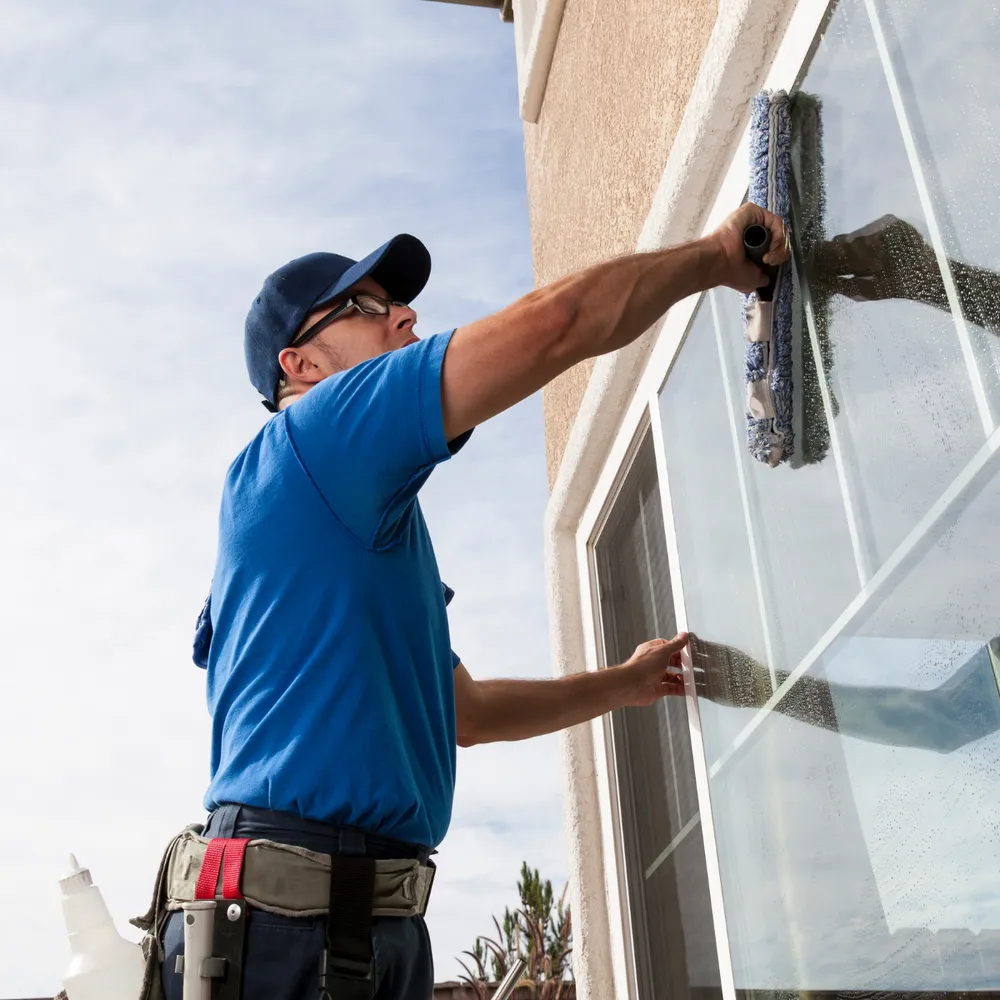
The list
| Item | The spec | Why |
|---|---|---|
| Waterproof top | Breathable, arms-overhead cut | EN 343 logic — the pole makes its own rain |
| Over-trousers / bibs | Waterproof, quick-drying | Splash and kneel, all day |
| Gloves | EN 511 thermal grip + spares | Wet cold is the rating that matters |
| Footwear | Waterproof, cushioned, high-grip sole | Ladders, moss and soap — grip is the spec |
| Branded layer | Embroidered softshell or polo for the doorstep | The round is a walking advert — kept smart |
The details
Questions
Breathable waterproof top and over-trousers as the working outfit, wicking base layers underneath, EN 511-rated thermal grip gloves (tested for wet cold — the trade's actual condition) with dry spares in the van, and waterproof high-grip footwear. Wet-plus-wind is the enemy; cotton anywhere in the system loses.
Thermal grip gloves rated under EN 511 — the standard that tests convective and contact cold and water penetration — in a dexterous enough build to handle poles and clips. Carry spares: once a glove wets through, its insulation is finished for the day.
On domestic rounds, rarely. On forecourts, retail car parks, roadside frontages and commercial sites, Class 2 hi-vis is commonly required by the client or just plainly sensible — vehicles reverse at exactly the height of a kneeling window cleaner. Many rounds keep a vest in the van as standard.
Everything in this guide is stocked, embroiderable and priced for teams — send the headcount.