iNeedWorkwear
Roles hub / Scaffolders

Role guide · Scaffolding

What scaffolders actually wear.

Scaffolding is climbing with cargo: tube, boards and fittings moved by hand, at height, in whatever the sky is doing, with a harness over everything. The kit list is written by three facts — everything must work under a harness, everything must move like sportswear, and hands are the tools.

Under harness
Layers that don't bunch at the legs and chest
4-way stretch
Trousers are climbing kit
Grip
Galvanised steel, wet, all day
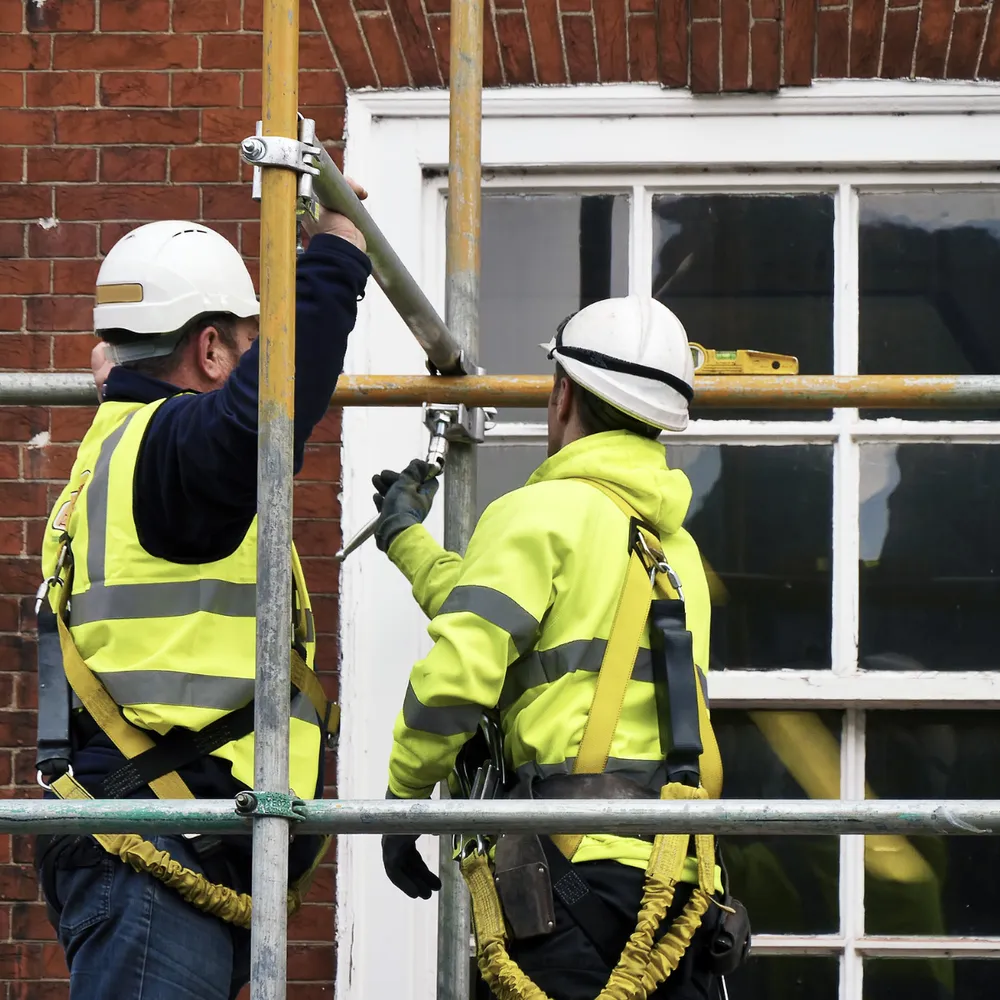
Two scaffolders in harnesses and hi-vis fixing scaffold tube on a brick elevation
Written from the job backwards Standards named per item Stocked and embroidered Trade accounts

The job

Harness first, wardrobe second

Everything a scaffolder wears interacts with the harness. Bulky jackets bunch under leg loops and chest straps; loose hoods foul the dorsal attachment; slippery shell fabrics let straps migrate. The working answer is slim, stretchy layers — fitted softshells and fleeces rather than padded bulk, with the waterproof shell cut to sit under or over the harness per the firm's policy (the harness itself, and its inspection, is employer-issued fall-protection territory, not a workwear purchase).

Trousers are the signature item: four-way stretch, holster pockets that close (loose fittings fall — see the FOD logic every trade at height shares), reinforced knees, and cut high enough at the back that climbing doesn't expose skin to a December wind. Scaffolders burn through trousers like consumables; buy the trousers guide's durable end.
The list

The scaffolder kit map

ItemThe specWhy
Trousers4-way stretch, holster pockets, knee zonesClimbing kit that carries fittings
GlovesGrip-palm, EN 388 cut level B+Wet galvanised tube — the letters
BootsS3 with a supportive shankAll-day standing on tube — the codes
Hi-visClass 2 minimum per site, fitted cutDraped hi-vis snags on standards — class logic
LayersFitted base/mid, packable shellWicking base; exposed elevations are wind tunnels

The details

Three scaffolder-specific truths

Winter hands
Thermal grip gloves (<a href='en-511-winter-gloves-explained.html'>EN 511</a>) — cold steel strips dexterity in minutes
No snag points
Drawcords, loose hoods and dangling ID lanyards are catch hazards at height
Weather is the shift
There's no indoors — <a href='reproofing-waterproofs.html'>maintained waterproofs</a> or a wet week

Questions

Scaffolder FAQ

What trousers do scaffolders wear?

Stretch work trousers with closing holster pockets, reinforced knees and a high back rise — effectively climbing trousers that carry fittings. Durability matters (scaffolding eats fabric on tube and boards), and pockets must close so nothing falls from height.

What gloves are best for scaffolding?

Grip-palmed gloves with genuine cut resistance (EN 388 cut level B or better) and enough dexterity for fittings work — with a thermal EN 511-rated version for winter, because cold galvanised steel drains hands fast. Scaffolders go through gloves quickly; buy by the box.

Does workwear need to be harness-compatible?

Yes in practice: slim fitted layers that don't bunch under leg loops or chest straps, no loose hoods around the dorsal point, and shells worn per the firm's harness policy. The harness and fall-arrest kit itself is employer-issued and inspected equipment, separate from the workwear order.

Kit the crew.

Everything in this guide is stocked, embroiderable and priced for teams — send the headcount.