Care guide · Waterproofs
Nine "leaking" work jackets out of ten haven't failed — their invisible outer coating has. When rain stops beading and the face fabric soaks dark, the fix is a washing machine and a bottle of reproofer, not a replacement. Here's the diagnosis, the fix, and the honest signs a jacket really is done.

The diagnosis
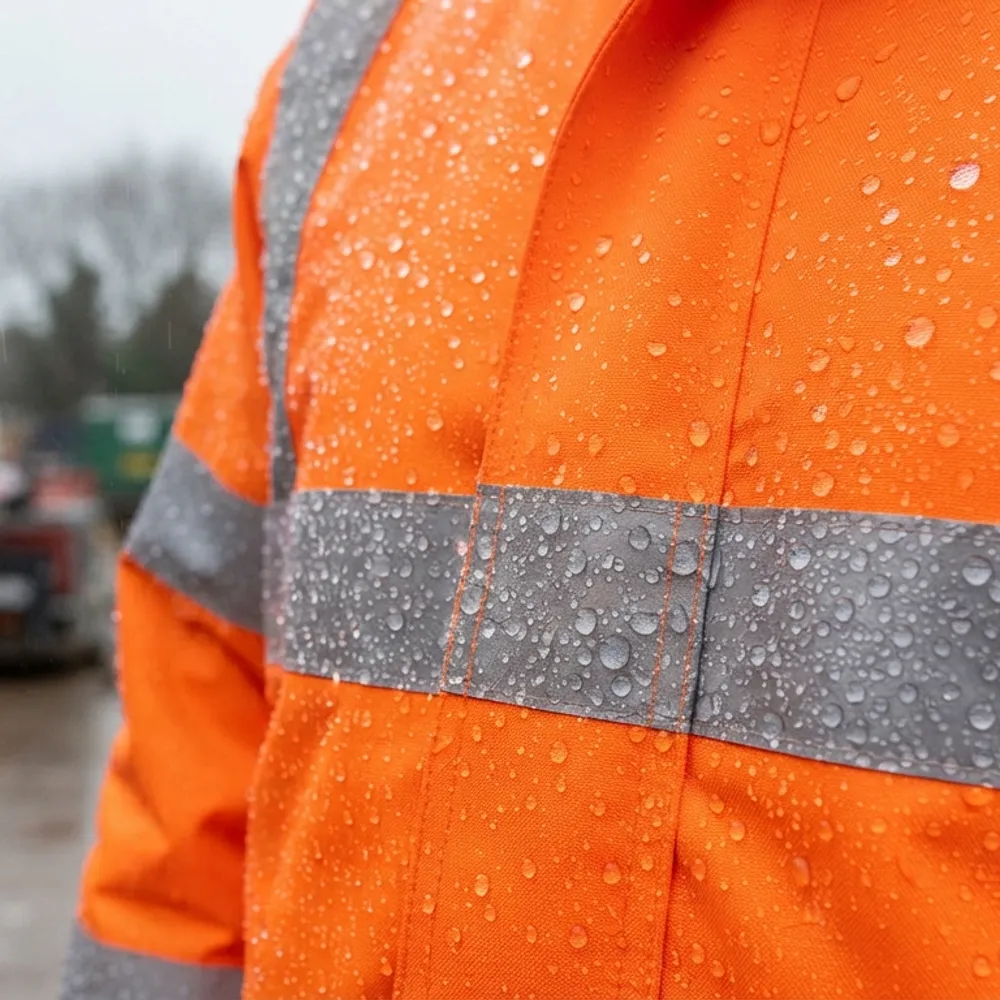
A waterproof work jacket keeps rain out with a membrane or coating bonded inside the fabric. But it stays comfortable thanks to something else: a DWR (durable water repellent) finish on the outer face that makes rain bead up and roll off.
DWR wears away — abraded by straps and tool belts, clogged by mud and body oils, stripped by harsh detergents. When it goes, the face fabric drinks water and the jacket feels like it's leaking: heavy, cold and clammy, because the soaked outer kills breathability and chills you through. The membrane underneath is usually still doing its job.
That distinction decides everything. Wet, dark, heavy face fabric = wetting out — restore the DWR and the jacket comes back. Water genuinely pooling inside while the outer stays merely damp — that's seams or membrane, and reproofing won't help.
The fix
Sprinkle water on the shoulder. If it soaks flat into the fabric instead of beading, the DWR is gone. If it beads but you're still getting wet inside, jump to the last section — the problem is elsewhere.
Reproofer bonds to clean fibre, and the dirt is half the problem anyway. Wash per the care label with a technical cleaner or pure soap. No fabric softener, no bio detergent — both strip or block DWR. Rinse twice to clear residue.
Wash-in DWR treatments go in the drawer for a second cycle, dosed per the bottle. Use spray-on instead if the jacket has a wicking mesh liner you don't want coated — spray the outer only, evenly, while damp.
Most treatments need warmth to bond: a cool tumble-dry or a warm iron over a tea towel, whichever the garment label permits. This step is where most home reproofing jobs succeed or fail.
Water on the sleeve should sit up in beads and roll. For a jacket worn daily outdoors, expect to repeat once or twice a year — the trigger is beading stopping, not the calendar.
The rating
Beyond saving
DWR restores the outer. These failures are structural.
| Symptom | What's failed | Verdict |
|---|---|---|
| Wet lines inside along the seams | Seam tape lifting or cracked | Repair tape or replace |
| Inner coating peeling, flaking or sticky | Membrane/laminate delaminating — end of life | Replace |
| Torn fabric, burn holes | Hole through the membrane itself | Patch small; replace large |
| Leaks at the zip in driving rain | Zip or storm flap worn out | Repair if the jacket merits it |
| Reproofed twice, still soaks instantly | Face fabric abraded past holding DWR | Replace |
Questions
That's wetting out: the DWR coating on the face fabric has worn off, so the outer soaks up water and feels cold and clammy even though the membrane inside is still waterproof. Washing the jacket clean and applying a wash-in reproofer restores it.
When water stops beading on the surface — for daily outdoor wear that's typically once or twice a year. Always wash the jacket clean first; reproofer over dirt and body oils won't bond.
Avoid biological detergents and never use fabric softener — both degrade the DWR finish and can affect the membrane's performance. Use a technical cleaner or pure soap, rinse thoroughly, and reproof after washing if beading has stopped.
Two classes, each 1–4: the first is resistance to water penetration, the second is breathability. Higher is better in both. A jacket rated 4:4 is the top spec; a high first number with a low second keeps rain out but traps sweat.
When care can't bring a garment back to compliance, replace it — certified hi-vis and weatherproofs from stock, with embroidery for teams.