Role guide · Hair & barbering
Salon work is a trade that happens in public view: ten hours standing, hands in chemistry, clippings finding their way into everything — performed in an outfit that doubles as the shop's brand. The kit list is short but every item earns its place the hard way.

The job
Colour is the chemical hazard hiding in the glamour: bleach and oxidative dyes ruin clothing instantly and sensitise skin cumulatively — which is why colourists work in chemical-tolerant aprons over their kit and disposable nitrile gloves per mix (vinyl swells in some colour chemistry; nitrile is the trade's default). Repeated wet work drives dermatitis too, so gloves are for washing as much as colouring.
Clippings decide the fabric. Freshly cut hair is a splinter: it works into knits and weaves and stays there. Salon garments — tunics and closely woven tops — use smooth, tight fabrics hair slides off, and it's why the beauty tunic (see tunic vs scrubs) exists as a garment category at all. And the floor decides the shoes: ten standing hours on hard floor makes cushioned, supportive, wipeable footwear the single biggest health purchase in the salon — varicose veins and plantar pain are the trade's pension deductions.
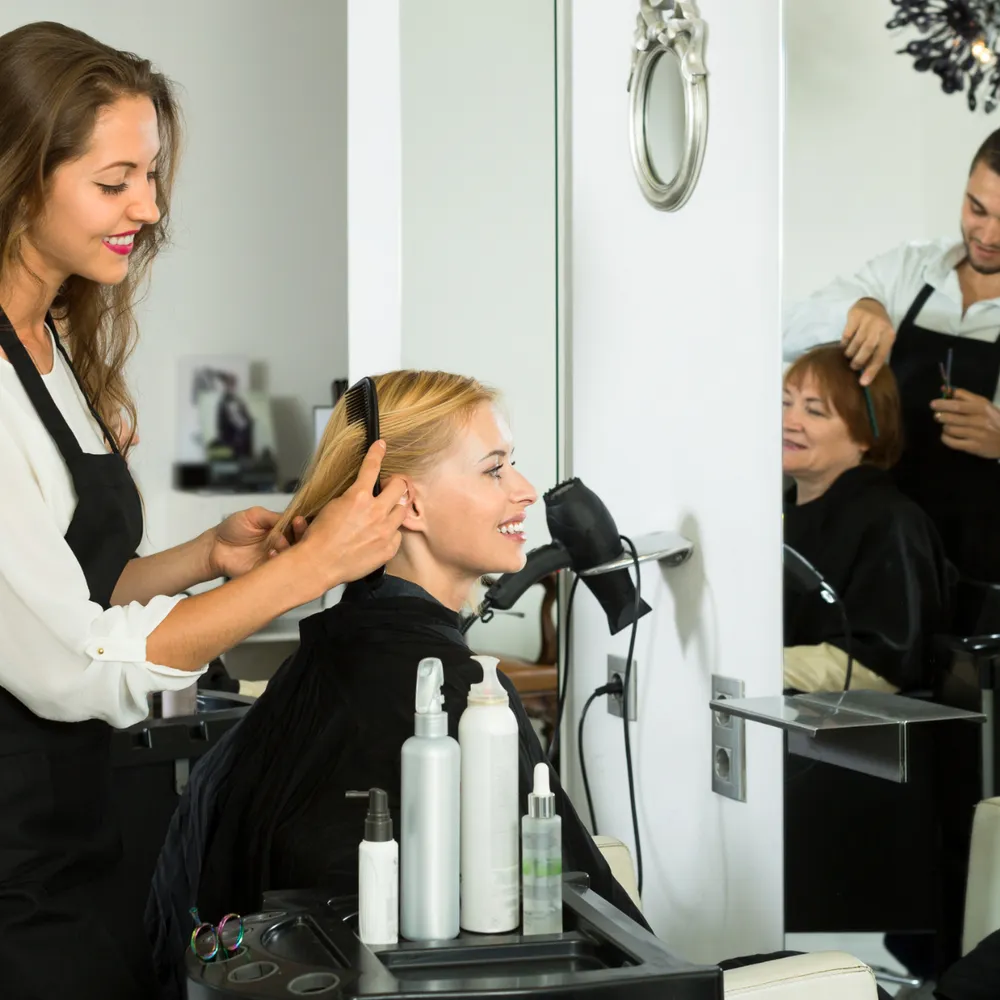
The list
| Item | The spec | Why |
|---|---|---|
| Tunic / top | Smooth tight-weave, dark or print-forgiving | Clippings slide off; colour splashes forgive |
| Apron | Chemical-tolerant, adjustable, washable | Bleach and dye are the daily chemistry |
| Gloves | Nitrile disposables, right size | Per colour mix and heavy wash days — dermatitis prevention |
| Footwear | Cushioned, supportive, wipeable | The ten-hour stand is the real hazard |
| Team look | Coordinated colours, embroidered where wanted | The staff outfit is the shopfront — FOH logic applies |
The details
Questions
Smooth, tight-weave tunics or tops that hair clippings slide off rather than embed in, a chemical-tolerant apron for colour work, nitrile gloves for mixing and washing, and cushioned wipeable footwear for the standing shift. In most salons the outfit doubles as the brand, so teams coordinate colour and style.
Colour chemistry (bleach, oxidative dyes) and constant wet work both attack skin — occupational dermatitis is one of hairdressing's biggest health problems. Nitrile resists the chemistry better than vinyl, fits closely enough for precision work, and is disposable per mix so sensitising residues don't accumulate.
Cushioned, supportive shoes with a wipeable upper — colour drips — and enough structure to support arches through a ten-hour shift. Footwear is the salon's real health purchase: the trade's chronic complaints are feet, legs and backs, and they start with hard floors and flat shoes.
Everything in this guide is stocked, embroiderable and priced for teams — send the headcount.