Role guide · Telecoms & fibre
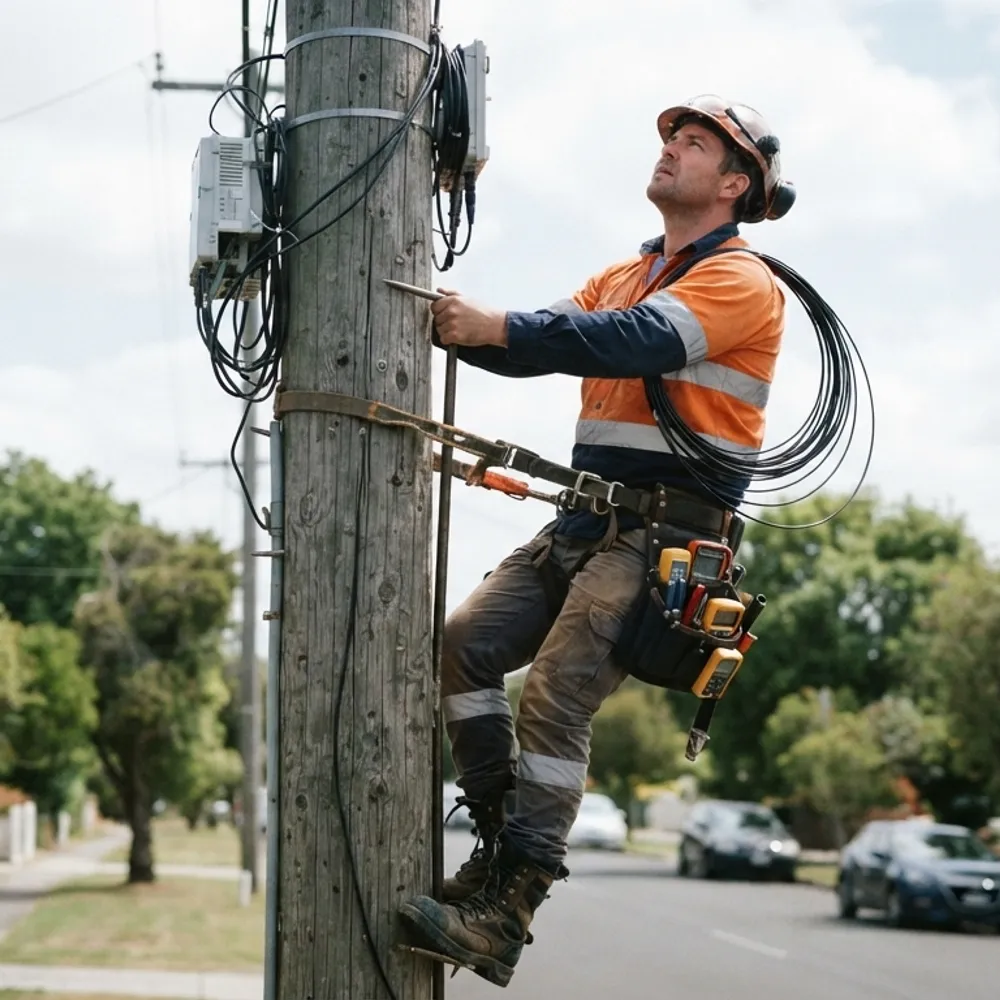
The fibre rollout put thousands of engineers on Britain's pavements, poles and underground chambers — a job that mixes streetworks, climbing, kneeling in water and customer doorsteps, often before lunch. The kit list borrows from four trades at once.

The job
The street makes the base layer of rules: work beside live traffic means hi-vis to the network's streetworks standard — Class 2 as the working floor, Class 3 kit where speeds and network rules demand — worn over everything, all day. The pole adds climbing: fitted layers that move, nothing that snags on steps or fouls the belt, and the operator's own training and equipment rules for the height work itself. The chamber is the wet one — footway boxes hold water, mud and worse, so waterproof over-trousers or bib-and-brace plus knee protection turn an unpleasant task into a merely muddy one. And the doorstep finishes the day: embroidered, presentable kit for the in-home install, with overshoes in the pocket.
Gloves split three ways: cut-rated (EN 388) for cable and hardware, nitrile disposables for jointing gel and grease, and thin-dexterity gloves — or clean dry hands — for fibre splicing, where feel is everything.
The list
| Item | The spec | Why |
|---|---|---|
| Hi-vis | Class 2–3 per network streetworks rules | Pavement work is traffic work |
| Over-trousers / bib | Waterproof, tough-kneed | Chamber work is kneeling in water |
| Layers | Fitted, climbing-friendly, wicking | Base layers under weather shells |
| Gloves ×3 | Cut-rated / nitrile / dexterity | Cable, gel and fibre are different hand jobs |
| Footwear | S3 with real grip | Wet footway boxes, ladder rungs, verges |
The details
Questions
Hi-vis to their network's streetworks requirements — Class 2 as the common floor for footway work, Class 3 garments where road speeds and operator rules require more. It's worn over everything all day, so buy the comfortable, fitted versions rather than the cheapest tabard.
Waterproof over-trousers or bib-and-brace with knee protection (EN 14404 inserts or a kneel pad), cut-rated gloves for hardware, nitrile disposables for jointing gel, and S3 boots with grip. Footway chambers hold water year-round — the kit assumes wet, not hopes for dry.
Splicing itself wants clean, dry, high-feel hands — thin dexterity gloves or bare hands per training — while the surrounding work uses cut-rated gloves for cable and hardware and nitrile disposables for gel and grease. Engineers carry all three; each has a different job.
Everything in this guide is stocked, embroiderable and priced for teams — send the headcount.