Care guide · Drying
The hardest workwear problem in Britain isn't washing — it's Tuesday night: soaked kit, a 6am start, and a tumble dryer that ruins half of what goes in it. Drying is where good garments die young and where damp ones quietly become a health issue, so it deserves the ten minutes of system the trade rarely gives it.

The rules
The dryer's casualty list is long and specific: waterproof membranes and taped seams delaminate (unless the label explicitly allows low tumble — some DWR revival actually wants it, label first); elastane-rich stretch fabrics lose their snap; prints and transfers crack; hi-vis fades faster (the compliance angle); FR garments follow their label exactly (the FR rules); and anything still stained gets its stain heat-set permanently. What tumbles happily: cotton-rich tees, sweats, polycotton trousers without stretch, towelling. The label knows; the habit doesn't ask.
The overnight system that works without a dryer is a drying room shrunk to a corner: garments spaced on hangers (not heaped on a radiator), moving air from a cheap fan doing more than heat ever does, modest background warmth, and ideally a dehumidifier — which dries kit faster than a radiator and doesn't wallpaper the room with condensation. Boots get their own rule: insoles out, newspaper or a boot dryer, never the radiator top — direct heat cracks leather and delaminates soles, which is how wet boots become dead boots in one winter.
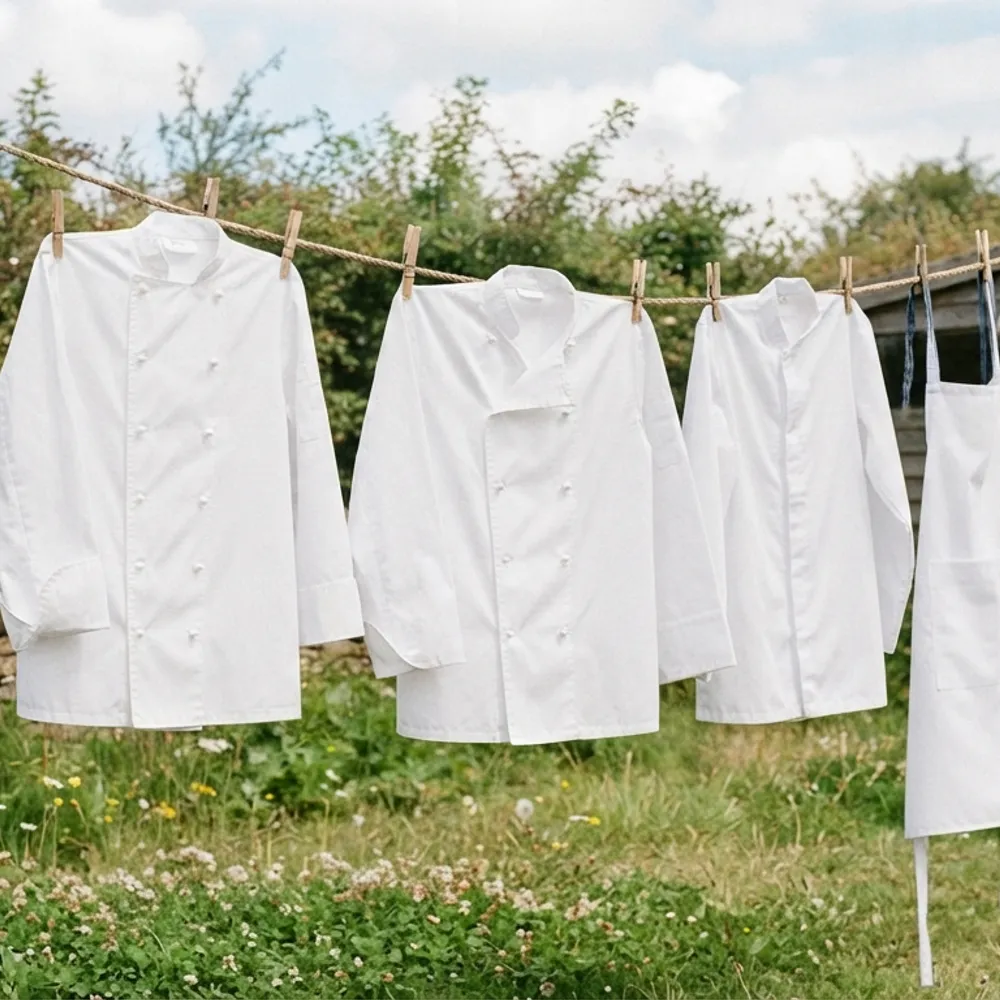
The setup
| Method | Verdict | Note |
|---|---|---|
| Dehumidifier + hangers + fan | The home drying room | Fast, gentle on everything, cheap to run |
| Tumble dryer (label-permitting items) | Fine for cottons and sweats | Sort by label — one load's convenience ruins another's membrane |
| Radiator heap | The classic mistake | Slow (no airflow), cooks what touches, condensation everywhere |
| Vehicle parcel shelf | Emergency only | UV + creasing; better than wearing it wet, barely |
| Boot dryers / newspaper | The footwear answer | Insoles out; leather never gets direct heat |
Why bother
Questions
Plain polycotton trousers usually yes, on the label's setting — but stretch (elastane) content, waterproof membranes and knee-pad pocket linings often say no or low. Check each garment's label once and sort loads accordingly; one hot load ruins stretch recovery permanently.
Space garments on hangers, add moving air (a basic fan) and modest warmth, ideally with a dehumidifier — airflow dries faster than radiator heat and doesn't condense on the windows. Heaped-on-radiator drying is slow and cooks the contact points.
Insoles out, laces loosened, stuffed with newspaper (changed once) or on a boot dryer — never on or against a radiator, which cracks leather and delaminates soles. Overnight is usually enough with airflow; two pairs in rotation is the winter answer.
When care can't bring a garment back to compliance, replace it — certified hi-vis and weatherproofs from stock, with embroidery for teams.