Role guide · Groundworker
Groundworks is the trade the weather actually reaches: open trenches, standing water, concrete pours, kerbs and cables. The kit list is longer than most trades' and earns its keep daily — especially the second pair of boots.
The list
| Item | Spec | Why |
|---|---|---|
| Site boots | S3, ankle support | The everyday boot between pours |
| Safety wellingtons | S5 — midsole + cleats | Concrete, mud and standing water beat any leather boot |
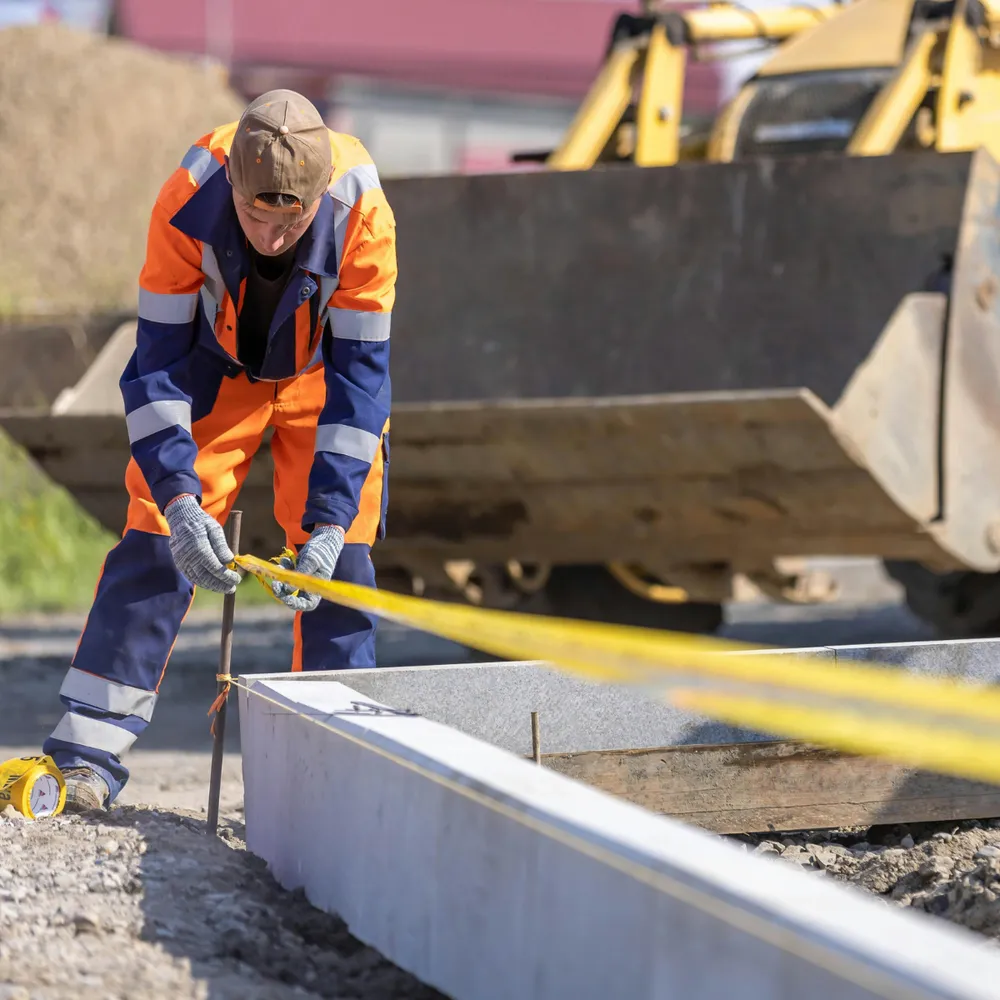
| Hi-vis | Class 3 jacket or vest + trousers combo | Constant plant, deliveries and reversing tippers |
| Waterproof trousers | Heavy-duty, over or instead of standard | Kneeling in wet aggregate destroys ordinary trousers |
| Gloves | Cut level B–C, grippy when wet | Kerbs, blocks, tying wire and cable draw all bite |
| Knee pads | Insert or strap-on, worn from day one | The item most regretted at 50 for not buying at 25 |
| Thermal base layers | Wicking, autumn to spring | The trench is colder than the site |
The two-boot strategy
No single boot survives groundworks. The S3 leather boot handles the general site day — walking, machine spotting, kerb lines. The moment the work goes into water, wet concrete or serious mud, it's the S5 safety wellington: waterproof by construction, with the same toe cap, midsole and cleated sole (codes explained). Wet concrete specifically is a chemical burn hazard — wellingtons with trousers over the top, not tucked in, is the pour-day setup.
Both pairs die faster in this trade than any other: mud draws the oils out of leather, so the boot-care routine — mud off same day, never radiator-dried — is worth reading twice.
Weather
Questions
Two pairs: S3 leather boots for general site work, and S5 safety wellingtons for excavations, mud and concrete pours. Wet concrete is a chemical burn hazard as well as a soaking — wellingtons with waterproof trousers over the top is the pour-day standard.
The trade lives around moving plant — excavators slewing, tippers reversing, deliveries arriving — often in poor light and weather. Class 3's larger fluorescent and reflective areas fit that exposure, and many groundworks contractors mandate it with hi-vis trousers.
They're the item veterans most wish they'd worn from day one. Kerb laying, ducting and drainage mean hours kneeling on aggregate; trouser-insert pads or strap-ons prevent the cumulative damage that shows up years later.
Either way the kit list is the same — send the role and the headcount and we'll price it, embroidered.