iNeedWorkwear
Roles hub / Mechanic

Role guide · Mechanic

Workwear for mechanics: oil, edges & things that spin.

A workshop hands you three hazards on rotation: oil on everything, edges under everything, and assemblies that spin. The kit list answers all three — and the golden rule is that nothing loose goes near the third one.

Nitrile
The only coating oil respects
Snug cuffs
Near anything rotating
Pre-treat
How the oil comes out later
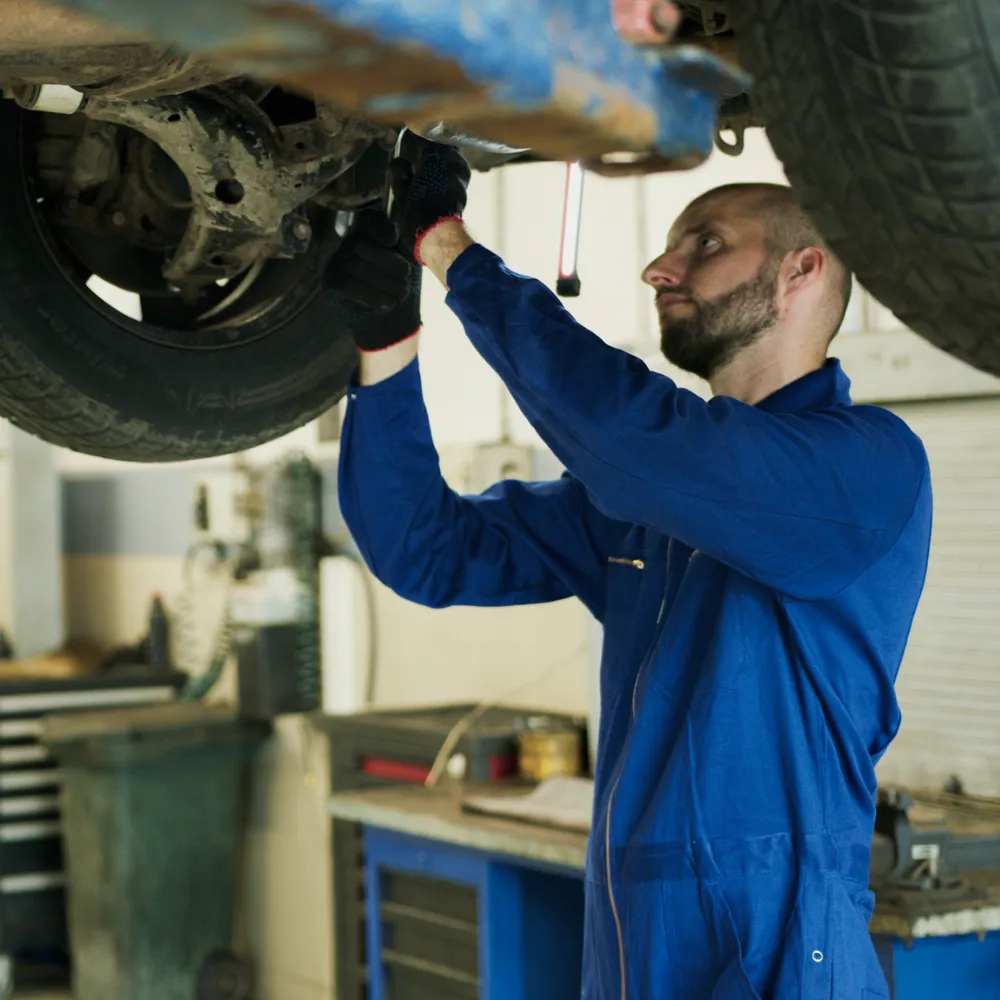
Mechanic in blue coveralls and grip gloves working under a car on a lift
Head-to-toe kit lists Standards named per item Certified stock to match Embroidery & trade accounts

The list

Head to toe

ItemSpecWhy
Coverall ×2 (or two-piece)Poly-cotton, snug cuffs, covered zipOne on, one in the wash — always
Work trousers + polo (alt.)Stretch, holster pocketsThe two-piece route for MOT bays and customer-facing work
GlovesNitrile-coated, abrasion 4Nitrile grips through oil where PU and latex give up
BootsS1P workshop / S3 if yard workDropped tools and trolley jacks answer the toe-cap question
Knee protectionPads or a creeperConcrete floors collect a career's worth of kneeling
Beanie / bump capUnder-ramp workRamps and sills win every head-height argument

The golden rule

Nothing loose near anything that spins

Serpentine belts, prop shafts, wheel balancers, bench grinders — a workshop is full of assemblies that grab. The rule is absolute: cuffs closed, zips done, no dangling drawstrings, no rings, and gloves off at specific rotating machines where a snagged glove pulls the hand in. It's why proper workshop coveralls have elasticated or stud cuffs and covered zips, and why the baggy-hoodie look has no place under a ramp.

On the oil itself: it's coming for the kit regardless. Two coveralls in rotation, washed hot with a degreaser pre-treat — the oil & grease guide is written for exactly this wardrobe. Kit that stays saturated stops being workwear and starts being a skin-contact problem; engine oils and dermatitis are a known pair, which is also why the gloves matter beyond grip.
Worth knowing

Three habits of tidy workshops

Two-coverall rotation
A washed coverall weekly beats one worn to saturation
Barrier cream + gloves
Mineral oil on skin daily is a dermatitis plan — interrupt it
Nitrile disposables in the box
For fluids work — brake cleaner and used oil aren't handwash

Questions

Mechanic kit FAQ

Should mechanics wear coveralls or trousers and top?

Coveralls win under ramps and inside engine bays — one garment, no waist gap, snug cuffs, industrial-washable. Two-piece suits MOT testing and customer-facing bays. Either way: two sets in rotation, because oil accumulates faster than one wash cycle.

What gloves are best for mechanics?

Nitrile-coated work gloves for general spannering — nitrile keeps grip through oil where PU and latex fail — plus disposable nitrile for fluids. At specific rotating machinery, gloves come off entirely: a snagged glove pulls the hand in.

How do you get oil out of mechanic overalls?

Pre-treat with a degreaser (neat washing-up liquid works), wait 20–30 minutes, then wash on the hottest cycle the label allows with heavy-duty detergent. Air-dry and check before tumble-drying — heat sets residual oil. Saturated kit that won't come clean gets retired.

Do mechanics need safety boots?

Yes — dropped tools, brake discs and trolley jack handles settle the argument. S1P covers workshop floors; step up to S3 if the job includes yards and recovery work in the weather. Metal-free composite caps suit anyone working around live electrics on EVs.

One person or a whole crew?

Either way the kit list is the same — send the role and the headcount and we'll price it, embroidered.