iNeedWorkwear
Roles hub / Electrician

Role guide · Electrician

PPE for electricians: the arc-flash line.

Most domestic and commercial electrical work never meets an arc-flash risk assessment — and some industrial work meets it every day. Electricians' kit splits cleanly along that line, so this guide covers both sides of it and the label that marks the boundary.

IEC 61482
The arc standard
APC 1 / 2
The box-test classes
No synthetics
Next to skin, ever
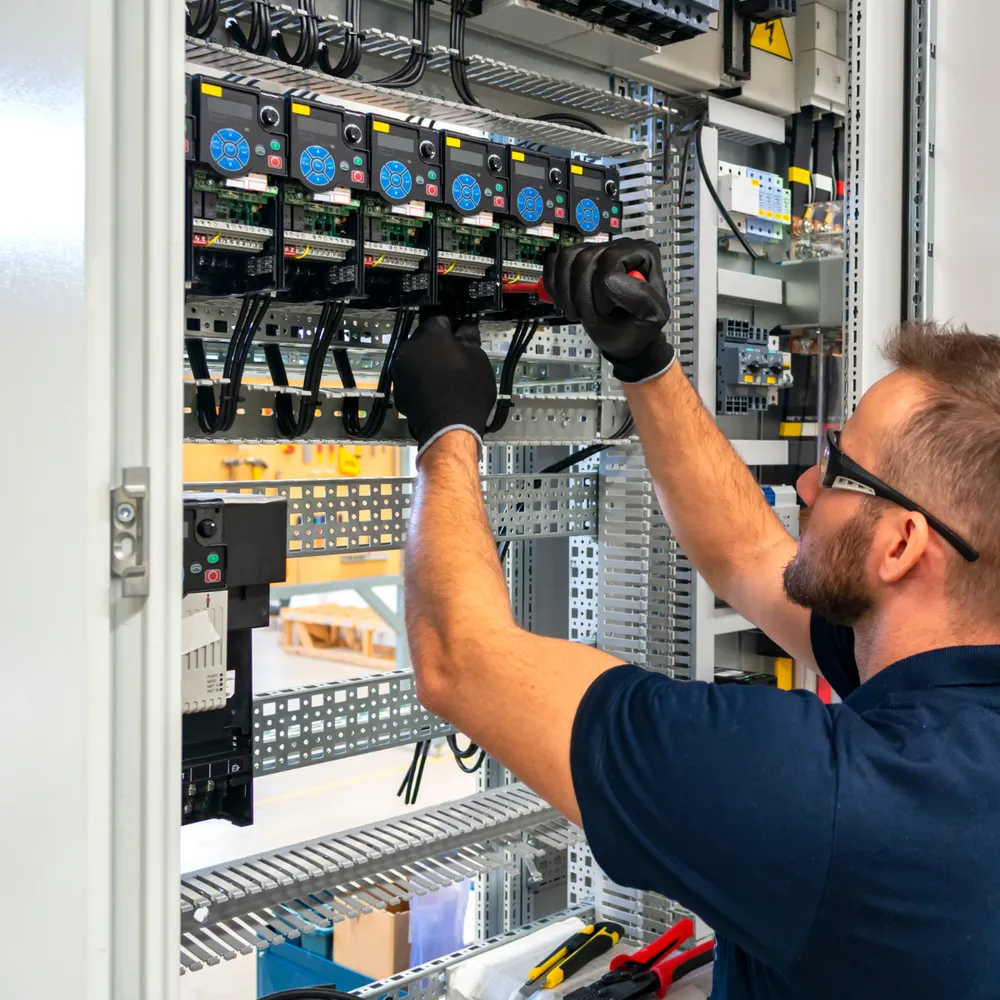
Electrician in gloves and safety glasses working in a control panel
Head-to-toe kit lists Standards named per item Certified stock to match Embroidery & trade accounts

The line

Which side of it are you on?

Below the line — installation, second fix, domestic and most commercial work on dead, isolated circuits: the kit is ordinary quality trade wear. Stretch work trousers, polos, S1P or S3 footwear, and dexterity-first gloves. Safe isolation is the protection; the clothing just has to work.

Above the line — live testing and fault-finding on industrial systems, switchgear operation, work near energised LV/HV equipment where the employer's risk assessment identifies arc-flash potential: clothing becomes PPE in the legal sense. That means arc-rated garments to IEC 61482, worn as a complete system.

Who decides? The risk assessment, not the wearer. If your work order involves energised switchgear, the arc assessment (and the PPE it specifies) should arrive with it.
The label

Reading an arc-rated garment

Two test routes appear on labels — a garment may carry either or both.

MarkingTest behind itWhat it tells you
APC Class 1Box test, 4 kA arcProtection benchmark for lower-energy exposures
APC Class 2Box test, 7 kA arcThe common spec for utility and industrial switching
ATPV (cal/cm²)Open-arc testRated thermal performance — matched to the calculated incident energy of your task
EN ISO 11612 + EN 1149-5Heat/flame + antistaticUsually certified alongside arc on multi-norm garments
The layer under the arc kit can undo the arc kit. Synthetic base layers melt at arc temperatures — inside the garment that just protected you. Under arc-rated clothing wear arc-rated or natural-fibre layers only, and that includes the T-shirt. The same rule runs through all FR work — the energy sector guide covers the system.

The rest of the kit

Beyond the clothing

Arc-rated clothing protects the body; the task-specific items are their own standards: insulating gloves for live work certify separately (with leather over-protectors and periodic retest), face shields and balaclavas carry their own arc ratings, and footwear for electrical environments avoids exposed metal — many electricians run composite-cap, metal-free boots as standard anyway (the cap comparison).

For the everyday tools-and-testing kit below the line: hard-wearing trousers with holster pockets, embroidered polos for the customer-facing side, and gloves you'll actually keep on — the EN 388 decoder sorts those.

Questions

Electrician PPE FAQ

Do all electricians need arc flash clothing?

No — the requirement follows the risk assessment, not the trade. Work on dead, isolated circuits doesn't create arc PPE requirements; live testing, fault-finding and switchgear operation on industrial systems commonly do. If the assessment identifies arc risk, it must also specify the rated clothing.

What does ATPV mean on arc flash clothing?

Arc Thermal Performance Value, in calories per square centimetre — the incident energy at which the garment gives a 50% probability of preventing a second-degree burn. The employer's arc calculation for the task sets the cal/cm² the clothing must meet or exceed.

What is the difference between APC Class 1 and Class 2?

Both come from the IEC 61482 box test: Class 1 tests against a 4 kA arc, Class 2 against 7 kA. Class 2 is the common specification for utility switching and industrial LV work — but the right class comes from the risk assessment.

Can I wear a normal T-shirt under arc-rated overalls?

Only if it's natural fibre — cotton at minimum, arc-rated ideally. Polyester and blends melt at arc temperatures and cause severe injury inside otherwise-intact protective clothing. The no-synthetics rule applies to every layer, base included.

One person or a whole crew?

Either way the kit list is the same — send the role and the headcount and we'll price it, embroidered.