iNeedWorkwear
Sectors hub / Manufacturing

Sector guide · Manufacturing & engineering

Manufacturing workwear: coveralls, gloves & the FR line.

Factory kit has one organising idea: the process dictates the garment. A machine shop, a fabrication bay and an assembly line share a roof but not a kit list — and the fastest way to spec it is to walk the processes, not the job titles.

Snug fit
Loose cuffs and machines don't mix
EN 388
Gloves by process
FR line
Hot works change everything
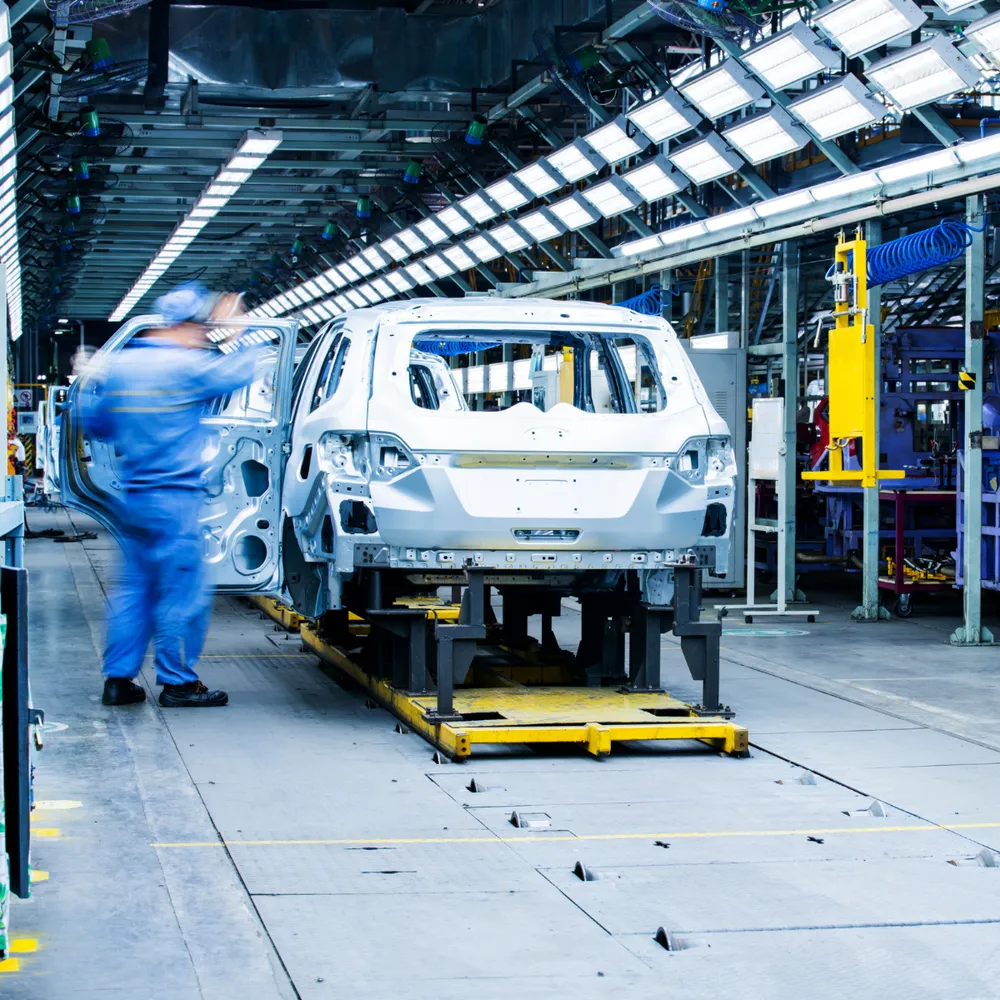
Operative in coveralls on a vehicle assembly line
Kit lists by sector Standards named, not implied Certified stock to match Embroidery & trade accounts

The base layer

The coverall survived for a reason

The coverall remains manufacturing's default because it solves three problems at once: it covers the torso and legs in one garment with no waist gap, it has no loose hem to catch, and it takes industrial laundering. Poly-cotton handles general machining and assembly; heavier cotton drill suits hot, dirty work; and once processes involve flame or arc, the coverall goes FR — a different garment entirely.

Fit rules matter more here than anywhere: cuffs close, zips done, nothing flapping. Rotating machinery turns loose fabric into a winch line — it's why workshop rules ban dangling drawstrings and why coverall cuffs button or elasticate. Two-piece alternatives (work trousers + polo or sweatshirt) suit assembly and inspection roles where the machine risk is lower and comfort wins.
Gloves

Match the glove to the process

One factory, four glove specs — buying a single glove for everyone protects no one properly.

ProcessGloveEN 388 spec to look for
Assembly & finishingThin PU-coatedAbrasion 3+, dexterity first
Sheet metal, stamping, laser-cut partsCut-resistant coatedCut level C–D (ISO 13997 letter)
Oily machining & maintenanceNitrile fully-coated4-series abrasion, oil grip
Hot parts & weldingHeat / welding gauntletEN 407 / EN 12477, not an EN 388 buy

The FR line

Where ordinary workwear stops being legal

The moment a process involves welding, grinding sparks, open flame or electrical arc risk, ordinary poly-cotton is the wrong side of a hard line — it melts onto skin. Past that line the kit is flame-resistant to EN ISO 11612 (with EN ISO 11611 for welding specifically), arc-rated to IEC 61482 for electrical work, and antistatic to EN 1149-5 where flammable atmospheres exist.

The rule that gets missed: FR only works as a system. An FR coverall zipped over a polyester hoodie is a melt layer wrapped in a safe one — mid layers under FR must be FR or natural fibre. And FR garments have their own washing rules; softener and bleach quietly strip the protection.

Uniform layer

The non-safety kit still works for you

Embroidered polos
Assembly, QA and stores read as one team — and visitors can find a supervisor
Industrial-wash grade
Buy garments rated for the laundry cycle you actually run
Personal issue
Named sets beat communal bins — kit that's yours gets looked after
Boot codes for factory floors (S1P inside, S3 for yard and goods-in) are decoded at the footwear guide; glove markings at the EN 388 decoder.

Questions

Manufacturing kit FAQ

What workwear do factory workers need?

The common base is a coverall or work trousers with a polo/sweatshirt, S1P safety footwear, and gloves matched to the process — dexterity-first for assembly, cut-rated for sheet metal, nitrile for oily work. Hot works and arc risk move the spec to FR garments under EN ISO 11612/11611 and IEC 61482.

Why do machine shops ban loose clothing?

Rotating machinery — lathes, drills, mills — catches loose cuffs, drawstrings and untucked hems and pulls the wearer in. Workshop kit is cut snug with closable cuffs for exactly this reason; it's also why gloves are sometimes prohibited at specific rotating machines.

Can you wear a normal hoodie under an FR coverall?

No — polyester and other melt-prone synthetics under FR defeat the system. In a flash event the FR outer survives while the synthetic mid-layer melts against skin. Under FR, wear FR-rated or natural-fibre layers only.

What gloves for handling sheet metal?

A cut-resistant coated glove at ISO 13997 cut level C as the starting point, D or higher for heavy, oily or forceful handling. Specify by the letter, not the old coup-test digit — the decoder guide explains the difference.

Kitting out a team?

Send the headcount and the roles — we'll come back with a kit list, embroidery options and trade-account pricing.