iNeedWorkwear
Roles hub / Forklift

Role guide · Forklift driver

Forklift driver kit: seated, draughty, visible.

Forklift work has a kit profile all of its own: seated (so trunk warmth beats mobility), permanently in vehicle lanes (so hi-vis is identity), and punctuated by dismounts onto concrete (which is where the boots earn their keep).

Seated
Changes the warmth maths
Always in lanes
Hi-vis is the uniform
The dismount
Where injuries live
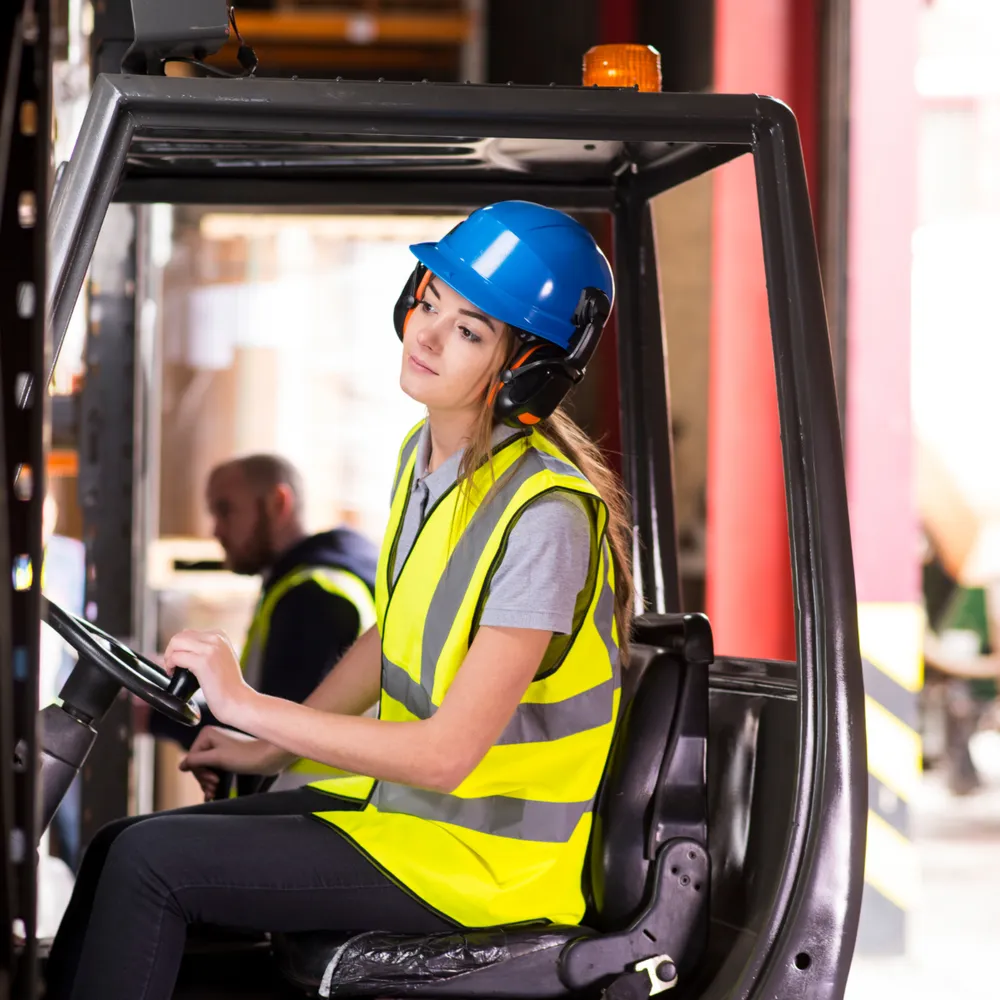
Forklift driver in a hi-vis vest, safety helmet and ear defenders at the wheel of a forklift
Head-to-toe kit lists Standards named per item Certified stock to match Embroidery & trade accounts

The list

Head to toe

ItemSpecWhy
Hi-visClass 2 vest or bodywarmer, always onThe truck is visible; the driver on foot must be too
Bodywarmer / giletInsulated, over a sweatshirtSeated warmth without sleeve bulk at the wheel
Sweatshirt or fleece ×2Mid-layer weightDocks run cold and draughty year-round
TrousersStretch or jogger-style work trousersHours seated punish stiff waistbands
BootsS1P, cushioned heelThe step-down onto concrete, hundreds of times
GlovesThin coated, grippyWheel, levers, and the occasional pallet fix
BeanieUnder any bump-cap ruleHeat leaves seated bodies from the top

The seated problem

Draughts beat temperatures

Dock levellers and open roller doors put FLT drivers in a permanent draught — and seated bodies can't walk themselves warm. The kit answer is core insulation that doesn't restrict arms: the gilet-over-sweatshirt combination is practically the trade uniform, with a wicking base layer underneath in winter rather than a bulkier coat on top. Cold-store trucks push the whole list into EN 342 territory — cab heaters help, but the picking aisles don't.

The dismount is the injury moment: hundreds of step-downs onto concrete per shift, often backwards, sometimes onto debris. Cushioned-heel S1P boots with real ankle support, laced properly, are the difference-maker — and the reason "trainers are fine, I'm sat down" misses the point of the job.
Details

Three FLT-specific details

Nothing dangling
Scarves and loose hoods near masts and moving chains — same rule as machine shops
Grip both ways
Boot soles clean of pallet-wrap film grip pedals as well as floors
Seated sizing
Try trousers and gilets sitting down — that's the working position

Questions

FLT kit FAQ

Do forklift drivers need hi-vis?

Yes — the standing convention is a Class 2 vest or hi-vis bodywarmer worn whenever on site, because drivers spend their day in vehicle lanes and become pedestrians the moment they dismount. Many operations treat it as non-negotiable uniform.

What boots are best for forklift driving?

S1P with a cushioned heel and decent ankle support — the hazard isn't the seat, it's the hundreds of dismounts onto concrete. A puncture midsole covers warehouse debris; toe caps cover the pallet and load work between drives.

How do forklift drivers keep warm in winter?

Core-first: gilet over sweatshirt over a wicking base layer keeps the trunk warm without sleeve bulk at the controls. Docks are draught alleys, so windproofing matters as much as insulation — and cold-store trucks step the whole kit up to EN 342-rated gear.

Kitting this role out?

Send the headcount — the kit list comes back priced, embroidered and sized.