iNeedWorkwear
Roles hub / Cleaning

Role guide · Cleaning

Cleaner's kit: built around wet floors and chemicals.

Cleaning kit gets bought as an afterthought and worn around the two most persistent hazards in any building: wet floors and chemicals. Get the shoes and the gloves right and the rest of the list is straightforward.

SR soles
The non-negotiable item
EN 374
Gloves matched to chemicals
Wash-hard
Uniform that survives bleach splash
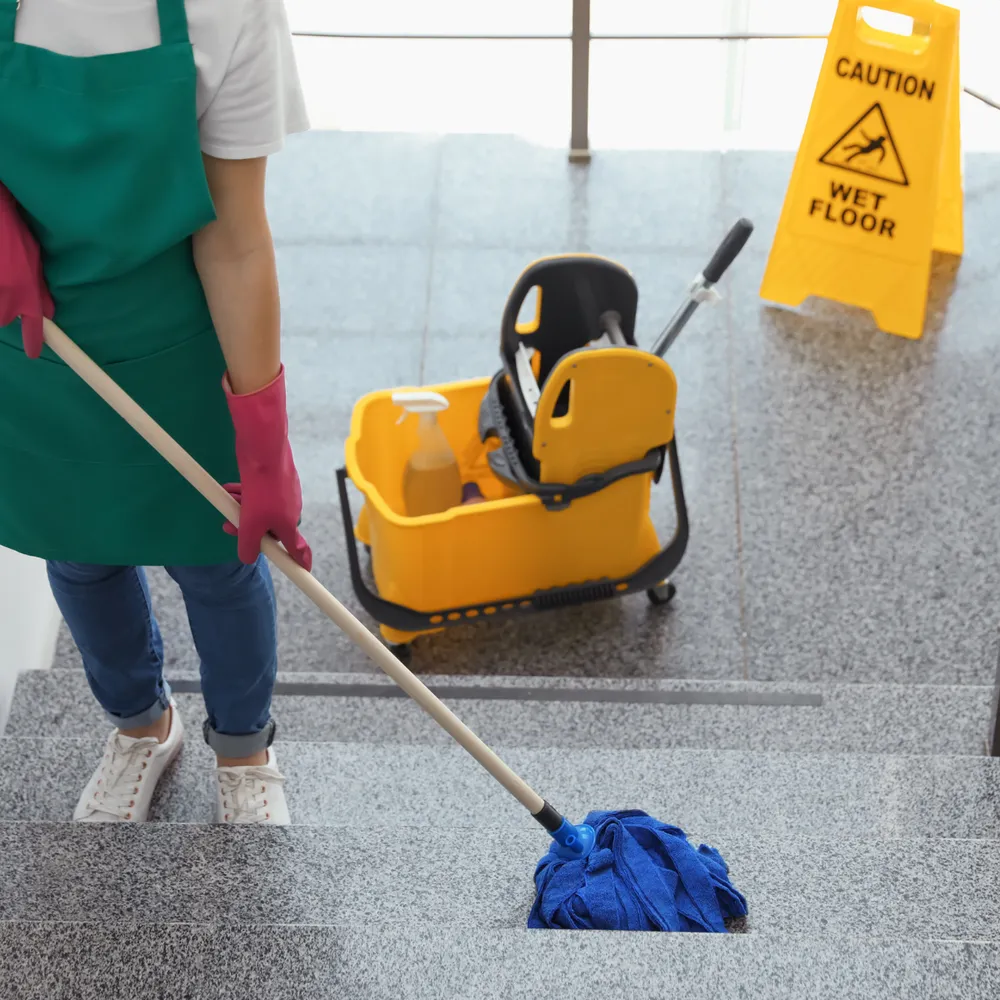
Cleaner in an apron and rubber gloves mopping stone steps beside a wet floor sign
Head-to-toe kit lists Standards named per item Certified stock to match Embroidery & trade accounts

The list

Head to toe

ItemSpecWhy
FootwearWashable upper, SR slip-rated soleThe cleaner works ON the wet floor everyone else avoids
Tunic or polo ×3Dark or colour-coded, hot-washableBleach splash writes off pale cheap fabric
Trousers ×2Stretch, hot-washableConstant bending, kneeling, reaching
Chemical glovesEN ISO 374 gauntlets for dilution & dosingSkin contact with cleaning chemistry is a dermatitis plan
Disposable nitrileBoxed, for general tasksThe everyday barrier layer
Knee pads or matStrap-on or kneelerFloor-level work adds up across a career
ApronPolythene or PVC by taskSustained wet work protects the uniform

The two that matter

Shoes and gloves do the protecting

Footwear is the serious purchase: cleaners spend their shift on the wet side of the warning cone, so a slip-rated occupational shoe with a washable upper isn't a comfort item — it's the primary PPE of the job. Gloves split by chemistry: thin disposable nitrile handles routine wiping; dilution, dosing and anything the safety data sheet flags gets EN ISO 374 chemical gauntlets. Repeated "just this once" bare-handed chemical contact is how cleaning teams end up with occupational dermatitis — barrier cream and after-work moisturiser are the unglamorous back-up that dermatology nurses would put on this list themselves.

Uniform-wise, colour-coded tunics or polos matched to the healthcare pattern suit contract cleaning in clinical and care settings; embroidered polos read better in offices and retail.
Details

Three habits worth institutionalising

Gloves by SDS
The chemical's data sheet names the glove — not the nearest box
Rotate the shoes
Washable uppers need drying time; two pairs outlast three singles
Skin checks
Dermatitis caught early is manageable; ignored, it's career-changing

Questions

Cleaner kit FAQ

What shoes should cleaners wear?

Washable uppers with slip-rated (SR) soles and real cushioning — cleaners work standing on the wet floors everyone else walks around. Occupational styles without toe caps suit most cleaning; add a cap only where goods handling justifies it.

What gloves do cleaners need?

Two tiers: disposable nitrile for routine tasks, and EN ISO 374 chemical-resistant gauntlets for diluting, dosing and anything the product's safety data sheet flags. Repeated bare-hand chemical contact is the main route to occupational dermatitis in cleaning.

Why do cleaning uniforms use colour coding?

In clinical and care settings, colour-coded uniforms (and equipment) separate clean and dirty areas and identify contract staff at a glance — mirroring healthcare's infection-control conventions. In offices and retail it's simpler: an embroidered polo identifies the team.

Kitting this role out?

Send the headcount — the kit list comes back priced, embroidered and sized.