iNeedWorkwear
Safety footwear

Standards hub · Safety footwear

Safety footwear: codes, cap types & how to choose.

Every safety boot sold in the UK starts from the same baseline — a toe cap that survives a 200-joule impact. Everything after that is a code on the label: waterproofing, midsole protection, sole grip. This hub decodes the label, then points to the detailed guides.

EN ISO 20345
The standard
200 J
Every toe cap
SB → S7
The codes
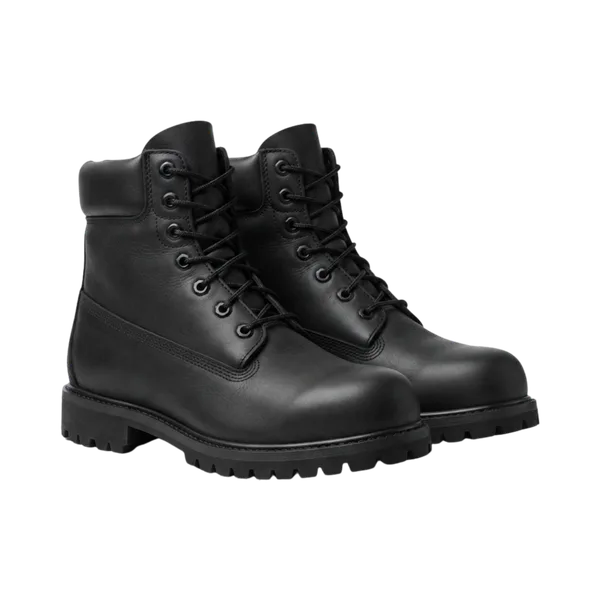
Black leather safety boot
EN ISO 20345 certified stock SB to S7 Steel, composite & aluminium caps Boots, shoes & trainers Trade accounts

The short version

One baseline, then add-ons

The standard behind UK safety footwear is EN ISO 20345. Its non-negotiable is the toe cap: it must protect against a 200-joule impact (roughly a 20 kg mass dropped from a metre) and a 15 kN compression. That's true of a basic SB shoe and a top-spec S7 boot alike — the cap protection does not get "better" as the code goes up.

What the S-codes add is everything around the cap: antistatic soles, energy-absorbing heels, water-resistant uppers, puncture-resistant midsoles, cleated outsoles. So choosing footwear is two decisions, not one: which S-code the ground and weather demand, and which cap material suits the job — steel, composite or aluminium.

The 2022 revision of the standard also reshuffled the codes — adding S6 and S7 for fully waterproof footwear — so a label bought this year may read differently from one bought five years ago. The guides below cover the differences.
At a glance

The three questions that pick a boot

Nearly every safety footwear decision resolves to ground, weather and site rules.

Question 1

What's underfoot?

Nails, screws, sharp scrap?

Debris that can puncture a sole means a midsole code — S1P, S3, S5 or S7 — not plain S1 or S2.

Question 2

How wet is the work?

Dry inside · showers · standing water

Dry indoor work suits S1/S1P. Outdoor ground calls for S3. Genuinely wet work points to S6/S7 or a wellington (S4/S5).

Question 3

What do site rules say?

Many sites mandate S3 minimum

Principal contractors commonly require S3 boots with midsole and ankle support regardless of task — check the site induction before buying lighter kit.

Every code on the label, decoded in one table: Read: safety boot codes S1–S7 explained →

Quick reference

Which code for which job

The full code table lives in the S-codes guide — this is the short route to an answer.

Typical workSensible specWhy
Warehouse picking, light assembly, drivingS1 / S1PDry ground; midsole only if stray fixings are a risk
General construction siteS3Wet ground + puncture risk + cleated grip; the common site minimum
Groundworks, drainage, concrete poursS5 wellingtonStanding water and mud beyond what a leather boot sheds
Outdoor trades through a British winterS7 (or S3 + WR)S3 protection plus certified whole-boot waterproofing
Food production, hygiene areasS2 (often white)Washable water-resistant upper; midsole rarely needed
Airport / secure sites with metal detectorsAny code, composite capMetal-free footwear clears archways without stripping off
Cap material is the other half of the decision: Composite vs steel toe caps — the honest trade-offs →

The bit people miss

A safety boot is a consumable

One impact
A cap that has taken its rated hit is spent — replace the boot even if it looks fine
Tread wears
Slip protection lives in the outsole pattern; worn smooth means it's gone
6–12 months
Typical daily-wear life on site — no law sets a date, condition decides
Make a pair last and know when to bin it: Safety boot care — drying, cleaning & replacement →

Go deeper

The detailed guides

This hub is the overview. Each guide takes one decision further — and links back here.

Questions

Safety footwear FAQ

What is the difference between EN ISO 20345 and EN ISO 20347?

EN ISO 20345 is safety footwear — it requires a 200-joule toe cap. EN ISO 20347 is occupational footwear with no toe cap requirement, used where slip or water resistance matters but impact doesn't. If the job involves anything that can fall on or run over a foot, you need 20345.

Do all safety boots have the same toe protection?

Yes — every EN ISO 20345 code from SB to S7 requires the same 200 J impact and 15 kN compression cap performance. Higher codes add protection around the cap (water resistance, midsoles, grip), not a stronger cap.

What safety boots do most construction sites require?

S3 is the most common site minimum — toe cap, puncture-resistant midsole, water-resistant upper and a cleated outsole. Some principal contractors also require ankle support, which means a boot rather than a shoe or trainer. Check the site induction pack before buying.

How long do safety boots last?

There's no legal replacement interval — condition decides. Daily site wear typically retires a pair in 6–12 months. Replace immediately after any significant impact to the cap, when tread wears smooth, or when the upper splits or delaminates.

Know your S-code? Shop it.

EN ISO 20345 boots, shoes and safety trainers from stock — S1P and S3 always available, with trade-account ordering for teams.