iNeedWorkwear
All guides / Compliance

Compliance guide · Young workers

Young workers: the duty gets stronger, not smaller.

A 17-year-old apprentice triggers duties a 27-year-old doesn't: the law treats young workers' inexperience, developing bodies and unfamiliarity with risk as factors the employer must specifically assess. PPE is where that duty gets physical — because kit sized and specced for adults quietly fails smaller, younger wearers.

Under 18
A specific assessment duty
Fit first
Adult PPE fails young frames
Blue hat
Site systems flag the learning
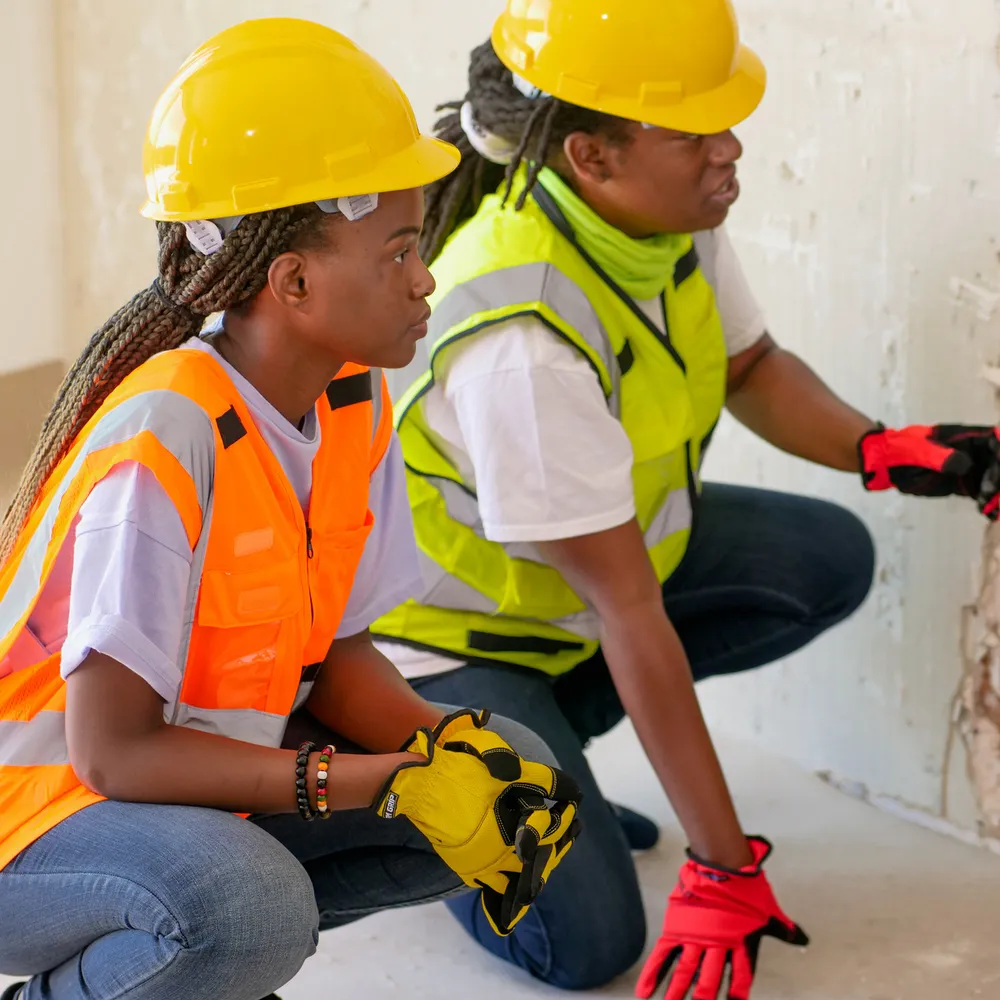
Two young workers in hi-vis vests, safety helmets and gloves on a refurbishment site
Plain-English summaries Principle-level, always check current rules Kit to meet the duty, in stock Trade accounts

The duty

What changes when the worker is young

Employers must make a specific risk assessment before a young person starts, accounting for inexperience, immaturity and lack of hazard awareness — and for the youngest (under school-leaving age or on work experience) that assessment is shared with parents. Certain exposures are restricted for under-18s outright or pending training and supervision: the well-known examples cluster around high-risk machinery, some chemical exposures and heavy vibration, and trades' own schemes (chainsaw certification being the classic) gate tasks behind age and competence regardless of enthusiasm.

PPE's role in this is mostly about fit and supervision. Adult-default kit fails young workers in predictable ways: gloves a size too big wreck grip, hi-vis drapes, boots on the wrong last cause the blisters that end up in trainers — the same physics as our women's-fit guide, applied to smaller frames generally. Buy the small end of ranges properly (the apprentice kit list covers the personal side), induct the wearer in why each item exists, and use the site's flag systems — the blue hat exists precisely so the whole site helps supervise.
The checklist

Apprentice intake, PPE edition

ItemThe young-worker note
Specific risk assessmentDone before day one — inexperience is itself a factor
PPE in real sizesSmall gloves, boots and hi-vis ordered before arrival, not adapted after
Induction with reasonsKit worn because it's understood beats kit worn because it's checked
Restricted tasks mappedMachinery, chemicals and vibration limits documented per trade
Supervision signalsBlue helmet or equivalent site convention in use
Summary, not legal advice. Duties turn on specific circumstances and current guidance — for decisions with legal consequences, check HSE/GOV.UK guidance or take advice.

Questions

Young workers FAQ

Do apprentices need a separate risk assessment?

Employers must specifically assess risks to young workers before they start, taking account of inexperience and immaturity — for under-school-leaving-age placements, findings are shared with parents. It's an enhanced duty on top of the general assessment, not a repeat of it.

What jobs can't under-18s do?

Work beyond their physical or psychological capacity, and certain high-risk exposures — dangerous machinery, some chemical and vibration exposures — unless it's necessary training under competent supervision with risks reduced. Trade schemes add their own age and competence gates; the assessment documents the specifics.

Does PPE for young workers differ from adult PPE?

Same standards, different priority on fit: young and smaller-framed workers need the small end of glove, boot and garment ranges ordered deliberately — oversized PPE degrades protection. Pair it with induction that explains each item's purpose; understanding is what keeps kit worn unsupervised.

Duty understood — kit the team.

Whatever the risk assessment says the team needs, it's stocked, certified and priced for volume.